








The Brain's First Bite
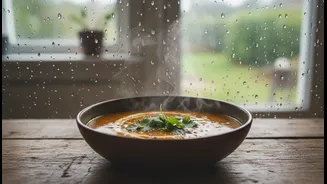
Long before food touches your tongue, your brain has already started the process of eating. This is known as the cephalic phase of digestion. When you see, think about, or especially smell food, your brain kicks your digestive system into gear. It sends
signals that trigger salivation, the secretion of gastric juices, and the production of stomach acid. This response is a conditioned reflex, an automatic preparation for the meal to come. The aroma of a simmering curry or fragrant biryani doesn't just promise a good meal; it physically prepares your body to receive it, making you feel the pangs of hunger in anticipation.
Two Paths for Smell
Our perception of smell works through two distinct pathways. The first is orthonasal olfaction, which is what we typically think of as smelling. It happens when aromas from the external world—like brewing coffee or a blooming jasmine flower—are inhaled through the nostrils. This is the sense that alerts you to food in your environment. The second, and arguably more critical for flavour, is retronasal olfaction. This occurs while you chew and swallow. Volatile compounds from the food in your mouth travel up the back of your throat into your nasal cavity. This internal smelling process is what creates the complex perception we call flavour.
Aroma, Emotion, and Memory
Why does the smell of a certain dish instantly transport you back to your childhood? The olfactory bulb, which processes smells, has a direct and powerful connection to the brain’s limbic system, particularly the amygdala and hippocampus. These are the centers for emotion and memory. No other sense is wired so directly to these parts of the brain. This is why a specific aroma can trigger a vivid memory or a strong emotional response, which in turn powerfully influences your desire for that food. The smell of your grandmother’s signature dish doesn’t just remind you of her; it makes you crave the comfort and satisfaction associated with it.
The Difference Between Taste and Flavour
Many people use the words "taste" and "flavour" interchangeably, but they are not the same. Taste refers to the five basic sensations detected by the taste buds on your tongue: sweet, sour, salty, bitter, and umami. Flavour, on the other hand, is a far more complex experience. It is the brain's synthesis of taste from the tongue, aroma from the nose (both ortho- and retronasal), and even texture and temperature from nerves in the mouth. Scientists estimate that as much as 80 percent of what we perceive as flavour actually comes from our sense of smell. This is why when you have a cold and a blocked nose, food seems bland and tasteless; you are only getting the basic taste signals, not the rich tapestry of flavour created by aroma.
Using Aroma to Your Advantage
Understanding the power of aroma can change how you cook and eat. Chefs in high-end restaurants are masters of using aroma to build anticipation and enhance the dining experience. At home, you can do the same. Using fresh herbs, toasting spices before adding them to a dish, or adding a squeeze of lime at the end can all release volatile compounds that elevate the aroma and, consequently, the flavour. Some research even suggests that certain smells can influence our choices and cravings. For instance, smelling something rich and savoury might trigger hunger, while brief exposure to scents like peppermint or citrus might have a different effect. Paying attention to the aroma before and during your meal—a practice in mindful eating—can make your food more satisfying and enjoyable.