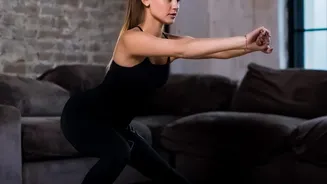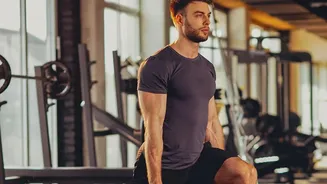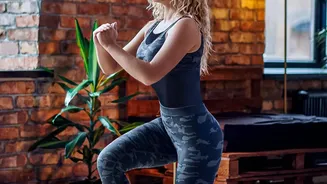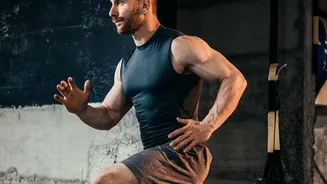



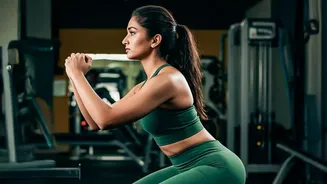
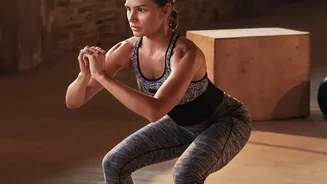
Building strong legs is foundational to overall fitness, and squats and lunges are king. But what if you're just starting? These essential moves are accessible to everyone, thanks to simple modifications designed to build strength safely.
The Foundation of Lower-Body Strength
Squats and lunges
are cornerstones of any effective fitness routine for a reason. They are compound exercises, meaning they work multiple muscle groups at once, making them incredibly efficient for building strength. The primary muscles targeted include the quadriceps (front of the thighs), hamstrings (back of the thighs), and glutes. But the benefits go beyond just leg day. These movements also engage your core for stability, improve your balance, and increase flexibility in your hips. Regularly performing squats and lunges builds functional strength that translates directly to everyday activities, like lifting objects or climbing stairs, while also helping with long-term injury prevention by strengthening the muscles that support your joints.
Beginner Squat Modification: Chair Squats
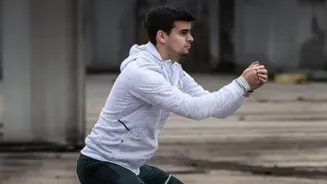
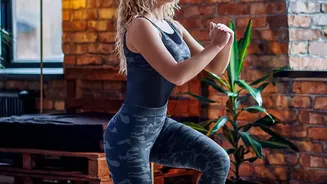
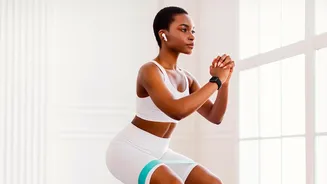
If a full bodyweight squat feels intimidating, the chair squat is the perfect starting point. This modification helps you learn the proper movement pattern with a built-in safety net, reducing the fear of falling and allowing you to focus on form. To perform one, stand in front of a sturdy chair with your feet shoulder-width apart. Keeping your chest up and back straight, push your hips back and bend your knees as if you're about to sit down. Lower yourself until you lightly tap the chair's seat, then drive through your heels to return to a standing position. The chair provides a physical target, ensuring you reach an appropriate depth without compromising your posture. This variation is excellent for building foundational strength in the quads and glutes while instilling the confidence to eventually progress to unassisted squats.
Beginner Squat Modification: Wall Sits
The wall sit, or wall squat, is an isometric exercise, meaning you hold a static position rather than moving through a range of motion. This makes it a fantastic, low-impact option for building muscular endurance, especially in the quadriceps. To do it, stand with your back flat against a wall. Walk your feet out and slide your back down the wall until your knees are bent at roughly a 90-degree angle, as if you're sitting in an invisible chair. Ensure your feet are shoulder-width apart and your lower back is pressed against the wall. Hold this position, breathing steadily. You'll quickly feel the burn in your quads, glutes, and even your core as it works to keep you stable. Because it strengthens the muscles supporting the knee joint without requiring movement, it's often considered a knee-friendly exercise.
Beginner Lunge Modification: Static Lunges
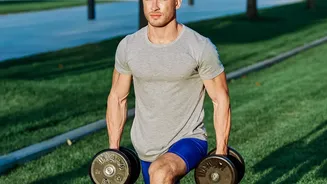
Lunges introduce a balance challenge that can be tricky for newcomers. The static lunge (also called a split squat) removes the forward or backward stepping motion, allowing you to focus purely on strength and form. Start in a split stance, with one foot forward and one foot back. Keeping your torso upright, lower your body until both knees are bent at approximately 90ndegree angles, ensuring your front knee stays in line with your foot. Your back knee should hover just above the floor. Push through your front heel to rise back to the starting split stance. Because you don't have to worry about the dynamic movement of stepping, you can build stability and strength in each leg individually, which is key for correcting muscle imbalances.
Beginner Lunge Modification: Assisted Lunges
For those who find balance to be the biggest hurdle with lunges, using support is a game changer. An assisted lunge involves holding onto a stable object like a chair, wall, or countertop. This support reduces the demand on your stabilizing muscles, so you can concentrate on executing the lunge with correct technique. Set up in a lunge position while lightly holding your support. Lower your body down by bending both knees, keeping your chest high and core engaged. The assistance from the chair or wall gives you the confidence to go through the full range of motion without wobbling, ensuring you are effectively working your quads, glutes, and hamstrings. Once you feel more stable and confident, you can gradually reduce your reliance on the support.