
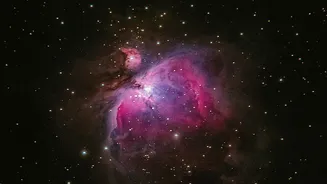
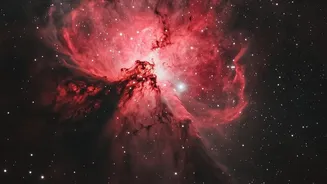
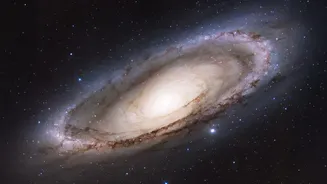
The Old Way vs. The New Way
For decades, astrophotography was the domain of dedicated hobbyists with deep pockets. It involved heavy DSLR cameras, complex tripods, star-tracking mounts to counteract the Earth's rotation, and hours of editing photos on a computer. The goal was to gather
as much faint light from stars and galaxies as possible, a task for which tiny smartphone sensors were completely unsuited. The result was that for most people, a photo of the night sky would turn out as a blurry, dark mess with a few indistinct bright spots. Today, that has completely changed. Modern flagship phones from Google, Samsung, and Apple have transformed a niche, technical hobby into an accessible feature that anyone can use.
How It Works: The Magic of Computation
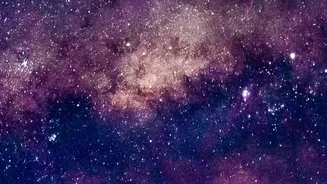
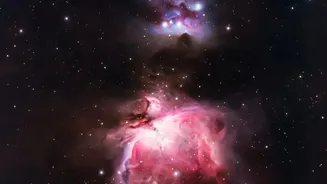
So, what is the secret? The term is 'computational photography'. Instead of relying on a single, long exposure that would be ruined by the slightest handshake, your phone takes a different approach. When you activate a dedicated astrophotography mode, the phone captures a series of many short-exposure shots over several minutes. An advanced algorithm then gets to work. It aligns all these individual frames, correcting for the Earth's rotation so stars remain sharp points instead of streaks. It then 'stacks' them, averaging out the random digital noise that plagues low-light photos and enhancing the faint details of stars and nebulae. Artificial intelligence also plays a role, identifying which part of the image is the sky and selectively enhancing it to create a more realistic and dramatic final image. The phone essentially automates the entire complex workflow that a traditional astrophotographer would do manually.
The Key Players in Your Pocket
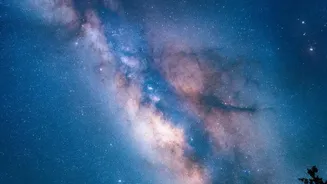
Several smartphone manufacturers have become leaders in this field. Google's Pixel phones are often considered the pioneers, with a dedicated 'Astrophotography' mode that activates automatically in Night Sight when the phone is on a tripod. This mode can capture stunning shots of the Milky Way with exposures up to four minutes, combining as many as 15 separate frames. Samsung offers a powerful alternative within its Expert RAW app, available on its flagship Galaxy S series phones. This gives users more manual control over settings like exposure time and even includes a 'Sky Guide' to help locate constellations. Apple's iPhones also have impressive low-light capabilities through their Night Mode, which can be extended for up to 30 seconds on a tripod to capture detailed starfields, though they lack a specific, multi-minute astrophotography mode like their competitors.
Tips for Capturing Your First Starry Night
Ready to try it yourself? You don't need to be an expert to get great results. First and most importantly, get away from city lights. Light pollution is the biggest enemy of astrophotography, so finding a dark location is key. Second, stability is crucial. While some software can work handheld, you'll need a tripod to use the best astrophotography modes, as they require the phone to be perfectly still for several minutes. Even a small, inexpensive tripod will make a world of difference. Finally, be patient. Open your phone's camera app, switch to Night or Astrophotography mode, frame your shot, and tap the shutter. The phone will then take a few minutes to complete the capture process. Using a self-timer can also help avoid camera shake from tapping the screen.