








The Billion-Dollar Price Tag
Several major reports have put a number on the economic damage from air pollution in India, and the figures are consistently alarming. A 2025 report from The Lancet, a prestigious medical journal, stated that premature mortality from outdoor air pollution cost
India $339.4 billion, which is equivalent to a staggering 9.5% of the country's GDP. Similarly, a joint report by FICCI and EY India estimated that total economic losses could be as high as 9.5% of GDP. Other analyses, like one from Greenpeace Southeast Asia, estimated the cost from fossil fuel pollution alone at $150 billion annually, or 5.4% of India's GDP. These figures, primarily quoted in U.S. dollars for global comparison, paint a grim picture of a national health crisis translating into a severe economic drag.
Who Does the Math and How?
These enormous figures aren't pulled from thin air. They are calculated by respected global and national bodies, each with specific methodologies. The Lancet Commission on Pollution and Health, the World Bank, Greenpeace, and the Clean Air Fund are some of the key players. Their models typically calculate costs across several areas. The largest component is often the 'cost of lost output' due to premature deaths and morbidity. This isn't just a grim statistic; it's an economic calculation of the years of productive work lost when a person dies early or becomes too sick to work. Another major factor is direct healthcare costs—billions spent on treating respiratory illnesses, heart disease, and strokes linked to air pollution. For instance, one study noted that healthcare costs for pollution-related diseases were around $11.9 billion.
From Lost Workdays to Lower Productivity
The economic impact extends far beyond healthcare bills. It seeps into the daily functioning of the economy. A report from Dalberg Advisors, in partnership with the Clean Air Fund and CII, found that Indian businesses lose around $95 billion each year due to pollution. This loss comes from multiple channels. Firstly, there's absenteeism, with an estimated 1.3 billion working days lost annually due to pollution-related sickness. Then there's 'presenteeism', where employees show up to work but are less productive due to the physical and cognitive effects of breathing toxic air; some estimates suggest an 8-10% decline in worker efficiency on highly polluted days. For the IT sector alone, this productivity loss translates to an annual hit of $1.3 billion.
The Broader Business Impact
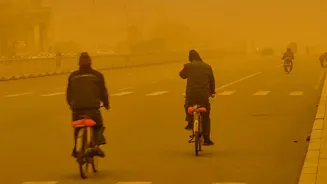
The damage isn't confined to office workers. Air pollution disrupts supply chains and dampens consumer activity. During peak pollution periods, recurring restrictions on construction and transportation halt economic activity, impacting everyone from real estate developers to daily wage labourers. Retailers and restaurants report lower footfall as people choose to stay indoors, directly hitting sales. The tourism industry also suffers, as iconic landmarks shrouded in smog become less appealing to visitors. Even the transition to green energy is affected. One company reported a 13% drop in solar panel efficiency on high-pollution days, which can reduce the economic viability of solar projects. This shows how pollution creates a vicious cycle, hampering the very solutions that could help fix the problem.
Dollars to Rupees: What It Means for India
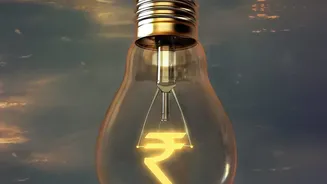
While international reports use U.S. dollars to provide a global benchmark, converting these figures into Indian Rupees makes the scale of the problem more tangible. The Greenpeace estimate of $150 billion translates to approximately ₹10.7 lakh crore annually. The Lancet's figure of $339.4 billion is nearly ₹30 lakh crore. For context, the cost of air pollution from fossil fuels was estimated to be 150% of India's entire healthcare budget in one report. When the economic loss is pegged at over 5% or even 9% of GDP, it means that for every ₹100 of economic value the country creates, between ₹5 and ₹9 are effectively erased by the consequences of dirty air. This is a massive, persistent drag on national growth that undermines economic progress year after year.