






A Groundbreaking Journey So Far
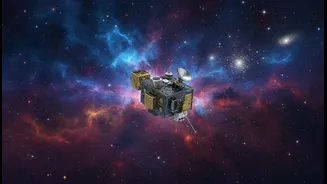
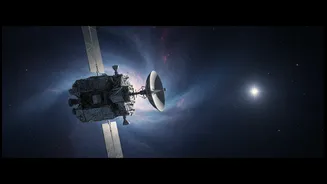
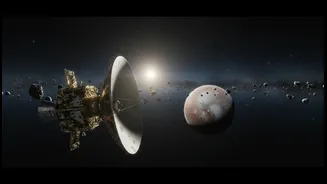
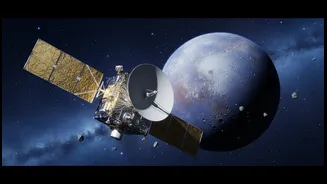
Launched in 2006, New Horizons has already secured its place in the annals of exploration. In 2015, it executed the first-ever flyby of Pluto, transforming our understanding of the dwarf planet. The data revealed a world with active geology, vast nitrogen-ice
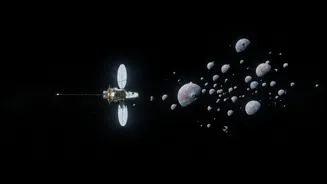
glaciers, and hints of a subsurface liquid water ocean. But its primary mission was far from over. In 2019, it studied Arrokoth, a 'snowman-shaped' object in the Kuiper Belt, making it the most distant and primitive object ever explored by a spacecraft. These encounters provided unprecedented insight into the building blocks of our solar system, preserved in the cold, dark expanse beyond the major planets.
The Longest Nap in Deep Space
To conserve power and reduce wear on its systems during the long cruise through empty space, mission planners at the Johns Hopkins Applied Physics Laboratory (APL) routinely place New Horizons in hibernation. On August 7, 2025, the spacecraft began a 321-day slumber, its longest to date. While most of its systems were unpowered, several key science instruments remained active, passively collecting data on the environment around it. On June 23, 2026, acting on commands sent nearly a year earlier, the probe woke itself up. Mission Operations Manager Alice Bowman confirmed the spacecraft was in good health, noting that weekly status reports sent during hibernation were all 'green', indicating all was well.
What Secrets Does the Data Hold?
The long-awaited signal confirming the spacecraft's status took about 8 hours and 52 minutes to reach Earth, crossing the vast distance from the Kuiper Belt. Now, the mission team will begin the slow process of downlinking the data New Horizons has been gathering. This isn't just a simple health check-up. Instruments like the Solar Wind Around Pluto (SWAP) and the Venetia Burney Student Dust Counter have been continuously monitoring the charged particles of the solar wind and the dust environment in this largely unexplored region. This information is crucial for understanding the heliosphere—the protective bubble of plasma carved out by our sun—and how it interacts with the interstellar medium. In the coming weeks, the probe will also begin a new study of hydrogen in the outer heliosphere.
The Frontier Beyond Pluto
With its primary flyby missions complete, New Horizons has transitioned into a new role as a deep-space observatory. It is currently speeding away from Earth at a rate of about 483 million kilometres per year, pushing deeper into the Kuiper Belt, a donut-shaped ring of icy objects beyond Neptune's orbit. While NASA has not yet found a new object the probe can reach for another close flyby, its journey is far from over. Scientists are using it to study the heliosphere's edge, a region previously crossed only by the Voyager spacecraft. The data from New Horizons, with its more modern instruments, will provide a new layer of understanding about the boundary where our solar system ends and interstellar space begins. The spacecraft is expected to exit the Kuiper Belt entirely around 2028 or 2029, continuing its journey into the void.