
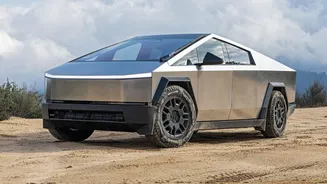
In a move that surprised many, Tesla announced it is winding down production of its futuristic Cybertruck. But this isn't a simple retreat; it’s a calculated pivot towards what the company sees as its next major frontier: autonomous vehicles.
The Official Timetable
Tesla CEO
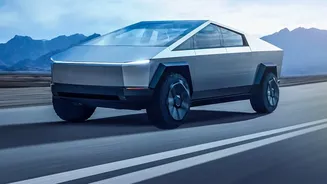
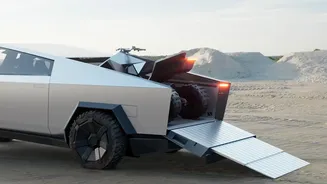
Elon Musk confirmed on the social media platform X that the company will phase out Cybertruck production at its Gigafactory in Texas around the middle of 2027. More specifically, subsequent posts from Musk pointed to a timeframe around June or July of that year. This decision brings an end to the production of one of the most polarizing vehicles in recent history at its sole manufacturing site. The Texas factory is the only facility equipped with the specialized tooling required for the Cybertruck's unique stainless-steel exoskeleton, making a production shift to another location highly unlikely. While the company will continue service and parts support for existing vehicles, the message from lead engineer Wes Morrill framed the change as the Cybertruck's legacy 'living on through Cybercab', signaling a definitive chapter end.
The Strategic Pivot to Cybercab
The primary reason cited for this shift is to free up factory floor space for the production of the Cybercab. The Cybercab is Tesla's purpose-built, two-seater robotaxi, featuring no steering wheel or pedals, and is central to Musk's vision for a future of autonomous transportation. Commercial Cybercab rides already began in parts of Austin in September 2026. In a post, Musk argued that the 'opportunity cost' of continuing the complex Cybertruck production is 'vastly outweighed' by the value of scaling up the Cybercab. He also noted that the decision frees up not just physical space, but also a 'very limited number of smart, dedicated people'—engineers and production specialists—to focus on the robotaxi project, which he believes will 'profoundly transform' transportation.
The Sales Story
While Tesla's official reason is the strategic shift to the Cybercab, the Cybertruck's commercial performance has been a persistent topic of discussion. After its 2019 unveiling, Elon Musk projected eventual annual sales of 250,000 to 500,000 units. However, sales figures fell significantly short of these ambitious targets. According to data from Cox Automotive, U.S. sales dropped from 38,965 units in 2024 to 20,237 in 2025. For the first nine months of 2026, sales were reported at 11,586 vehicles, a 28% decline from the same period in the previous year. The vehicle also faced challenges with recalls, quality control issues, and an unconventional design that made it ineligible for sale in key markets like Europe due to safety regulations.
Impact on Orders and Pricing
Despite the planned shutdown, Tesla is still working through a substantial backlog of orders. Musk stated that the number of outstanding orders is 'far more than we can make before dismantling the line'. To address this, the company plans to add an extra production shift to fulfill as many existing orders as possible before the mid-2027 deadline. Just before the shutdown announcement, Tesla also adjusted its pricing, increasing the cost of some Cybertruck models by up to $7,500 and pausing new orders for the entry-level Dual Motor variant. This suggests a focus on producing higher-margin versions of the truck in its final months of production.
An Engineering Platform, Not a Pickup Revolution
Ultimately, the Cybertruck's legacy may be less about conquering the traditional pickup market and more about serving as a highprofile engineering experiment. The development of its unique steerbywire system, 48volt architecture, and manufacturing techniques for its steel body provided valuable lessons. Lead Engineer Wes Morrill emphasized that the Cybertruck was an 'incredible technology development platform' whose innovations live on in the Cybercab. This frames the vehicle not as a commercial failure, but as a stepping stone. By winding down the line, Tesla is cutting its losses on a polarizing consumer product to double down on its bet that the future of the company—and transportation itself—is autonomous.