




What Makes This Eclipse Special
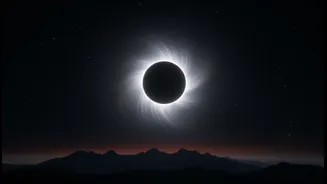
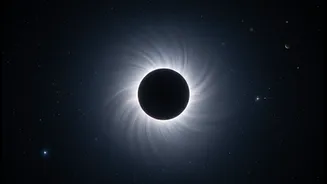
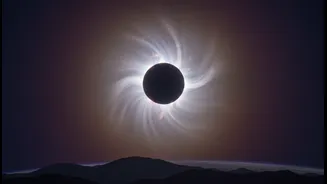
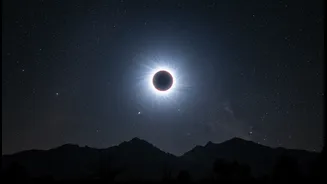
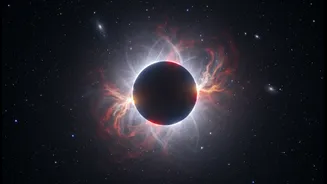
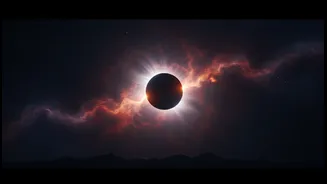
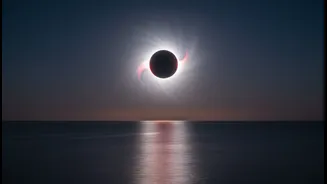
A total solar eclipse happens when the Moon passes directly between the Sun and Earth, completely blocking the Sun's face. For those within the narrow path of totality, daytime transforms into a deep twilight, revealing the Sun's ethereal outer atmosphere,
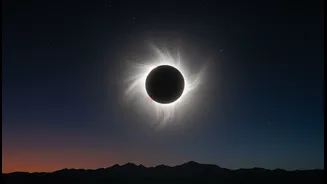
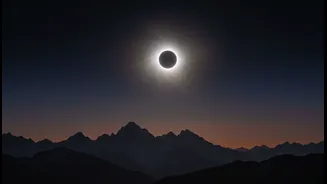
the corona. The August 12, 2026, eclipse is especially notable for its path. The journey of the moon's shadow begins over a remote part of Siberia, sweeps across the Arctic, Greenland, and Iceland, before arriving in northern Spain and a sliver of Portugal right around sunset. For many in Europe, this will be a dramatic sunset eclipse, a particularly beautiful and rare sight. Another special feature is the timing: the eclipse coincides with the peak of the annual Perseid meteor shower, offering a potential celestial double-header for those staying out after dark.
Your Essential Viewing Kit
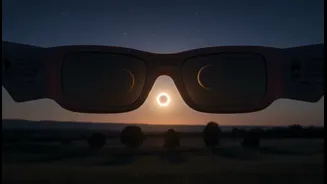
The single most important rule is to never look directly at the Sun without proper eye protection. Regular sunglasses, no matter how dark, are not safe. You must use special-purpose solar filters, such as certified “eclipse glasses” or handheld solar viewers that meet the ISO 12312-2 international standard. Always inspect your filter for scratches or damage before use. It’s safest to purchase them from reputable vendors recommended by astronomical societies, as fakes can exist. Beyond glasses, consider a few low-tech tools for indirect viewing. A simple pinhole projector can be made with two pieces of card. Even a kitchen colander or the spaces between your fingers can project dozens of tiny crescent suns onto the ground during the partial phases.
Location, Location, Totality
To see the main event—totality—you must be inside the path of the Moon's shadow. For this eclipse, the most accessible land-based locations will be Iceland and northern Spain. Cities like Reykjavík in Iceland, and A Coruña, Bilbao, and Zaragoza in Spain, are directly in the path. Here, the total eclipse will last for up to two minutes. For those outside this narrow band, including observers in the UK, most of Europe, and parts of North America and Africa, a partial solar eclipse will be visible. While not as dramatic as totality, a partial eclipse is still a fascinating event to watch safely with your eclipse glasses as the Moon takes a 'bite' out of the Sun.
The Timeline: What to Watch For
An eclipse isn't a single moment but a two-hour-plus event with distinct stages. It begins with 'First Contact,' when the Moon first appears to touch the Sun's edge. As the partial phase progresses, the sky will slowly dim. Just before totality ('Second Contact'), look for Baily's Beads, where sunlight streams through lunar valleys, and the dazzling Diamond Ring effect. Then comes totality. For this brief period, it is safe to remove your eye protection and look directly. You'll see the Sun's corona, and potentially reddish solar prominences at the edge. As soon as the Sun begins to reappear ('Third Contact'), creating a second diamond ring, you must immediately put your eclipse glasses back on.
Look Around, Not Just Up
The 'smarter' way to watch an eclipse involves noticing the changes on Earth, not just in the sky. In the minutes before totality, the quality of light becomes strange and silvery. Colors can appear to shift, a phenomenon known as the Purkinje effect. You might also see faint, rippling 'shadow bands' on the ground. As totality arrives, the temperature can drop noticeably. Notice the horizon; you may see a 360-degree sunset, which is the light from areas outside the Moon's shadow. Also, listen. Animals and birds can become quiet or behave as if night has fallen.
To Photograph or Just Experience?
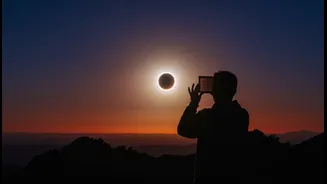
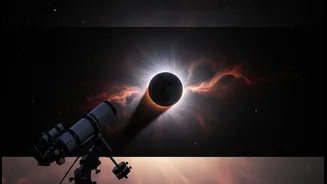
Trying to capture the eclipse can be a distraction from experiencing the awe of the moment. If you do want a souvenir, your smartphone is capable of getting a decent shot, but you must protect it. Place a certified solar filter, like one lens from a pair of eclipse glasses, over your phone's camera for all partial phases. A tripod will help keep your phone steady. During the brief moments of totality, you can remove the filter to capture the corona. But for your first eclipse, many veterans advise putting the camera down. The few minutes of totality are fleeting, and the memory of seeing it with your own eyes is often more powerful than any photo.