





The Ambitious Double-Catch Plan
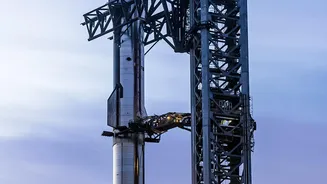
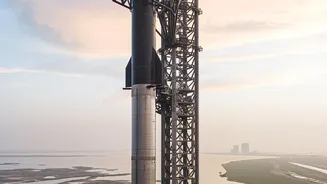
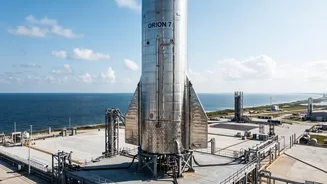
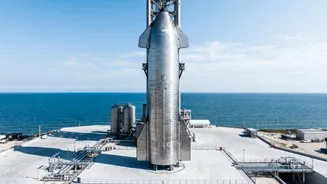
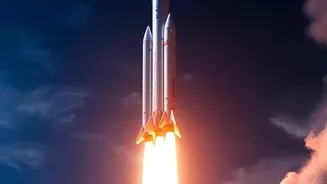
On Friday, November 13, 2026, SpaceX launched its 15th Starship test flight from its Starbase facility in Texas. The mission's goal was unprecedented: to launch the world's most powerful rocket, have both its massive Super Heavy booster and its Starship upper
stage return to the launch site, and catch both mid-air using the giant mechanical 'chopstick' arms of the launch tower. This so-called 'double catch' would represent the holy grail of rocketry—a completely and rapidly reusable orbital launch system, a feat never before achieved. The mission began perfectly, with the 124-meter rocket soaring into the sky. The two stages separated as planned, with the Starship continuing its journey to orbit while the booster began its descent back to Texas.
A Setback for the Booster
The first moment of drama occurred just minutes after liftoff. The Super Heavy booster, which was attempting to return for its landing, encountered a problem. According to SpaceX, an automated abort was triggered by the guidance, navigation, and control system. It appears a low fuel alarm was the culprit, forcing the booster to divert from its planned catch at the launch tower. Instead, it headed for a designated splashdown zone in the Gulf of Mexico, where it was seen exploding before hitting the water. While SpaceX has successfully caught boosters before, this specific failure meant the dream of a perfect double recovery on this flight was over.
The Historic Ship Recovery
Despite the booster's fate, the mission was far from a failure. The Starship upper stage, known as Ship 42, successfully reached orbit for only the second time in the program's history. It then spent over 22 hours in space, completing 14 orbits of Earth and deploying 26 of SpaceX’s next-generation Starlink satellites. Then came the main event. On Saturday, November 14, Ship 42 began its fiery reentry, crossed North America, and lined itself up with the launch tower at Starbase. In a breathtaking finale, the spacecraft fired its engines for a final landing burn, slowed its descent, and was flawlessly caught by the giant 'chopstick' arms—the first time an orbital spacecraft has ever been recovered this way.
Why This 'Partial Failure' is a Game-Changer
In the world of SpaceX's iterative development, data is king, and even a setback provides crucial information. The booster's failure will be analyzed to prevent it from happening again. But the successful catch of the Starship upper stage is the overwhelming victory. Recovering the upper stage, which travels much faster and higher than the booster and must survive the intense heat of atmospheric reentry, is a far more complex challenge. By proving it can be done, SpaceX has overcome the single biggest hurdle to making Starship fully reusable. This capability is the key to dramatically lowering the cost of spaceflight and increasing launch frequency, paving the way for ambitious projects like building a base on the moon and a city on Mars.