







Why Sitting Saps Your Strength
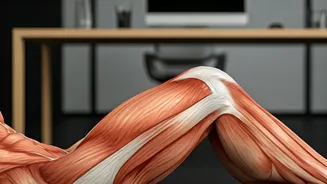
Our bodies are not designed for prolonged sitting. When you're chained to a desk for eight hours, major muscle groups in your lower body—like your glutes and quadriceps—become inactive. This state of 'muscular amnesia' doesn't just make you feel sluggish;
it can lead to poor posture, lower back pain, and a slower metabolism. The fatigue you feel isn't just in your mind; it's a physical response from your body, which is conserving energy because it thinks it's in a state of rest. Over time, this chronic inactivity can weaken these crucial muscles, making you feel tired even when you’ve had a full night's sleep. Breaking this cycle requires re-engaging these muscles in a simple and accessible way.
Enter the Wall Sit: Your Secret Weapon
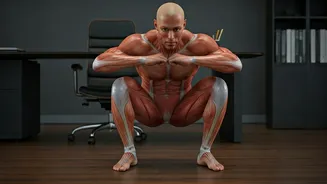
The wall sit is the perfect antidote to desk-bound lethargy. It’s an isometric exercise, which means you hold a static position to create tension in your muscles. There’s no jumping, no equipment, and no need for a lot of space. It specifically targets the quads, glutes, and hamstrings—the exact muscles that switch off when you sit. By activating them, you send a signal to your body to wake up. This increases blood flow, helps combat the metabolic slowdown from sitting, and builds endurance in your legs and core. Think of it as a reset button for your lower body that you can press anytime you need an energy boost.
How to Do the Perfect Wall Sit
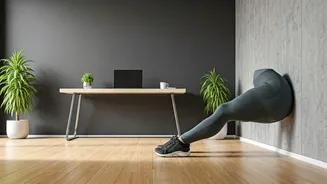
Form is everything. Doing it wrong can strain your knees or back, so take a moment to get it right. 1. **Find a Wall:** Stand with your back flat against a sturdy, clear wall. 2. **Position Your Feet:** Your feet should be shoulder-width apart and about two feet away from the wall. 3. **Slide Down:** Slowly slide your back down the wall until your thighs are parallel to the floor, as if you're sitting in an invisible chair. Your knees should be directly above your ankles, forming a 90-degree angle. Never let your knees extend past your toes, as this puts immense pressure on the knee joints. 4. **Check Your Posture:** Keep your back and head flat against the wall. Engage your core by pulling your belly button towards your spine. This supports your lower back. 5. **Hold It:** Breathe steadily and hold the position. Your thighs will start to burn—that’s the exercise working!
Make It a Workplace Habit
The key to seeing benefits is consistency, not intensity. You don't need to hold a wall sit for five minutes on your first day. Start small and build up. Find a quiet corner or an empty conference room. A good starting routine is to hold the position for 30 seconds, rest for 30 seconds, and repeat this three times. You can do this once in the morning and once in the afternoon. A great time to sneak it in is while waiting for your chai, during a less-intensive phone call (if you can stand near a wall), or just before you head out for lunch. The goal is to make it a non-negotiable part of your workday, like checking your email.
Challenge Yourself: Level Up Your Sit
Once a 30- or 60-second hold feels too easy, you can increase the challenge without needing any gym equipment. Try holding for longer periods, aiming for 90 seconds or more. For a more advanced variation, try lifting one foot off the ground for a few seconds while maintaining your form, then switching to the other foot. This engages your core and stabilizer muscles even more. You can also hold your laptop or a heavy water bottle in your lap to add resistance. These small progressions will ensure your muscles continue to adapt and grow stronger, helping you more effectively blast away that sedentary fatigue for good.