





A Quantum Leap in Ambition
Chandrayaan-4 is not merely a successor to previous missions; it is a complete evolution of India's lunar ambitions. The primary goal is far more complex than just a soft landing. It is designed to be India's first lunar sample-return mission, aiming
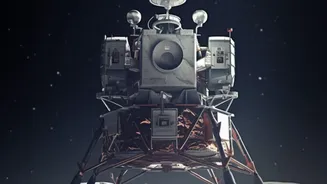
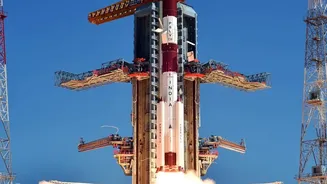
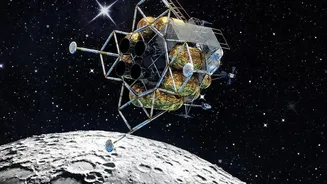
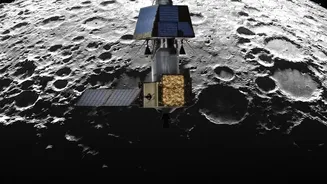
to collect soil and rock from the Moon and bring it back to Earth for analysis. This undertaking is so massive that it requires five separate spacecraft modules: a Propulsion Module, a Descender (lander), an Ascender, a Transfer Module, and a Re-entry Module. Due to the sheer weight and complexity, the mission will be launched in two separate phases using powerful LVM3 rockets, with the modules assembling themselves in Earth's orbit before heading to the Moon. This intricate orbital docking is a crucial new capability for ISRO, paving the way for future human spaceflight.
The South Pole’s Treacherous Welcome
The lunar South Pole is a region of immense scientific interest, believed to hold vast quantities of water ice in permanently shadowed craters. However, this scientific prize is guarded by some of the most hostile terrain in the solar system. The area is characterised by extreme temperature fluctuations, long, deep shadows that can hide dangers and block solar power, and a landscape pockmarked with craters and boulders. Successfully landing a spacecraft here requires a system that can navigate these hazards with pinpoint accuracy. Unlike previous missions that had larger target zones, Chandrayaan-4 needs to land precisely in a pre-scouted area that is both safe and scientifically valuable.
Smarter Eyes and Brains
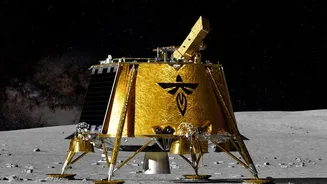
To conquer this challenge, Chandrayaan-4’s landing module, the Descender, will be equipped with significantly more advanced navigation systems than its predecessors. The key is an autonomous hazard detection and avoidance system. Using a suite of advanced sensors, including high-resolution cameras, laser altimeters, and Laser Doppler Velocimeters, the lander will perform a real-time scan of the terrain below during its final descent. An AI-powered onboard computer will instantly analyse this data, create a 3D map of the landing zone, identify potential hazards like steep slopes or large rocks, and autonomously select the safest possible touchdown spot within the designated area. This real-time decision-making capability is a major upgrade, reducing reliance on ground control and allowing the lander to react instantly to unforeseen dangers.
A Precise, Two-Part Touchdown
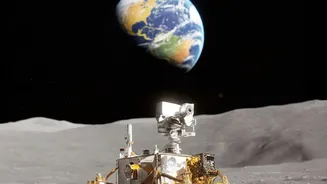
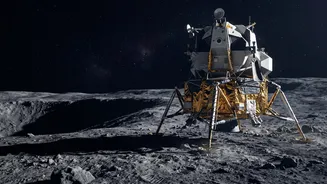
The landing isn't just about safety; it's about setting the stage for the mission's next critical phases. The combined Descender and Ascender modules will land together. After landing, a robotic arm and a drill on the Descender will collect surface and sub-surface samples. These precious materials will then be transferred and sealed within the Ascender module. The landing must be stable enough to serve as a launchpad. In another first for India, the Ascender module will then fire its engines and lift off from the lunar surface, leaving the Descender behind. This lunar launch is an incredibly precise manoeuvre, as the Ascender must reach a specific orbit to rendezvous with the Transfer Module waiting overhead. This entire sequence relies on the initial landing being perfectly placed and stable.
Scouting the Perfect Spot
ISRO has been meticulously preparing for this landing for years. Using high-resolution data from the Chandrayaan-2 orbiter's camera, scientists have been mapping the South Pole in incredible detail. They have analysed potential landing zones based on slope, boulder distribution, and sunlight availability. Through this rigorous process, they have identified several candidate sites, with one specific area in the Mons Mouton region, dubbed MM-4, emerging as a prime candidate. This 1x1 km zone is considered relatively safe, with gentle slopes and fewer hazards, while still being close to scientifically interesting areas. This detailed prep work gives the advanced landing module the best possible chance of success.