



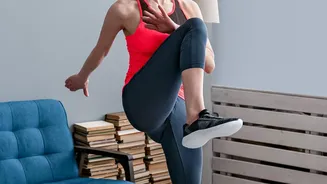
Play with Pace and Intensity
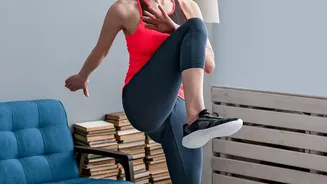
One of the simplest ways to transform your indoor walk is by incorporating interval training. Instead of maintaining one steady speed, alternate between periods of high-intensity, brisk walking and slower recovery phases. For example, march quickly in place
for one minute, raising your heart rate, then slow down to a gentle pace for the next minute to recover. This method, known as High-Intensity Interval Training (HIIT), can improve cardiovascular endurance, boost metabolism, and burn more calories than walking at a constant speed. If you have stairs, walking up and down them is an excellent way to add incline and intensity, strengthening your legs and glutes.
Incorporate Arm Movements
Walking primarily works your lower body, but you can easily turn it into a full-body workout by adding intentional arm movements. While marching in place, try incorporating bicep curls, shoulder presses, or lateral raises. You can use light hand weights for added resistance, but even without them, controlled movements are effective. Try swinging your arms purposefully as you walk, bending them at a 90-degree angle to engage your upper body and core. Another option is to perform lat pull-downs by raising your arms diagonally and then pulling them down as if pulling on a bar, squeezing your shoulder blades together.
Add Strength and Mobility Moves
Break up your walking segments by weaving in bodyweight strength and mobility exercises. Every few minutes, pause your walk to perform a set of squats, lunges, or calf raises. You can also add dynamic movements like high knees, butt kicks, or heel taps. These additions not only prevent boredom but also help build functional strength and improve flexibility. Side-steps are another great option to work different muscle groups, specifically your inner and outer thighs, by moving in a different plane of motion.
Change Your Direction and Stride
Our bodies are accustomed to moving forward, so changing your direction can be a simple but effective challenge. If you have a clear, safe path, try walking backward for a short distance. This movement challenges your balance and coordination, engages different leg muscles, and forces your brain to focus more intently. You can also experiment with your stride length. Alternate between taking short, quick steps and longer, slower strides. This variation recruits different muscles and keeps your body guessing, leading to better overall progress. A heel-toe walk, as if on a tightrope, can improve balance and ankle strength.
Use Your Space Creatively
You don't need a large area to have an effective indoor walk. Create a simple walking route through your home, such as a figure eight pattern around furniture in your living room or laps down a hallway. Using your entire space helps make the workout feel less static than simply marching in place. You can also make chores part of your routine ; for example , take multiple trips to put away laundry or tidy up different rooms to accumulate more steps . Putting on some upbeat music or an engaging podcast can also be a powerful motivator , helping the time pass quickly while you move.