

A Cosmic Zoo of Shapes
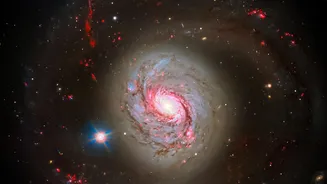
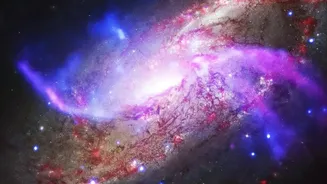
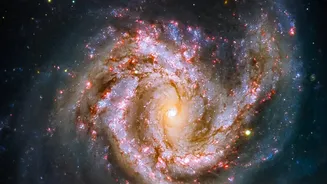
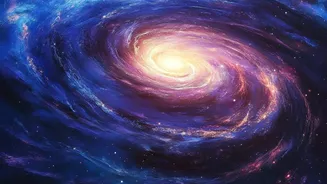
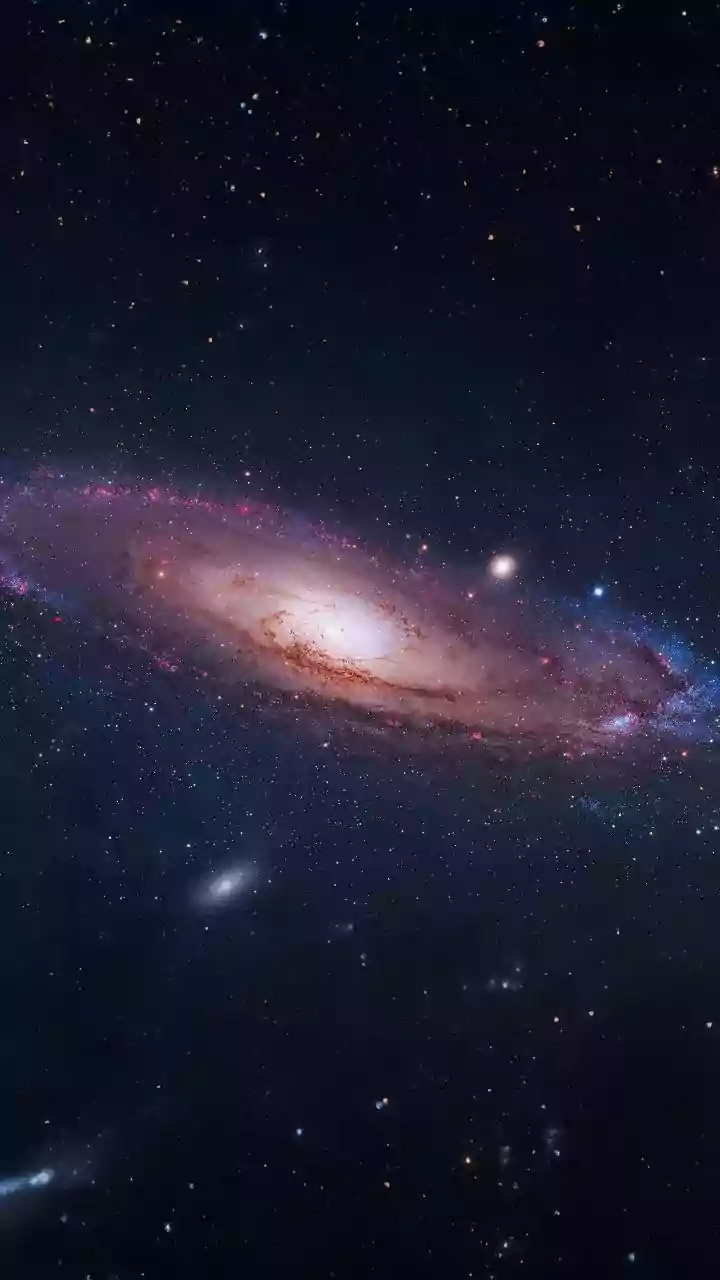
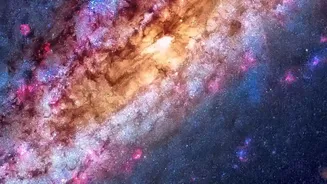
When you picture a galaxy, you probably imagine something like our own Milky Way: a vast, pinwheeling collection of stars with graceful spiral arms. These are known as spiral or disk galaxies. But they are just one type in a vast cosmic zoo. Astronomers
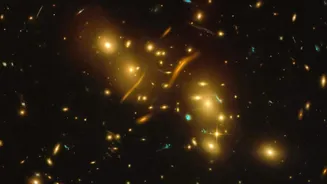
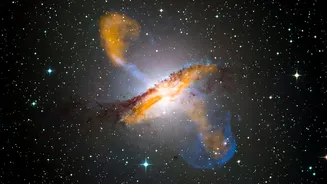
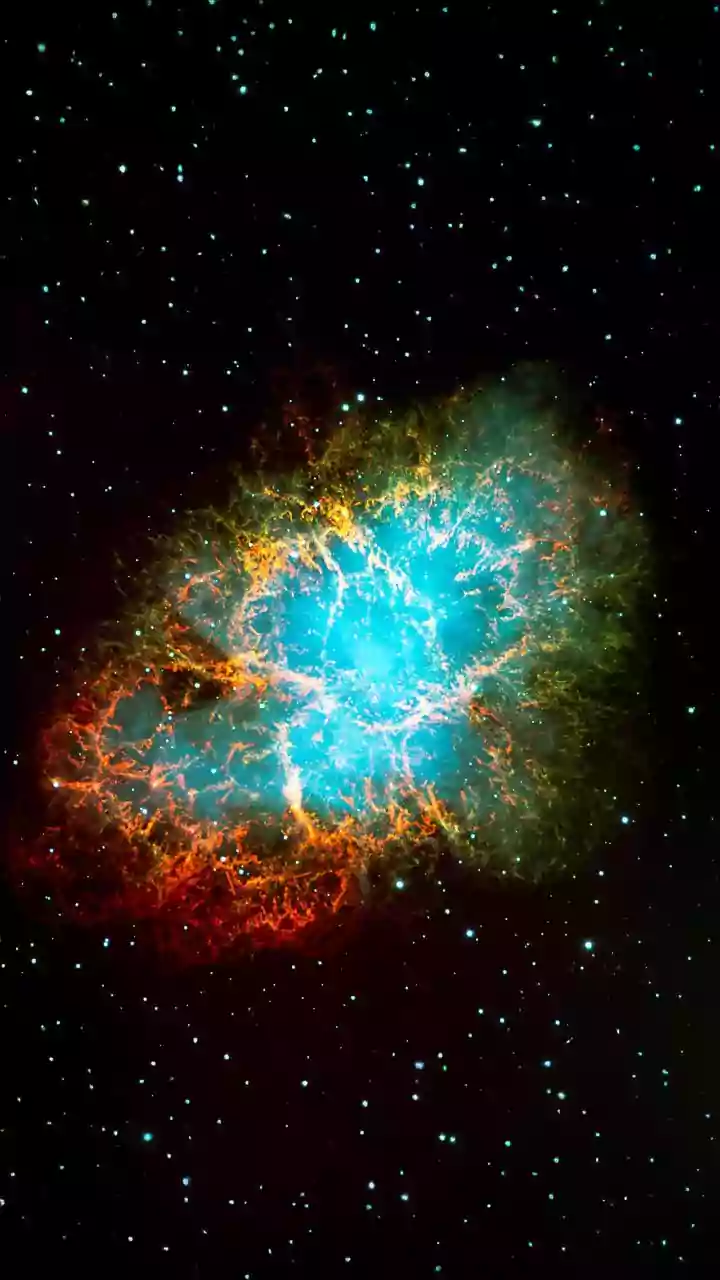
also observe giant, reddish, featureless blobs called elliptical galaxies, which are more oval or spherical and contain older stars. And then there are irregular galaxies, which, as their name suggests, have no defined shape at all, often looking like cosmic trainwrecks. For over a century, scientists have used these classifications to map the universe, but the fundamental question has always been: why the difference? Is it nature or nurture? Are galaxies born this way, or do they evolve into these shapes over time?
The Invisible Scaffolding
The answer, it turns out, lies with something we cannot see: dark matter. According to the standard model of cosmology, all galaxies form inside massive, invisible clouds of dark matter called halos. These halos are like the gravitational scaffolding of the universe, providing the framework upon which visible matter—gas, dust, and stars—can coalesce and build a galaxy. For a long time, the primary factor that scientists thought determined a galaxy's properties was simply the total mass of its dark matter halo. A more massive halo would naturally lead to a more massive galaxy. But this couldn't explain the sheer diversity of shapes we see for galaxies of the same mass.
It’s All in the Spin
New observations, particularly from the James Webb Space Telescope (JWST), combined with powerful computer simulations, are pointing to a different crucial factor: the spin of the dark matter halo itself. Think of it like spinning a blob of pizza dough. A recent wave of research suggests that if the initial dark matter halo is spinning rapidly, the gas that falls into its gravitational grip gets flattened into a rotating disk, just like the dough. This creates the perfect conditions for a spiral galaxy to form, with new stars igniting within its arms. Conversely, if the dark matter halo has very little or no initial spin, the gas and dust fall in from all directions, clumping together into a more spherical or blob-like shape—an elliptical galaxy.
Cosmic Collisions and Evolution
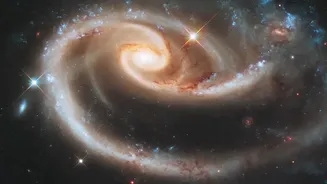
This initial spin isn't the only factor, of course. The universe is a dynamic place, and galactic nurture plays a role, too. Cosmic collisions and mergers can have a dramatic effect on a galaxy's appearance. When two spiral galaxies of roughly equal size collide, the gravitational chaos can disrupt their elegant disks, scattering stars in random orbits and often resulting in the formation of a large, puffy elliptical galaxy. On the other hand, a large spiral galaxy can 'swallow' smaller dwarf galaxies without losing its signature shape. New images from telescopes like the JWST have given us unprecedented views of these mergers in action, showing how galaxies are shaped by both their internal genetics and their external environment.
Rewriting Cosmic History
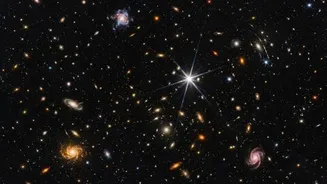
These new insights are allowing astronomers to piece together a more complete history of the universe. By studying incredibly distant galaxies, the JWST is looking back in time to the cosmos's earliest epochs. Some of these early galaxies are surprisingly mature, showing complex structures like bars and rings far earlier than models had predicted. This suggests that the fundamental processes governing a galaxy's shape—like the spin of its dark matter halo—were at play from the very beginning. Understanding this connection helps us not only classify the galaxies we see today but also reconstruct the evolutionary path that led from the Big Bang to the rich and diverse universe we inhabit.