


Turn Mealtime into a Brain Game
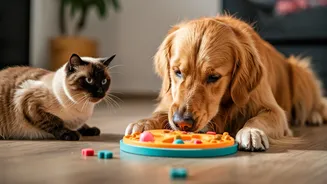
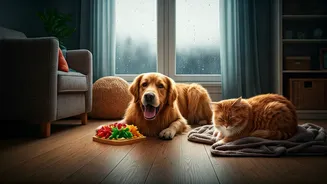
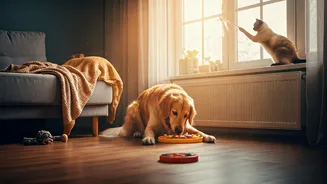
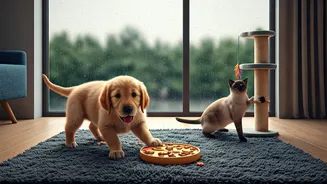
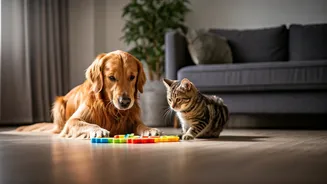
In the wild, animals spend a significant portion of their day foraging for food. Our pets, however, get their meals served in a bowl, a process that takes mere seconds. You can reintroduce this mental challenge by ditching the bowl and using puzzle feeders.
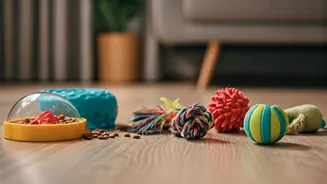
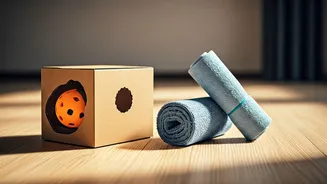
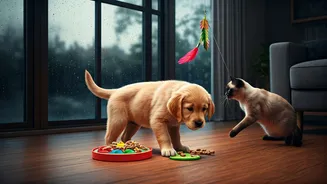
These toys require your pet to sniff, nudge, paw, and problem-solve to get their kibble. For dogs, snuffle mats that mimic grass or complex puzzle balls are great. For cats, food-dispensing mice or stationary puzzles work wonders. Don't want to spend? A simple DIY solution is to hide kibble inside a cardboard box with scrunched-up paper, or even place it in the cups of a muffin tin, forcing them to work for their dinner. This simple change turns a five-second meal into a 15-minute engaging activity.
Create a DIY Agility Course
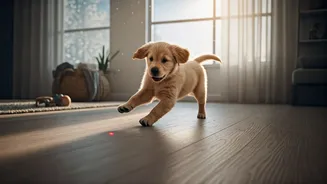
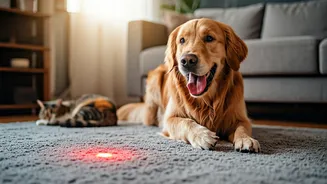
You don’t need a sprawling lawn to give your dog a physical workout. Your living room can become a fun-filled agility course with a little creativity. Use pillows and cushions to create low hurdles to jump over, arrange dining chairs to build a tunnel to crawl under (drape a blanket over them), and use a broomstick balanced on two stacks of books as a jump. Guide your pet through the course with treats and praise. Not only does this burn off excess energy, but it also builds their confidence and strengthens their obedience skills. For cats, you can encourage similar exploration by creating vertical pathways with sturdy boxes or clearing a path for them to chase a laser pointer or wand toy up and over furniture.
Play Scent-Based 'Nose Work' Games
A dog’s greatest sense is its nose, and putting it to work is one of the most mentally tiring—and rewarding—activities you can do. Scent games are easy to set up and incredibly effective at beating boredom. Start simple: have your dog sit and stay while they watch you hide a high-value treat under a pillow or behind a chair leg. Then, release them with a command like “Find it!” As they get better, you can make the hiding spots more complex. Another classic is the “shell game”: place a treat under one of three identical cups, shuffle them around, and let your dog sniff out the right one. Just 15 minutes of focused nose work can be more exhausting than a half-hour walk.
Teach an Old (or Young) Pet New Tricks
Training sessions are not just about obedience; they are powerful brain exercises that combat cognitive decline and strengthen the bond between you and your pet. Even if your dog has mastered “sit” and “stay,” there’s always something new to learn. Try teaching them fun tricks like “shake,” “roll over,” “play dead,” or “high five.” Keep sessions short (5-10 minutes) and always end on a positive note. This isn't just for dogs. Cats are highly intelligent and can be trained to do tricks like coming when called, sitting, or even fetching a small toy. Using positive reinforcement with their favourite treats makes it a fun game for them, not a chore.
Rotate Toys and Encourage Interactive Play
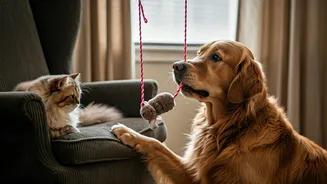
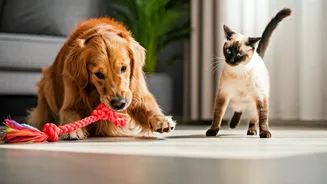
If a pet has access to all their toys all the time, they quickly lose their novelty and appeal. The solution is simple: toy rotation. Keep most of their toys hidden away and only bring out two or three at a time, swapping them every few days. When a toy reappears after a week-long absence, it will feel brand new and exciting all over again. More importantly, focus on interactive toys. A simple wand toy for a cat or a flirt pole (a long stick with a toy on a string) for a dog requires your participation, making playtime a shared activity. This active engagement is far more stimulating than a squeaky toy they play with alone.
Set Up a 'Cat TV' Window Perch
For indoor cats, the world outside the window is a constant source of entertainment. You can vastly improve this experience by creating a dedicated viewing station. Install a sturdy window perch or simply clear a wide windowsill and place a soft blanket on it. This gives them a comfortable front-row seat to watch birds, people, and passing vehicles. To make their “Cat TV” even more interesting, consider setting up a bird feeder or bird bath outside the window. The fluttering activity provides endless visual stimulation, satisfying their natural predatory instincts from the safety of inside. It's a low-effort, high-reward way to enrich their environment.