

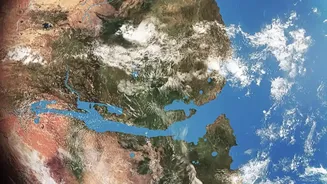
First, What Are Super-Earths?
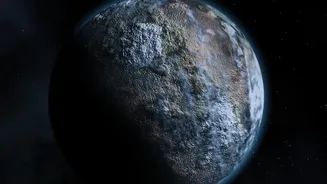
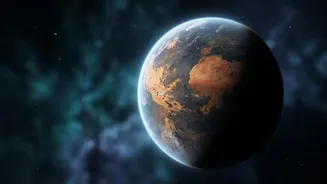
Before we dive into the latest cosmic revelations, let’s clarify our terms. Super-Earths are a class of exoplanets, or planets outside our solar system, that are more massive than Earth but lighter than ice giants like Neptune. They can be anywhere from
two to ten times the mass of our own planet. Interestingly, while Super-Earths are one of the most common types of planets discovered in our galaxy so far, our own solar system doesn't have one, making them a fascinating puzzle for astronomers. The name refers only to their size and mass, not that they are Earth-like in terms of surface or habitability. They could be rocky worlds, gas-shrouded planets, or even 'water worlds' with deep global oceans.
The Infrared Eye on the Universe
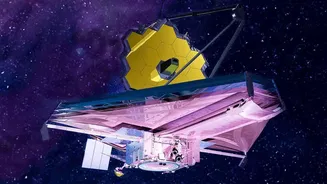
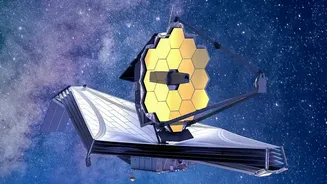
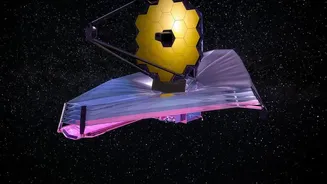
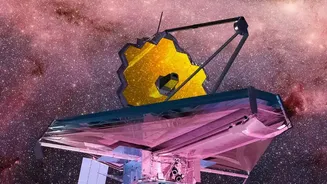
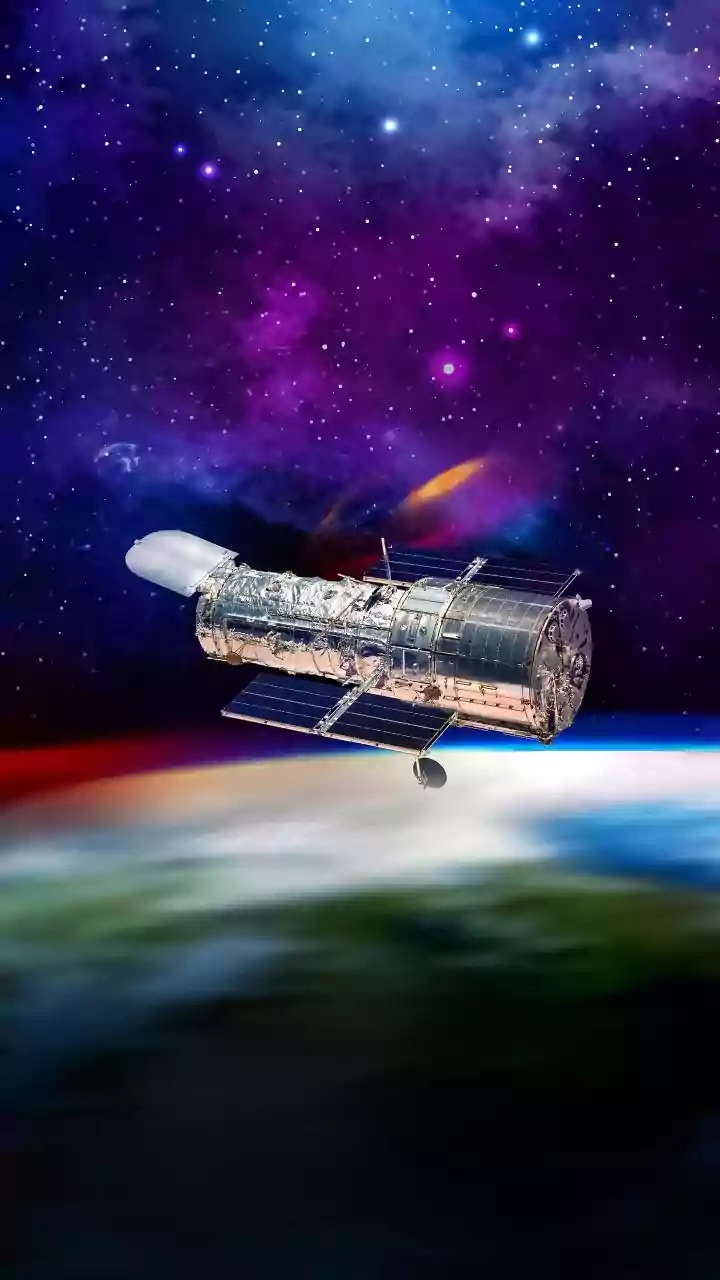
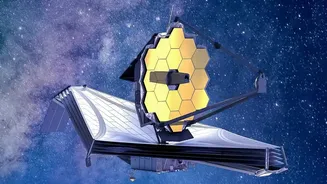
This is where the James Webb Space Telescope comes in. Unlike the Hubble telescope, which primarily sees visible light, JWST is designed to see the universe in infrared. This is crucial for studying distant exoplanets. When a planet passes in front of its host star—an event called a transit—the starlight filters through the planet’s atmosphere. Different molecules in the atmosphere absorb specific wavelengths of light. By using its powerful spectrographs to analyse this filtered starlight, JWST can detect the chemical fingerprints of molecules like water vapour, methane, and carbon dioxide. This technique, called transmission spectroscopy, allows us to peer into the air of worlds hundreds of light-years away.
A Landmark Discovery of Water
Recent JWST observations have provided groundbreaking evidence of water vapour on several Super-Earths and similar planets. One of the most-studied targets is K2-18 b, a planet 8.6 times the mass of Earth, located 120 light-years away in the constellation Leo. Initial observations with Hubble hinted at water, but JWST’s more powerful instruments have confirmed the presence of carbon-bearing molecules like methane and carbon dioxide in its atmosphere. The abundance of these molecules, along with a shortage of ammonia, strongly supports the theory that K2-18 b could be a 'Hycean' world—a planet with a hydrogen-rich atmosphere covering a global water ocean.
More Than Just Water Vapour
The discoveries are not limited to K2-18 b. For a planet called GJ 1214 b, which had long baffled astronomers due to a thick haze, JWST's mid-infrared instrument (MIRI) finally pierced the veil. The findings suggest a steamy atmosphere, rich in heavier molecules like water or methane. On Earth, these kinds of complex chemistries are linked to life. For K2-18 b, the telescope even found a possible trace of dimethyl sulfide (DMS), a molecule that, on our planet, is overwhelmingly produced by marine life like phytoplankton. This particular finding is still tentative and requires further confirmation, but it underscores the incredible potential of these new observations.
Is It Habitable? Not So Fast
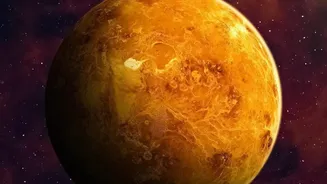
It is crucial to interpret these findings with caution. Detecting water vapour and other molecules is a monumental scientific achievement, but it does not automatically mean a planet is habitable. For instance, the super-Earth 55 Cancri e, where JWST also found signs of a water-rich atmosphere, is a searingly hot lava world. On GJ 1214 b, the average temperature is around 230 degrees Celsius, far too hot for liquid water as we know it. The presence of an atmosphere and water vapour on these worlds is exciting because it shows that rocky planets can hold onto significant atmospheres. However, 'habitable' requires a much stricter set of conditions, including the right temperature for liquid water to exist on the surface. We are not there yet.