



A New Culinary Confidence
For years, modern Indian food was often about spectacle—think theatrical foams and deconstructed classics. Now, a new wave of chefs is embracing a quieter, more profound form of innovation. They are moving away from simply translating dishes for a global
palate and instead are confidently presenting regional Indian flavours on their own terms. This shift is driven by a deeper respect for local ingredients and traditional cooking wisdom. The focus is less on fusion and more on thoughtful reinterpretation, asking how the principles of a classic dish can be honoured while using a completely different, plant-based toolkit. This evolving confidence is allowing chefs to challenge themselves and progress the cuisine, finding a delicate balance between tradition and innovation.
Deconstructing Classics, Rebuilding with Plants
How do you capture the soul of a creamy French bisque or a hearty meat-based broth without dairy or meat? The process begins with deconstruction. Chefs first identify the essential qualities of a classic global soup—its texture, depth of flavour, and aromatic profile. Then, they turn to the extensive Indian pantry for plant-based solutions. For instance, the traditional Anglo-Indian Mulligatawny soup, which translates to “pepper water” and was often made with chicken broth, is now being reimagined in vegan form. Chefs achieve its signature creamy, hearty texture using ingredients like red lentils, rice, and coconut milk, proving that meat is not essential for a satisfying result.
The Indian Pantry: A Vegan Powerhouse
The secret to these successful transformations lies in the versatility of Indian ingredients. To replace the creaminess of dairy, chefs turn to blended lentils (dal), cashew or coconut milk. Red lentils (masoor dal) and yellow lentils (mung dal) are particularly effective; when cooked, they break down to create a thick, porridge-like consistency that provides body and richness to soups like Dal Shorba. For savoury depth, or umami, ingredients like tamarind paste, sun-dried tomatoes, and even specific Indian heirloom grains are used. Spices, of course, play a crucial role. Aromatic tempering of whole spices like cumin and mustard seeds in hot oil—a technique known as tadka—builds a foundational layer of flavour that rivals any meat-based stock.
Case Study: From Pepper Water to Plant-Based Delight
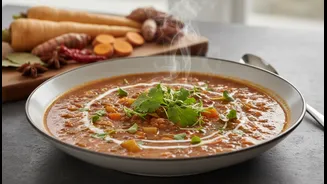
The evolution of Mulligatawny soup is a perfect example of this trend. While traditionally made with lamb or chicken broth, contemporary vegan versions are rich, flavourful, and completely plant-based. Recipes often feature a base of red lentils and sometimes rice, combined with vegetables like carrots and celery. The creamy element comes from full-fat coconut milk, while a complex spice blend including curry powder, garam masala, turmeric, and coriander provides warmth and depth. Some chefs even add apples for a touch of sweetness to balance the heat, creating a complex and satisfying soup that stands proudly on its own.
Beyond Substitution: The Rise of the Neo-Shorba
This movement isn't just about finding one-to-one replacements. It's about creating entirely new dishes inspired by global concepts. The Shorba, a type of soup found across the Middle East and Central Asia, has been enthusiastically adopted and adapted in India. While traditionally a light broth, chefs are now creating hearty, plant-forward versions. Some use a base of lentils and vegetables, brightened with lemon juice and fresh herbs like cilantro. Another South Indian staple, Rasam, a typically thin and tangy soup, is being adapted into a more substantial meal. By adding pumpkin and split peas, chefs are giving it a heartier feel suitable for colder climates, transforming it from a side dish into a main course. These neo-shorbas and reimagined rasams showcase innovation that respects tradition while creating something entirely new.