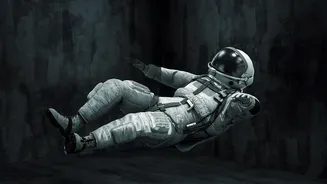




Ever wondered how astronauts prepare for the disorienting feeling of floating in space? They do it by falling. Specifically, they fly in a modified airplane that follows the path of a roller coaster, creating brief, crucial moments of weightlessness.
Meet the 'Vomit Comet'
The aircraft used for this training have earned a colorful and descriptive nickname: the 'Vomit Comet'. The name points to a very real side effect of the experience. The rapid shifts between intense gravitational forces and complete weightlessness can be extremely disorienting, and motion sickness is common, especially for first-timers. NASA began using these flights in the late 1950s during Project Mercury to prepare the first American astronauts for spaceflight. The interior of these planes, typically modified jets like a Boeing 727, is stripped of most seats and lined with padded surfaces to create an open, safe environment for passengers to float freely. While the nickname has stuck, the experience is a highly controlled and essential part of space readiness.
The Physics of Falling with Style
Creating weightlessness inside an airplane has nothing to do with escaping Earth's gravity and everything to do with physics. It’s essentially a highly controlled free fall. Imagine throwing a ball into the air. From the moment it leaves your hand until it starts coming down, it follows a curved path—a parabola. Along that arc, the ball is in free fall, with only gravity acting upon it. A parabolic flight does the exact same thing, but with an entire airplane. The process happens in three stages. First is the 'pull-up,' where pilots pull the aircraft into a steep climb at a roughly 45-degree angle. During this phase, passengers feel pressed to the floor, experiencing about 1.8 times the force of normal gravity (1.8 Gs).
The Zero-G Moment
At the peak of the climb, typically above 30,000 feet, the pilots drastically reduce engine thrust, effectively letting the plane 'coast' over the top of the curve. The aircraft, its occupants, and any loose objects inside are all falling together at the same rate. Because nothing is pushing up against you—the floor is falling away at the same speed you are—you experience the sensation of weightlessness. This period of microgravity lasts for about 20 to 30 seconds. Then comes the 'pull-out,' where pilots bring the engines back to life, gently pulling out of the dive and subjecting everyone to another 1.8 Gs before leveling off. A typical flight repeats this cycle 15 to 30 times, offering several minutes of total weightless time.
Not Just for Floating
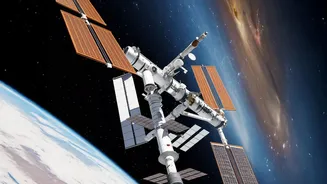
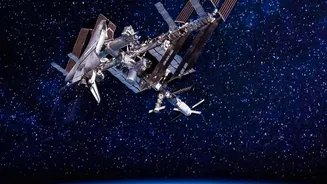
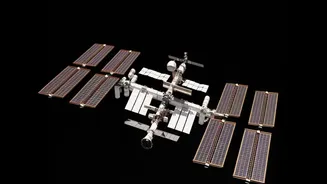
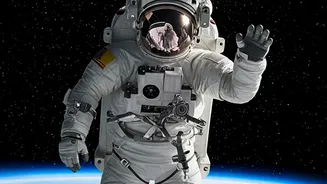
For astronauts, these flights are far more than a simple joyride. This is where they get their 'space legs' without leaving the atmosphere. The training is intensely practical. Astronauts learn fundamental skills like how to move and orient themselves without gravity, where a simple push off a wall can send you spinning. They practice using tools, performing repairs, and testing equipment to ensure it functions correctly in microgravity before it's sent to the International Space Station. The flights can also be adjusted to simulate the partial gravity of the Moon (one-sixth of Earth's) or Mars (about one third), making them invaluable for preparing for future exploration missions to other celestial bodies.