





Understanding the Kanwar Yatra
Every year during the Hindu month of Shravan (or Sawan), millions of devotees of Lord Shiva, known as Kanwariyas, undertake a pilgrimage to fetch holy water from the Ganga river, primarily from Haridwar. They carry this water back, often on foot, to offer
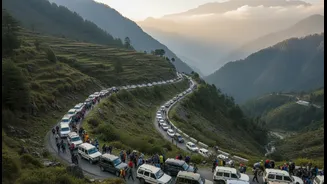
at local Shiva temples. This mass movement of people, India's largest annual religious gathering, necessitates extensive traffic management to ensure the safety of the pilgrims. For 2026, the main yatra period is from July 30 to August 11, with authorities expecting over four crore pilgrims in Haridwar alone.
Key Dates for Travellers in 2026
If you are planning a trip to popular destinations like Rishikesh, Dehradun, or Mussoorie, these dates are critical. The Kanwar Yatra officially begins on July 30, 2026. The most intense period for traffic restrictions will be the two weeks leading up to Sawan Shivratri, which falls on August 11, 2026. Officials typically start diverting heavy vehicle traffic about a week or two before the yatra begins and impose stricter controls on all vehicles, including private cars, during the peak days around August 7 to August 12. Leisure travellers are advised to either complete their trip before July 30 or plan it for after August 13 to avoid the peak rush.
The Most Affected Highway Corridors
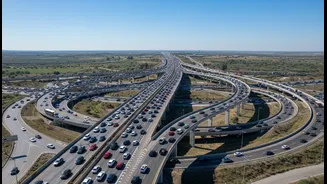
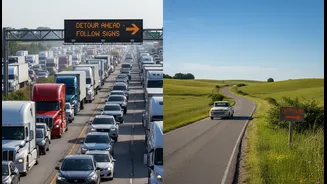
The primary artery affected is National Highway 334 (formerly NH-58), the main route connecting Delhi to Haridwar via Meerut and Muzaffarnagar. During the peak yatra days, one or both carriageways of this highway are often closed to regular traffic to facilitate the movement of Kanwariyas. The Delhi-Meerut Expressway also faces significant restrictions, with lanes reserved for pilgrims and complete closure for heavy vehicles. Even the new Delhi-Dehradun Expressway, which bypasses Haridwar, is expected to face closures for regular traffic during the most crowded days, based on patterns from previous years.
Alternate Routes to Uttarakhand
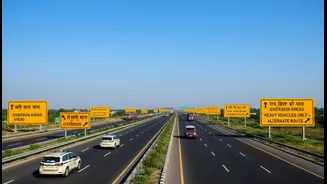
For those determined to travel during this period, authorities suggest several alternative routes to bypass the congested Haridwar-Rishikesh corridor. To reach Dehradun and Mussoorie, travellers from Delhi can consider the route via Panipat, Yamunanagar, and Saharanpur. Another option is to travel from Delhi towards Hapur and then take the route via Bijnor and Najibabad to reach Kotdwar, which provides access to the Garhwal region. These routes are longer but can help avoid the gridlock on the main Kanwar Yatra path. Always check for the latest police advisories before starting your journey, as diversions can change based on real-time crowd management.
Travel by Train or Air
To completely sidestep the road closures and congestion, travelling by train or air is the most reliable option. Dehradun's Jolly Grant Airport (DED) remains operational and is well-connected to major Indian cities. From the airport, you can hire taxis to reach Rishikesh, Dehradun, and Mussoorie. Similarly, train services to Dehradun and Haridwar continue, though expect stations to be exceptionally crowded. Booking tickets well in advance is highly recommended. Using public transport can save you from the stress of navigating unpredictable road diversions and traffic jams.
Tips for a Smoother Journey
If driving is your only option, be prepared. Start your journey after checking the live traffic situation and official police announcements on social media. It is advisable to travel during off-peak hours, such as late at night or very early in the morning. Pack extra food, water, and essential supplies, as journeys can take much longer than usual. The main challenge during the yatra is congestion, not safety, as the entire region is heavily policed. For a more peaceful trip, consider destinations in the Kumaon region like Nainital or Almora, which are not directly on the Kanwar Yatra route and see fewer disruptions.