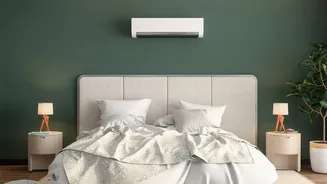








Why Humidity Wrecks Your Sleep
Our bodies are designed to cool down for sleep. This happens primarily through the evaporation of sweat from our skin. However, when the air is already saturated with moisture—as it is during the monsoon—sweat can't evaporate efficiently. This traps heat,
preventing your core body temperature from dropping, a key biological signal for initiating and maintaining deep sleep. Studies show that high humidity can increase wakefulness and reduce the time spent in the most restorative stages of sleep: deep non-rapid eye movement (NREM) and rapid eye movement (REM) sleep. This interference means you miss out on crucial processes like tissue repair, immune system support, and memory consolidation, leaving you feeling groggy and unrested.
The Ideal Sleep Sanctuary
So, what's the magic number for perfect sleep? Most experts agree that the ideal relative humidity for a bedroom is between 40% and 50%. Anything above 60% not only makes it difficult for your body to cool itself but also creates a breeding ground for allergens like mould, mildew, and dust mites. These can trigger allergies and respiratory issues, further disrupting your rest. By aiming for this 'sweet spot,' you create an environment that supports your body’s natural sleep processes and promotes better respiratory health. A simple device called a hygrometer can measure your room's humidity levels, giving you a clear idea of your starting point.
Mastering Your Airflow
One of the most effective, low-cost strategies for combating humidity is improving ventilation. Stagnant air traps moisture, so getting it moving is essential. During drier parts of the day or when it's not actively raining, open windows on opposite sides of your home to create a cross-breeze. Make it a habit to use exhaust fans in bathrooms and kitchens, running them during and after showers or cooking to expel moist air directly outside. Ceiling fans are also excellent tools; they circulate air, which helps moisture evaporate from surfaces and your skin, making the room feel cooler and less stuffy.
Consider a Dehumidifier or AC
For those living in particularly humid regions, mechanical solutions can be a game-changer. A dehumidifier is an appliance designed specifically to pull excess moisture from the air, collecting it as water in a tank. This is highly effective for maintaining that ideal 40-50% humidity level, especially in bedrooms with poor ventilation. Alternatively, most air conditioners have a 'dry' or dehumidifying mode that serves a similar purpose, cooling the air while removing moisture. While an investment, these appliances offer a powerful defence against the pervasive dampness of the monsoon season.
Smart Fabric and Household Choices
What you sleep on and around you matters. Switch to bedding made from natural, breathable fabrics like cotton or linen. These materials allow for better airflow and wick moisture away from your skin, unlike synthetic fabrics like polyester, which tend to trap heat and sweat. You can also try simple, cost-effective household hacks to absorb ambient moisture. Placing bowls of rock salt or charcoal briquettes in the corners of your room can help, as they are natural desiccants. Baking soda is another effective option for smaller, enclosed spaces like wardrobes to prevent that musty monsoon smell and dampness.