

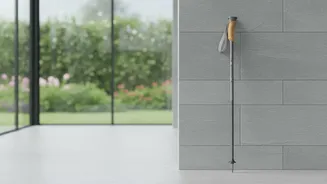
More Than Just Walking With Sticks
At first glance, Nordic walking might look like hiking with poles on a flat surface. But it’s a distinct fitness discipline that originated in Finland as off-season training for cross-country skiers. The core principle isn't about using the poles for support,
but as levers for propulsion. By pushing off the ground with specially designed poles, you actively engage the muscles in your arms, shoulders, chest, and core. This transforms a simple walk into a comprehensive, low-impact workout that engages up to 90% of the body's muscles, significantly more than regular walking.
The 'By-the-Book' Technique
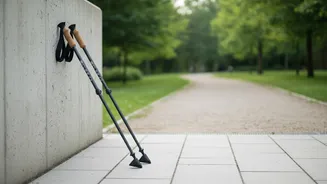
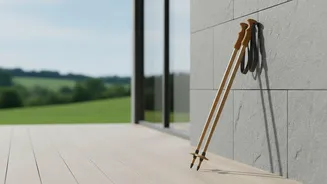
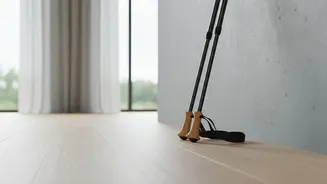
A certified instructor will teach a specific, rhythmic technique. It involves maintaining an upright posture, swinging your arms from the shoulder, and using a contralateral motion — right arm and left leg forward, and vice-versa. A key element is planting the pole behind you at an angle and pushing off, followed by a release of the handgrip to allow for a full arm swing. Done correctly, this method offers a host of documented benefits: increased calorie burn (up to 46% more than regular walking), improved cardiovascular health, better posture, and reduced strain on knee and hip joints. The equipment itself is also crucial; poles must be the correct height, and cheap aluminium ones can transfer vibrations to your joints.
The Shift to Everyday Fitness
The very effectiveness of Nordic walking is driving its mainstream popularity. As more people in India look for accessible, outdoor, and joint-friendly exercises, the sight of walkers with poles is becoming more common. This growth has led to an inevitable 'everyday fitness' shift. Many new enthusiasts are self-taught, picking up the basics from online videos or simply improvising. They may not have the perfect pole-plant angle or the classic grip-and-release motion. Their primary goal isn't technical mastery but simply to be more active and get more out of their daily walk. This casual adoption is changing the perception of the sport from a specialist activity to a simple, enhanced form of walking.
Good Enough vs. Technically Perfect
So, does this dilution of technique matter? For the purists, yes. Improper form, like planting the poles too far in front of the body or using bent elbows, can negate many of the benefits and, in some cases, lead to strain. Planting the pole in front of you, like a hiking stick, acts as a brake and can strain joints. However, for the average person, even a casual approach to Nordic walking is a significant upgrade from being sedentary or just regular walking. Simply using poles, even imperfectly, encourages a more upright posture and engages the upper body to some degree, burning more calories than a simple stroll. The key is that the movement shouldn't cause pain. Bad habits like hunching over or using poles that are too short can lead to back pain or reduced effectiveness.
Finding a Healthy Middle Ground
You don't need to be a perfectly trained athlete to benefit from Nordic walking. The consensus among many experts is that perfection shouldn't be the enemy of good. Rather than obsessing over every detail, beginners can focus on a few non-negotiable fundamentals. First, get the right gear, especially poles of the correct height (roughly your height in cm x 0.68) to encourage good posture. Second, focus on the basic rhythm: opposite arm, opposite leg. Third, remember the poles go behind you to push you forward, not in front to support you. Mastering these basics ensures you get most of the core benefits while avoiding the risk of strain or injury.