


The Ultimate Supply Chain Problem
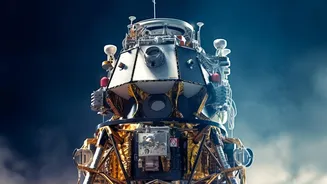
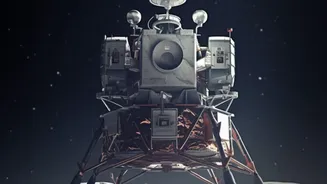
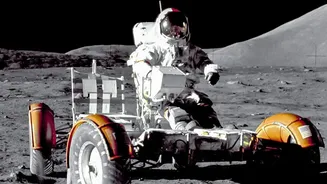
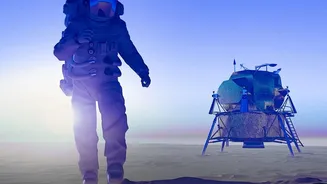
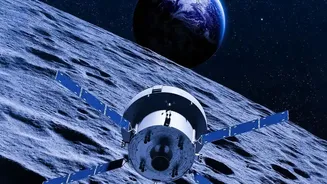
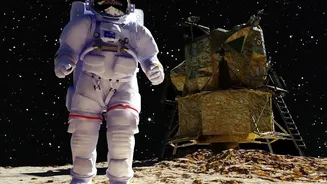
For humanity to establish a permanent foothold on the Moon, as planned under NASA's Artemis program, astronauts will need a constant supply of essentials. Water, food, and shelter are obvious, but the most immediate need is breathable air. Shipping oxygen
from Earth is an incredibly expensive proposition. Every kilogram launched into space costs thousands of dollars, and a lunar base would require metric tons of oxygen not just for life support, but also as a critical component of rocket propellant for return trips or further exploration. This reliance on Earth for a resource as basic as air makes any long-term lunar presence economically and logistically unsustainable. The success of a future lunar economy hinges on breaking this costly supply chain and learning to use the resources already there, a concept known as In-Situ Resource Utilization (ISRU).
An Ocean of Air Locked in Dust
While the Moon has virtually no atmosphere to speak of, its surface is surprisingly rich in the one element astronauts need most: oxygen. The powdery topsoil, a mix of dust and crushed rock known as regolith, is composed of roughly 45% oxygen by weight. However, this oxygen is chemically locked away inside minerals, primarily as metal oxides like silicon dioxide, aluminum oxide, and iron oxide. It is not free for the breathing. The challenge for scientists has been to develop a reliable and efficient way to break these strong chemical bonds and liberate the oxygen. The sheer abundance of this resource is staggering; the lunar regolith holds enough oxygen to sustain thousands of people for centuries, making it one of the most valuable resources on the Moon.
From Rock to Respiration
The leading technology to crack open moon rocks for their oxygen is a process called molten oxide electrolysis. In simple terms, the process involves heating the lunar regolith to extreme temperatures—around 1,600 degrees Celsius—until it melts into a molten slag. Once it's liquid, an electric current is passed through it. This electrochemical reaction splits the metal oxides. Oxygen ions are drawn to a positive electrode (the anode), where they form breathable oxygen gas that can be collected and stored. Meanwhile, the molten metals—primarily iron, aluminum, and silicon—collect at a negative electrode (the cathode). Several organizations, including NASA teams and private companies like Blue Origin and Helios, are developing and testing reactors designed to perform this task, proving the concept in vacuum chambers with simulated moon dust on Earth.
More Than Just Breathable Air
The genius of molten oxide electrolysis is that oxygen is not its only useful product. The process also yields a steady supply of metals. The separated iron, silicon, and aluminum can be extracted and used as raw materials for manufacturing and construction directly on the Moon. This silicon, which can be purified to a very high degree, could be used to produce solar panels to power the base. The other metals could become feedstock for 3D printers to create tools, spare parts, and building materials, such as bricks for landing pads or habitats. This creates a powerful, self-sustaining industrial cycle: using lunar soil to produce the air to breathe, the propellant to fly, the metals to build, and the solar cells to power it all. This drastically reduces the mass that needs to be launched from Earth, paving the way for a true lunar economy.
The Road Ahead to a Lunar Base
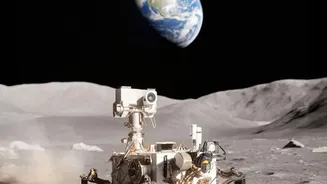
Despite successful laboratory demonstrations, significant hurdles remain before the first full-scale oxygen plant is operational on the Moon. These reactors require immense amounts of energy to reach and maintain their high operating temperatures, which will likely necessitate the deployment of a dedicated lunar power source, such as a compact nuclear reactor. Furthermore, the lunar regolith itself is abrasive and difficult to handle, posing engineering challenges for the machinery designed to scoop, transport, and feed it into a reactor. NASA and its commercial partners are planning a series of robotic landings through the end of the decade to test these technologies in the harsh lunar environment. These precursor missions are essential to refine the hardware and processes, ensuring they are robust enough to support the first permanent human outpost on another world, which could be established in the 2030s.