






Sarson (Mustard Greens)
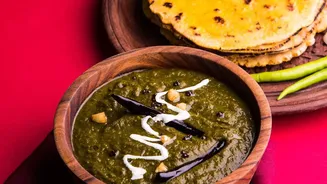
No Indian winter is complete without the mention of Sarson ka Saag. These pungent, vibrant green leaves are a powerhouse of nutrients, including vitamins K, C, and A, which support bone health and immunity. While their flavour is distinctly sharp, it mellows
beautifully when cooked. Traditionally, sarson is slow-cooked with other greens like spinach (palak) and bathua to balance its peppery bite. A final tempering (tadka) of ghee, garlic, and ginger makes it a rich, comforting dish, famously paired with makki ki roti (maize flour flatbread).
Gajar (Carrots)
Winter brings the arrival of deep red 'Delhi carrots', which are sweeter and juicier than their year-round orange counterparts. These carrots are packed with beta-carotene, which the body converts to Vitamin A, crucial for vision and immune function. Their natural sweetness makes them the star of the quintessential winter dessert, Gajar ka Halwa, a slow-cooked pudding with milk, ghee, and nuts. Beyond dessert, they can be enjoyed raw in salads, added to vegetable stir-fries, or fermented into a tangy drink called Kanji.
Bajra (Pearl Millet)
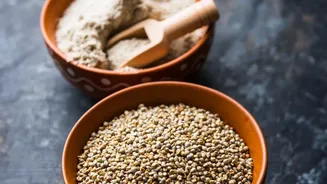
In many parts of Western India, winter signals a switch from wheat to heartier grains like bajra. This gluten-free millet is prized for its warming properties, making it ideal for cold weather. Rich in fibre, iron, and magnesium, bajra provides sustained energy and aids digestion. It's most commonly consumed as 'bhakri' or 'rotla', a dense, rustic flatbread that pairs wonderfully with ghee, jaggery, or a spicy garlic chutney. You can also make a nourishing khichdi with bajra and lentils.
Mooli (White Radish)
The crisp, pungent white radish is a winter staple valued for its digestive benefits. It's a versatile vegetable where both the root and its leaves are edible and nutritious. Mooli is rich in Vitamin C and antioxidants that help bolster the immune system. It can be eaten raw as a salad, pickled, or stuffed into parathas for a hearty breakfast. The leaves, or 'mooli ke patte', can be cooked into a delicious 'bhujia' or added to dal for extra flavour and nutrients.
Shakarkandi (Sweet Potato)
Sweet potatoes are a common sight at street food stalls during Indian winters. This nutrient-dense root vegetable is an excellent source of dietary fibre, antioxidants, and vitamins A and C. Unlike regular potatoes, they have a lower glycemic index and offer a natural sweetness. A popular way to enjoy shakarkandi is roasted or boiled, then chopped into a 'chaat' with lemon juice, chaat masala, and tangy chutneys. It can also be mashed or used to make a healthier version of halwa.
Amla (Indian Gooseberry)
Amla makes its appearance in winter and is celebrated as an immunity-boosting superfood. It contains one of the highest concentrations of Vitamin C found in a natural source, which helps ward off seasonal colds and flu. Its taste is intensely sour and astringent, so it's often consumed as a 'murabba' (sweet preserve), pickled, or juiced. A small amount of fresh amla or its juice in the morning is a traditional way to boost vitality during the colder months.
Bathua (Lamb's Quarters)
Often found growing as a wild green in wheat fields, bathua is a highly nutritious leafy vegetable available only in winter. It is packed with iron, calcium, and vitamins A and C. Bathua has an earthy flavour and is a key ingredient in Sarson ka Saag, where it helps mellow the mustard greens. On its own, it can be used to make a simple saag, mixed into dal, or kneaded into dough to make flavourful parathas or puris.