



NASA is studying lunar dust, a major hazard for Artemis missions. Discover why this fine, abrasive material is a problem and how new science will help.
The Gritty Reality of Moon Dust
When you picture the challenges of space travel, you might think of rocket science or the vast emptiness
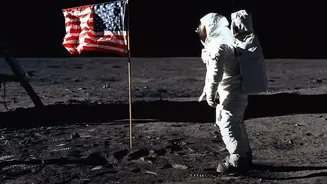
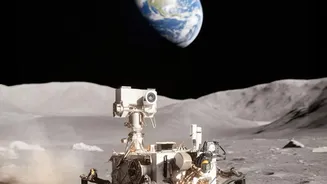
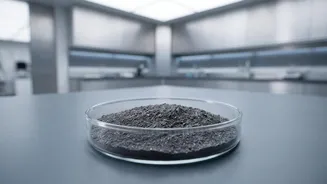
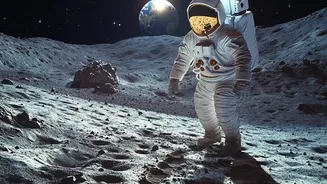
of space. But for astronauts on the Moon, one of the biggest threats was something much smaller: dust. During the Apollo missions, astronauts discovered that lunar dust, or regolith, was a persistent and destructive problem. Unlike Earth dust, which is rounded by wind and water, lunar dust is born from billions of years of micrometeorite impacts. These impacts have pulverized the rocky surface into tiny, glass-like shards that are incredibly sharp and abrasive. This dust got everywhere, wearing down the layers of spacesuits, scratching visors, and clogging mechanisms. Apollo 17 commander Gene Cernan noted how it inhabited every pore and crevice. The dust was so abrasive that it wore through three layers of a spacesuit boot on one mission, and astronauts reported respiratory irritation, dubbed "lunar hay fever," after inhaling particles that made their way into the lunar module.
Why It Sticks to Everything
The problem isn't just that the dust is sharp; it's also electrostatically charged. The Moon has no atmosphere to shield it from the constant bombardment of solar wind and radiation. This process charges the regolith particles, causing them to cling to any surface they touch, much like a balloon sticks to your hair after being rubbed. This electrostatic stickiness makes it nearly impossible to simply brush off. In fact, Apollo astronauts found that trying to brush the dust away often made the problem worse by further charging the particles. This fine, clinging powder can cover solar panels, reducing their efficiency, coat thermal radiators and cause overheating, and contaminate sensitive scientific instruments, leading to false readings or total failure. For NASA’s Artemis program, which aims to establish a long-term human presence on the Moon, simply enduring the dust isn't an option.
Studying the Science of Plumes and Landings
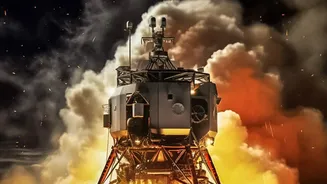
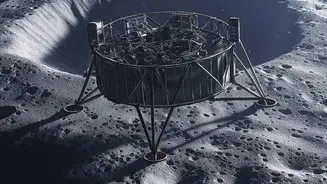
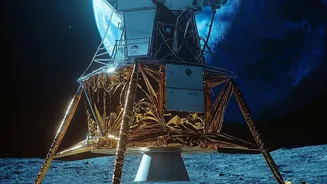
To prepare for the Artemis-era, NASA is conducting a range of studies to better understand and combat the lunar dust menace. One recent and critical area of study involves plume-surface interaction. When a lander fires its engines to touch down on the lunar surface, the exhaust plume blasts the regolith at high velocity. This creates a cloud of dust and rock that can travel for miles, potentially damaging the lander itself or any other equipment or habitats nearby. At NASA's Langley Research Center, engineers are conducting tests in a massive vacuum chamber to simulate this effect. By firing test engines at simulated lunar soil, they can gather data to improve predictive models, helping future missions land more safely and influencing the design of landers and landing pads. This research is fundamental to planning a sustainable lunar outpost where multiple missions can operate without endangering each other.
Developing Dust-Busting Technologies
Beyond understanding the physics of dust plumes, NASA is actively developing new technologies to mitigate the dust problem. One of the most promising is the Electrodynamic Dust Shield (EDS). This technology uses an electric field to actively repel and remove dust from surfaces. It can be embedded as a transparent layer on everything from solar panels and camera lenses to fabrics for spacesuits. Tests have shown it can remove more than 98% of dust in a vacuum. Other innovations being explored include the Electron Beam Dust Mitigation (EBDM) tool, which uses an electron beam to charge and repel dust from surfaces with up to 92% efficacy, and even specialized fabrics that resist dust adhesion. These technologies are being rigorously tested in simulated lunar environments at facilities like the Lunar Development and Test Facility at Johnson Space Center to ensure they are ready for future Artemis missions.
Paving the Way for a Lunar Future
The science of lunar dust isn't just about protecting a single mission; it's about making a sustained human presence on the Moon possible. Every piece of data gathered and every new technology developed is a crucial step toward building a permanent lunar outpost. The Artemis program plans to send astronauts to the Moon's South Pole, where they will live and work for extended periods. Managing lunar dust is officially recognized by NASA as one of the biggest challenges for long-term habitats. Lessons learned from these studies will inform the design of everything from habitats and rovers to the very roads and landing pads that will form the first lunar base. By tackling the dust problem head-on now, NASA is ensuring that when Artemis astronauts step onto the Moon, they are equipped not just to survive, but to thrive in the dusty lunar environment.