




The Heart of Konkani Cuisine
From Maharashtra through Goa and down to coastal Karnataka, the coconut is more than just an ingredient; it's a way of life. In vegetarian cooking, it provides a creamy, luscious base that carries a multitude of flavours—from fiery red chillies to tangy
kokum and earthy, roasted spices. The result is a diverse tapestry of curries, each with its own unique identity, yet all tied together by the generous use of fresh coconut. These dishes are a testament to making humble, everyday vegetables sing with flavour, turning a simple dinner into a coastal feast.
Goan Vegetable Caldin
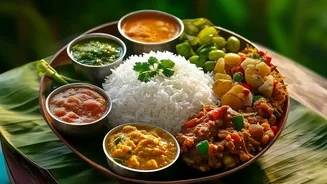
Often overshadowed by its spicier Goan cousins, the Vegetable Caldin is a beautiful, mild curry that deserves the spotlight. This delicate, light-yellow stew is the epitome of comfort food. Made with a soothing base of coconut milk, it is gently spiced with turmeric, ginger, green chillies, and whole spices like cloves and cinnamon. Unlike the sharp notes of vindaloo, Caldin is subtle and fragrant. It typically features a medley of vegetables like cauliflower, carrots, potatoes, and green beans. Its gentle flavour profile makes it a perfect, calming dish to enjoy with steamed rice, offering a taste of Goa's softer, more serene culinary side.
Konkani Gajbaje
A celebratory dish from the Goud Saraswat Brahmin (GSB) community, Gajbaje literally means a 'mixture of vegetables'. This curry is a riot of seasonal produce, often prepared for festivals like Ganesh Chaturthi and Krishna Janmashtami. It can feature a dozen or more vegetables, including yam, sweet potato, pumpkin, ivy gourd, and even tender jackfruit seeds. The masala is a robust blend of roasted red chillies and coriander seeds ground with fresh coconut and soured with a touch of tamarind. The result is a thick, textured curry where each spoonful offers a different combination of vegetables, all coated in a complex, tangy, and mildly spicy gravy. It’s a true taste of the Konkan's festive spirit.
Maharashtrian Valval
Similar to Gajbaje in its use of mixed vegetables, Valval is another Konkani classic that leans towards a milder, creamier profile. Primarily cooked in coconut milk, this stew is a staple in many households, especially during festive periods, because it is often made without onion or garlic. The beauty of Valval lies in its simplicity. A mix of vegetables like ash gourd, pumpkin, and cashews are gently simmered in coconut milk, seasoned with green chillies and a final tempering of cumin seeds in ghee. The flour slurry is sometimes added to give the curry a creamier texture. The resulting dish is sweet, savoury, and incredibly aromatic—a perfect pairing with hot rice and a spoonful of dal.
Solkadhi: The Essential Digestive
No Konkani meal is truly complete without Solkadhi. While technically a drink rather than a curry, this quintessential beverage is made from coconut milk and the souring agent kokum, also known as 'sol'. The dried, deep purple fruit imparts a lovely pinkish hue and a signature tangy flavour to the creamy coconut milk. Often seasoned with a hint of garlic, green chillies, and coriander, Solkadhi is cherished for its digestive properties, especially after a spicy or heavy meal. Served chilled, it acts as a coolant and a palate cleanser, providing a refreshing counterpoint to the rich flavours of the main course. It’s the perfect, soothing end to a coastal culinary journey.