








The Heart of the Proposal
Goa's Forest Department has put forward a significant proposal to officially designate 24 of the state's beaches as official turtle nesting sites under the Coastal Regulation Zone (CRZ) Notification of 2019. This list includes 10 beaches in North Goa and
14 in South Goa. If accepted, this designation would grant these areas a higher level of ecological protection. The core of the new rules would involve much stricter controls on nighttime activities, most notably artificial lighting from beach shacks, hotels, and events. The move is a direct response to growing concerns over the impact of unregulated coastal development on the turtles' breeding cycle.
Why Lights Are a Lethal Lure
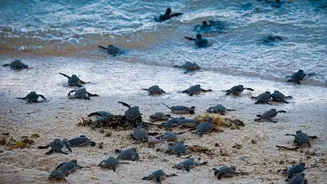
For Olive Ridley sea turtles, light is a matter of life and death. Adult females looking for a safe, dark place to lay their eggs are often deterred by brightly lit beaches, causing them to abandon nesting attempts. The greater danger, however, is to the hatchlings. For millennia, baby turtles have emerged from their sandy nests at night and used the brightest horizon—the moon and starlight reflecting off the ocean—as their guide to the sea. Artificial lights from coastal development now tragically confuse them. Instead of crawling towards the water, they become disoriented and move inland towards the artificial brightness, where they face dehydration, exhaustion, or predators. This simple misdirection is a major cause of mortality for a species already facing numerous threats.
Goa's Critical Nesting Havens
While beaches like Morjim, Agonda, and Galgibaga are already famous as 'turtle beaches' where the Forest Department manages protected hatcheries, the new proposal seeks to expand these protections significantly. The list of 24 proposed beaches includes some of Goa's most popular and commercially active coastlines, such as Baga, Calangute, and Candolim in the north, and Palolem and Varca in the south. This move signals a major shift from focusing on a few specific sites to creating a broader, state-wide conservation strategy. The proposal comes after data showed a concerning decline in the number of nests and eggs recorded during the recent nesting season compared to previous years.
A Balancing Act for a Tourist Economy
The proposed regulations present a classic dilemma: balancing environmental protection with economic activity. Goa's beach shacks, resorts, and restaurants are the backbone of its tourism industry, and nighttime operations are a huge part of their business. For years, conservationists have raised alarms about loud music and bright lights disrupting nesting sites. The new rules could mandate 'turtle-friendly' lighting—such as low-intensity, shielded, and long-wavelength (red or orange) lights—and restrict vehicle movement and late-night events on these beaches during the nesting season, which typically runs from November to April. This will inevitably require a significant adjustment from business owners who rely on the vibrant, illuminated beachfront to attract tourists.
The Path Forward
The Forest Department has submitted its proposal to the state's department of environment and climate change. If the 24 beaches are formally notified as turtle nesting sites under the CRZ, a detailed environmental management plan will need to be formulated. This plan will outline the specific restrictions, enforcement mechanisms, and timelines. The move coincides with efforts to secure Blue Flag certification for Mandrem and Galgibaga beaches, an international eco-label that requires stringent environmental management. The success of this proposal will depend on collaboration between government agencies, the tourism industry, and local communities to find a sustainable path that keeps Goa's beaches bright for tourists but dark enough for its oldest seafaring visitors to survive.