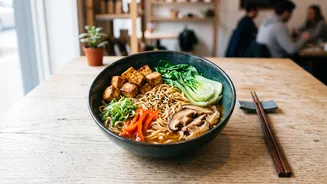




Beyond Gobi Manchurian
For decades, 'Asian food' for most Indians meant Indian-Chinese, a beloved cuisine of spicy noodles and fiery gravies. But a new wave is here. The current trend is not about adapting dishes to a familiar Indian palate but about exploring more authentic
and diverse flavours from across Asia. We're talking about the subtle, savoury broths of Japanese ramen, the funky tang of Korean kimchi, the fresh herbs of a Vietnamese summer roll, and the creamy richness of a Burmese khao suey. This evolution was perhaps inevitable. The long-standing popularity of Indian-Chinese food laid the groundwork, creating a familiarity with Asian flavour profiles that made diners more receptive to trying something new. Now, that curiosity has blossomed into a full-blown exploration.
The Global Palate Comes Home
So, what’s driving this change? A major factor is increased global exposure. More Indians are travelling abroad, while international media, especially K-dramas and pop music, has a massive influence at home. This cultural phenomenon, known as 'Hallyu' or the Korean Wave, has directly fuelled a craving for Korean food. When audiences see their favourite actors enjoying a bowl of tteokbokki or ramen, that curiosity translates into demand. Younger generations, particularly Gen Z and millennials, are more experimental than ever, actively seeking out novel dining experiences they see trending on social media. They are eager to participate in global food cultures, and restaurants are quickly responding to this adventurous spirit.
A Perfect Match for a Veggie Nation
India has the largest vegetarian population in the world, a tradition rooted in cultural and religious principles like ahimsa, or non-violence. Many Asian cuisines offer a fantastic canvas for vegetarian cooking that goes far beyond simple salads or paneer-based dishes. Ingredients like tofu, tempeh, edamame, and a wide variety of mushrooms provide hearty textures and the savoury, umami flavours that can make a meal deeply satisfying without meat. Furthermore, many Asian cooking methods, such as steaming, stir-frying, and boiling, are perceived as healthier alternatives to heavy, cream-based cooking. This combination of culinary versatility and health benefits makes Asian food a natural fit for the modern Indian diner.
From Niche to Mainstream Menus
Just a few years ago, finding authentic vegetarian sushi or a vegan pho would have required a trip to a high-end restaurant in a major metro. Today, these dishes are increasingly common in casual, mid-range eateries, cafes, and even delivery-focused cloud kitchens. Restaurants dedicated entirely to vegetarian Pan-Asian or specific cuisines like Burmese are thriving. We are seeing vegetarian tempura sushi, wild mushroom dim sum, avocado-based rolls, and spicy tofu ramen becoming menu staples. This accessibility is crucial; it has transformed what was once a niche interest into a mainstream dining trend, with food delivery platforms reporting significant year-on-year growth in orders for Asian dishes, even in smaller cities.