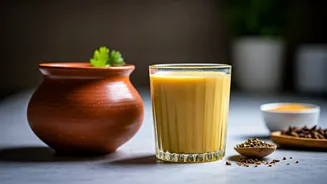









The Global Star: Kombucha's Arrival
Walk into any trendy cafe in urban India, and you're likely to see it on the menu: kombucha. This fizzy, slightly sour, fermented tea has exploded in popularity, transitioning from a niche health product to a mainstream lifestyle choice. Originating from ancient
China, kombucha is made by fermenting sweetened black or green tea with a SCOBY—a Symbiotic Culture of Bacteria and Yeast. This living culture, which looks like a rubbery, pancake-like disc, transforms the sugar into a cocktail of probiotics, organic acids, and B vitamins, giving the drink its famed health halo. In India, the kombucha wave has been fueled by a growing wellness-conscious consumer base seeking alternatives to sugary sodas. Brands have sprung up across the country, from Goa to Delhi, infusing their brews with local flavours like jamun, mango, and hibiscus, making the foreign feel familiar.
The Desi Original: Kanji's Timeless Appeal
Long before kombucha became a household name, Indian kitchens had their own probiotic powerhouse: kanji. This traditional North Indian fermented drink is especially popular during the winter months and the festival of Holi. Unlike kombucha, kanji requires no special starter culture. Its magic lies in wild fermentation. The classic recipe involves fermenting black carrots (or beetroot for that vibrant, ruby-red colour) in water with salt and crushed mustard seeds. The mixture is left in a glass jar, often in the sun, for several days. During this time, naturally present lactic acid bacteria on the vegetables get to work, turning the concoction into a tangy, savoury, and slightly pungent drink. It's a flavour profile that’s earthy and unapologetically desi—an acquired taste for some, but a beloved digestive aid for generations.
Two Drinks, One Principle: The Fermentation Link
At their core, both kombucha and kanji celebrate the transformative power of fermentation. They are living drinks, teeming with beneficial microbes. However, their fermentation processes are fundamentally different. Kombucha relies on a specific, reusable SCOBY that initiates a dual fermentation of yeast and acetic acid bacteria. This creates its signature fizz and vinegar-like tang. Kanji, on the other hand, undergoes lacto-fermentation, driven by wild lactobacillus bacteria present on the carrots and in the environment. This is the same process that gives us yogurt and pickles. The result is a drink rich in lactic acid, with a flavour profile that is more salty and sour than sweet. While kombucha is tea-based and contains a small amount of residual sugar and caffeine, kanji is vegetable-based, caffeine-free, and virtually sugar-free once fermented.
A Shared Path to Wellness and Revival
The reason these two distinct drinks are now sharing the spotlight is a collective, modern-day quest for better gut health. Both are championed for their probiotic content, which is believed to aid digestion, boost immunity, and improve overall wellness. The global popularity of kombucha has inadvertently cast a new light on India’s own rich heritage of fermented foods. As urban Indians experiment with brewing kombucha at home, many are also rediscovering the simplicity and benefits of traditional recipes like kanji. This isn't a battle of global versus local, but rather a parallel appreciation. The rise of one seems to be fueling curiosity in the other. Both drinks are finding their place: kombucha as a healthy soda replacement and kanji as a traditional, functional health tonic. This intersection highlights a beautiful cultural moment where a global trend inspires a deeper look into our own backyards and kitchens.