









The Old Hiring Hurdle
For decades, Indian recruiters have faced a monumental task. Drowning in a sea of resumes for every opening, they've relied on keyword matching and academic qualifications to sift through candidates. This traditional approach often proves inefficient,
especially for roles requiring deep, specialized knowledge in fields like technology, data science, or renewable energy. A resume might list 'Python,' but does the candidate have experience with specific libraries used in machine learning, or just basic scripting? This gap between stated qualifications and actual, nuanced abilities leads to long hiring cycles, costly mismatches, and missed opportunities for both companies and deserving candidates. The process is often slow, prone to human bias, and struggles to accurately measure the practical, role-specific skills that truly matter.
Enter AI-Ready Recruitment
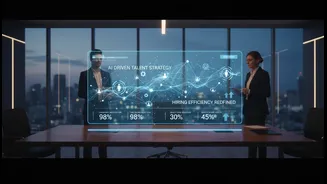
AI-ready hiring is not about replacing recruiters with robots. Instead, it's about equipping them with intelligent tools to automate repetitive tasks and generate deeper insights. These systems use technologies like Natural Language Processing (NLP) and machine learning to go beyond simple keyword searches. Instead of just flagging a resume, AI can analyze the context in which skills are mentioned, evaluate project descriptions, and even score a candidate's proficiency based on the complexity of their described work. This allows recruitment to shift from a reactive, manual process to a proactive, data-driven strategy. For companies, this means reducing hiring time by up to 50% and significantly improving the quality of candidates shortlisted for interviews.
Decoding the Specialist
The real magic of AI in hiring is its ability to act as a universal translator for specialized skills. An AI platform can be trained to understand that dozens of different terms or phrases might all refer to a single, critical competency. For instance, it can connect experience in 'AWS Lambda' with 'serverless computing' and 'microservices architecture,' building a comprehensive profile of a candidate’s expertise that a non-technical recruiter might miss. Some advanced platforms use AI-powered assessments, including coding simulators and situational judgment tests, which dynamically adjust in difficulty to pinpoint a candidate's precise skill level. This replaces guesswork with evidence, allowing companies to see not just what a candidate claims to know, but how they think and solve problems.
Advantages for Indian Firms
For Indian businesses, particularly in the booming IT, healthcare, and manufacturing sectors, the benefits are immense. Firstly, it dramatically speeds up the process of finding talent in a competitive market, where the best candidates are often off the market in weeks. Secondly, by focusing on verifiable skills, AI helps mitigate unconscious bias related to a candidate's gender, background, or even the prestige of their college. This creates a more level playing field and widens the talent pool. Companies can also tap into talent from Tier-2 and Tier-3 cities who might have been previously overlooked. Ultimately, it leads to better role alignment, which improves retention and on-the-job performance.
What It Means for Job Seekers
For candidates with specialized skills, this shift is largely positive. It means their actual abilities are more likely to be recognized, even if their resume isn't perfectly optimized. It encourages a focus on building and demonstrating real-world skills through projects and portfolios. However, it also means that candidates need to be more explicit about their achievements and the specific technologies they've mastered. Vague descriptions won't pass muster with sophisticated algorithms. As candidates also begin using AI to optimize their resumes, the hiring landscape is becoming a more complex, technology-driven conversation between both sides.
The Challenges and Road Ahead
The adoption of AI in hiring is not without its challenges. The primary concern is algorithmic bias. If an AI is trained on historical hiring data that contains biases, it can learn and even amplify them, unfairly penalizing certain groups. There are also concerns around data privacy and the candidate experience, as many still prefer human interaction. For AI to be truly effective and fair, it requires constant human oversight, high-quality data, and a clear focus on ethical implementation. The most successful companies will be those that blend AI's efficiency with the irreplaceable human judgment needed for assessing cultural fit and soft skills.