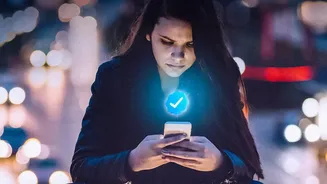







The Rise of Digital Deception
Welcome to the world of deepfakes, a term that combines 'deep learning' and 'fake'. This technology uses artificial intelligence (AI) to create highly realistic but entirely fabricated videos or audio recordings. By analysing a person's facial movements
and voice, AI can generate new content that makes it appear as though they said or did something they never did. What started as a niche technology is now widely accessible, allowing for the creation of everything from harmless memes to dangerous misinformation. The core challenge is that as the AI gets smarter, these fakes become nearly indistinguishable from reality, making it easy to mislead millions.
India's Unique Vulnerability
With over 850 million internet users, India is a fertile ground for the spread of manipulated media. Content shared on platforms like WhatsApp can reach a massive audience with little to no context or source verification. This has led to a surge in deepfake-related incidents, from celebrities like Anil Kapoor and Jackie Shroff having their likeness used in derogatory or unauthorized ways, to financial scams where cloned voices of executives are used to request fraudulent money transfers. A 2026 report found that a staggering 65% of organisations in India have experienced deepfake-driven attacks. The problem is so acute that women have been disproportionately targeted, often with non-consensual intimate imagery, highlighting a severe violation of privacy and dignity.
New Rules for a New Threat
Recognising the growing threat, the Indian government has taken action. In February 2026, it amended the Information Technology (IT) Rules to specifically address AI-generated content, legally termed 'synthetically generated information' (SGI). These new regulations require social media platforms to label AI-generated content clearly and prominently. More critically, they mandate extremely rapid takedown times—as short as three hours—for harmful deepfakes once reported, forcing platforms to act swiftly or risk losing their 'safe harbour' protections from liability. The government has made it clear that while it does not want to ban AI, it intends to manage its impact by placing primary responsibility on the tech industry to build safeguards.
How to Spot a Deepfake
While technology is getting better, there are still clues that can give away a fake. However, relying on visual glitches alone is no longer enough. Early deepfakes had obvious errors like unnatural blinking, strange lighting, or blurry edges. While you should still look for these inconsistencies, the safest approach is to treat visual clues as a reason to investigate further, not as final proof. Pay attention to the audio as well—a robotic texture or odd pauses can be red flags. But the most effective defence is not what you see or hear, but how you think.
Your First Line of Defence: Source Verification
Before you believe, and especially before you share, the most crucial step is to check the source. Ask yourself: Where did this content come from? A random forward is not a credible source. If a public figure seems to be making a shocking statement, check their official, verified social media accounts or the websites of reputable news organisations. If a video claims to show a major event, see if it is being reported independently by multiple trusted news outlets. This simple habit of cross-referencing is the most powerful tool against misinformation.
A Simple Checklist Before You Share
To protect yourself and stop the spread of fake content, run through this mental checklist: 1. Check the Source: Is it from an official and verified account or a credible news organisation? 2. Look for Labels: Under the new rules, platforms should be labelling AI-generated content. Look for these disclaimers. 3. Perform a Reverse Image Search: Tools like Google Lens can help you see if an image or video has appeared online before in a different context. 4. Verify Urgent Requests: If you receive an urgent and unusual request for money or personal information via video or voice call, even from a known number, hang up. Contact the person directly through a separate, trusted method (like calling a number you already have for them) to confirm if the request is real. 5. Pause and Think: Does the content seem designed to make you angry, scared, or shocked? Strong emotional reactions are a tactic used to make content go viral. Take a moment to verify before you react or forward.