

The Key Date for Stargazers
Mark your calendars for the evening of September 18, 2026. On this date, Venus will reach what astronomers call its “greatest brilliancy,” achieving a stunning magnitude of -4.8. For context, that’s significantly brighter than any star in the night sky.
While the planet will appear exceptionally bright for several days before and after this peak, the 18th is the official date for its maximum splendor. This event will be an evening spectacle, so you’ll be looking for Venus in the western sky shortly after the sun goes down.
Why is Venus So Bright This Month?
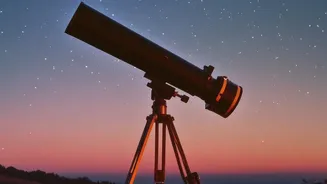
The incredible brightness of Venus isn’t because it's fully illuminated. In fact, if you were to look at it through a telescope around this time, you would see a beautiful, slender crescent. The peak brilliance, known as the “greatest illuminated extent,” is a perfect compromise between two competing factors: the planet’s distance from Earth and its phase. As Venus gets closer to us in its orbit, its apparent size in our sky increases. However, as it moves between Earth and the Sun, we see less and less of its sunlit side. Greatest brilliancy occurs at the sweet spot where the large apparent size of the crescent Venus combines to reflect the maximum amount of light back to our eyes.
How to See Venus From India
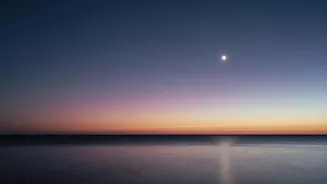
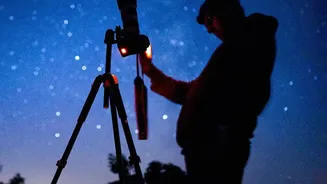
The best part about this celestial event is that you don’t need any special equipment to enjoy it. Venus will be so bright that it will be impossible to miss, even from light-polluted cities. For the best view, find a location with an unobstructed view of the western horizon. About 30 to 45 minutes after sunset, look towards the direction where the sun just disappeared. Venus will appear as a blazing, silvery point of light, outshining everything else in the twilight sky. For an extra treat on the evening of September 14, look for the thin waxing crescent Moon which will appear very close to Venus, creating a stunning celestial pairing.
The Evening Star's Farewell
This period of brilliance marks the grand finale of Venus’s appearance in the evening sky for 2026. Throughout September, you can watch as it sinks lower towards the horizon each evening. After its peak brightness, it will quickly move toward what is known as inferior conjunction on October 24, when it passes between the Earth and the Sun and becomes lost in the solar glare. It will then transition to become the “Morning Star,” reappearing in the eastern sky before dawn in November. This September performance is its most dazzling evening show until April 2028, making it a must-see event for skywatchers.