




The Policy That Unlocked The Stars
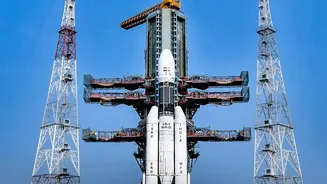
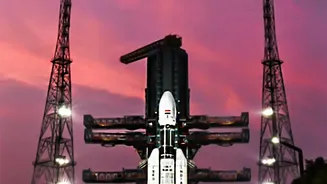
For decades, the Indian Space Research Organisation (ISRO) was the sole custodian of India's space ambitions. Private companies were mostly limited to being component suppliers. That all changed in June 2020. The government announced historic reforms,
opening the entire space value chain to private participation. The creation of the Indian National Space Promotion and Authorisation Centre (IN-SPACe) was the centerpiece of this shift. Acting as a single-window agency, IN-SPACe's mandate is to promote, authorise, and supervise the activities of non-governmental entities, effectively rolling out the welcome mat for private enterprise. The Indian Space Policy 2023 further solidified this new era, providing a clear regulatory framework and even allowing for significant foreign direct investment in areas like satellite manufacturing. The goal was to move ISRO's focus towards advanced research and development, while private industry takes the lead on operational and commercial services.
The New Constellation of Startups
The policy changes have been a game-changer, transforming the landscape from just one space startup in 2014 to over 450 today. These new ventures are not just tinkering; they are building and launching rockets, deploying satellite constellations, and developing cutting-edge propulsion systems. Hyderabad-based Skyroot Aerospace made global headlines in July 2026 by becoming the first Indian private company to launch a rocket, the Vikram-1, into orbit on its maiden attempt. This historic feat proved that India's private sector could compete on the world stage, joining a small club of nations with private orbital launch capability. Meanwhile, Chennai's Agnikul Cosmos, incubated at IIT Madras, is pioneering the use of 3D-printed engines for its Agnibaan rockets, drastically cutting manufacturing time. The company is also aiming for rocket reusability, a technology that has fundamentally reshaped global launch economics.
More Than Just Launching Rockets
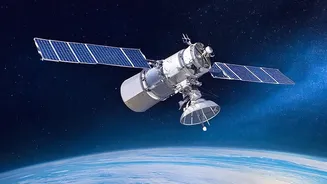
While launch vehicle startups grab headlines, the boom extends across the entire space value chain. Bengaluru-based Pixxel is building a constellation of hyperspectral imaging satellites to create a health monitor for the planet, tracking everything from crop health to pollution in real-time. Backed by investors like Google, the company is already serving global clients and is leading a consortium to build India's first privately-led national Earth observation constellation. Another key player, Dhruva Space, provides full-stack space engineering solutions, from satellite manufacturing to launch and ground services. These 'downstream' applications—turning space-based data into actionable insights—are where many experts see the largest long-term economic opportunity.
Fuelled By Funds And Global Ambition
This entrepreneurial energy is attracting serious capital. In 2025 alone, IN-SPACe facilitated $150 million in investments into Indian space startups. In the first half of 2026, the sector secured another $150-160 million. The government is also catalysing this growth, establishing a dedicated Venture Capital Fund of around $120 million to provide early-stage capital. The projections are ambitious: India's space economy, valued at about $8.4 billion today, is forecast to grow fivefold to over $40 billion by 2033. The success of companies like Skyroot, which recently achieved a valuation of over $1.1 billion, signals a maturing ecosystem capable of attracting significant international and domestic funding. This influx of capital is not just funding technology; it's funding a vision for India to capture a significant share, potentially up to 10%, of the global space market.