






From Seasonal Nuisance to Daily Essential
Not long ago, the collective Indian memory of sunscreen was of a thick, greasy lotion that left a stubborn white cast, felt heavy in the humid climate, and was only ever considered for a rare beach trip or a long day outdoors. It was seen as a cumbersome,
optional product. This perception is undergoing a dramatic transformation. The Indian sunscreen market has seen remarkable growth, with one report indicating the market size grew from USD 576.6 Million in 2025 to USD 621.4 Million in 2026. Another report highlights that household penetration has more than tripled in four years, reaching 14.3 million households by June 2026. This isn't just a market trend; it's a fundamental shift in how Indians are approaching skin health, moving sun protection from a niche purchase to a daily habit.
The Rise of the 'Derm-influencer'
A major catalyst for this change has been the democratisation of skincare knowledge, led by dermatologists and science-based influencers on social media platforms like Instagram and YouTube. These experts have worked tirelessly to debunk myths and educate consumers in an accessible way. They have effectively communicated that sunscreen isn't just about preventing a tan or a sunburn. Through reels, videos, and detailed posts, they explain complex topics like the difference between UVA and UVB rays, the importance of a high PA rating (which protects against pigmentation and ageing), and why Indian skin is particularly prone to hyperpigmentation. This wave of digital education has directly influenced consumer behaviour, with one study showing sunscreen was among the top three skincare products purchased due to social media influence.
Busting Deep-Rooted Sunscreen Myths
For years, the most pervasive myth was that melanin-rich Indian skin doesn't need sunscreen. Experts have clarified that while melanin offers some natural protection (equivalent to a mere SPF 4-13), it's nowhere near the recommended SPF 30 or 50 needed to guard against India's high UV index. Another misconception was that sunscreen is only for sunny days. Dermatologists now widely advise that UVA rays, which cause premature ageing and pigmentation, can penetrate clouds and even glass windows, making daily indoor application just as crucial. The conversation has also expanded to include protection from blue light emitted by our countless digital screens, which can also contribute to skin damage.
Innovation in a Bottle: Formulations Finally Feel Good
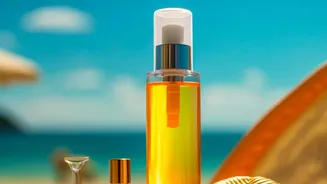
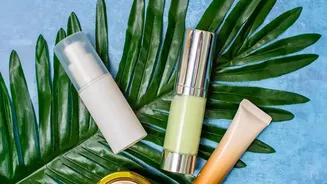
Perhaps the most significant driver of daily adoption is that sunscreens have finally become a pleasure to use. Brands have invested heavily in creating lightweight, non-greasy formulations that cater specifically to Indian skin types and the humid climate. The dreaded white cast, a major deterrent for those with deeper skin tones, is being eliminated with elegant gel, serum, and fluid textures that blend invisibly. Many new-age sunscreens are also multifunctional, packed with skin-loving ingredients like niacinamide to control oil, or hyaluronic acid for hydration, effectively combining two skincare steps into one. These cosmetically elegant formulas feel more like moisturizers than traditional sunblock, making it easier for people to incorporate them into their morning routine without a second thought.
A Broader View of Skin Health
The push for daily sunscreen reflects a larger cultural shift towards a science-backed, preventive approach to self-care. The understanding of sun damage has evolved beyond just tanning. Consumers now know that daily, unprotected sun exposure is a primary cause of premature ageing, fine lines, loss of skin elasticity, and stubborn pigmentation issues like melasma and dark spots. Sunscreen is no longer positioned as a cosmetic product for fairness, but as an essential health product that protects the skin's long-term integrity. Dermatologists recommend a minimum of SPF 30, but often advise SPF 50 with a PA++++ rating for optimal protection in India's climate. This shift shows a maturing consumer base that values skin health over outdated beauty standards.