





Artemis: A New Era of Moon Exploration
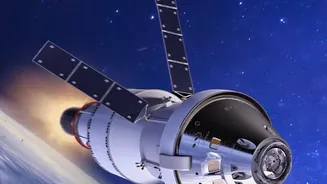
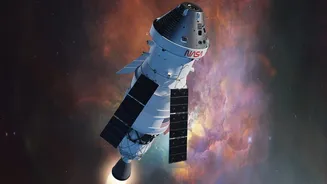
The Artemis program is NASA's ambitious plan to establish a sustainable human presence on the Moon, and 2026 is a pivotal year. In April, the world watched as the Artemis II mission successfully sent four astronauts on a nearly 10-day journey around the Moon, the farthest
humans have travelled from Earth. This crewed flight, the first for the Orion spacecraft, tested critical life-support and maneuvering systems, paving the way for what comes next. While the actual lunar landing is now slated for Artemis IV in 2028, the focus in 2026 shifts to preparing for Artemis III. Planned for 2027, this mission will see astronauts perform crucial docking tests in Earth orbit with the new commercial lunar landers being developed by SpaceX and Blue Origin. For Indian readers who followed the success of Chandrayaan, the progress of Artemis is a glimpse into the collaborative and multi-pronged future of lunar exploration.
Europa Clipper: A Close Shave with Earth
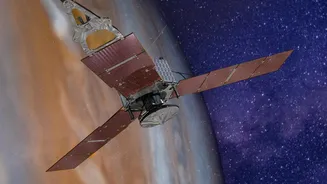
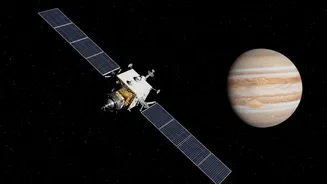
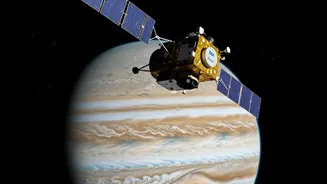
Launched in October 2024, the Europa Clipper spacecraft is on a long voyage to Jupiter's mysterious moon, Europa. Scientists are captivated by Europa because evidence strongly suggests a vast liquid water ocean exists beneath its icy shell, potentially holding the ingredients for life. While the probe won't reach Jupiter until 2030, a major event is scheduled for December 2026. During this month, Europa Clipper will perform a crucial gravity-assist flyby of Earth. By swinging past our home planet, the spacecraft will gain the velocity needed to catapult it toward the outer solar system. This maneuver is a critical step in the mission's 2.9-billion-kilometer journey. The probe is designed to perform dozens of close flybys of Europa, using its suite of instruments to analyze the ice shell, confirm the ocean's existence, and assess the moon's habitability. It's a quest for answers to one of humanity's biggest questions: are we alone?
VIPER: The Comeback Rover Hunts for Water
The Volatiles Investigating Polar Exploration Rover, or VIPER, is a story of persistence. After a brief cancellation, the lunar rover was revived in 2025 with a new plan for delivery to the Moon's South Pole. Throughout 2026, work is underway to prepare this golf-cart-sized robot for its 2027 launch aboard a Blue Origin lander. VIPER's mission is directly relevant to India's own lunar pursuits; like the Chandrayaan missions, it targets the South Pole. Its primary goal is to search for and map water ice in the region's permanently shadowed craters. This is not just a scientific quest. Finding accessible water is considered essential for establishing a long-term human presence on the Moon, as it can be used for drinking water, oxygen, and rocket fuel. VIPER will provide the first up-close ground truth, turning theoretical knowledge of lunar water into a tangible resource map for future astronauts.
Dragonfly: A Sci-Fi Drone Becomes Real
While its launch is set for July 2028, the Dragonfly mission is already one of the most exciting projects to track in 2026. This year, the mission has passed major construction and testing milestones. Dragonfly is a car-sized, nuclear-powered rotorcraft—essentially a massive drone—that will fly through the thick atmosphere of Saturn's largest moon, Titan. Titan is a unique world with a nitrogen-rich atmosphere four times denser than Earth's, featuring rivers, lakes, and seas of liquid methane and ethane. In 2026, engineers have been busy testing the spacecraft's fuselage and heat shield to ensure it can survive both launch from Earth and entry into Titan's alien environment. Once it arrives in 2034, Dragonfly will fly between dozens of promising locations to study prebiotic chemical processes, exploring a world seen as an analogue to early Earth. Following its progress in 2026 is like watching a science fiction concept become an engineering reality.