



Beyond the Bunsen Burner
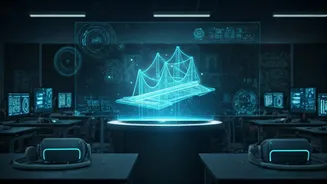
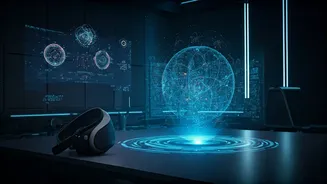
Welcome to the classroom of the near future, where students strap on a virtual reality (VR) headset to enter a fully equipped physics lab. In this digital space, the laws of physics are not just rules in a textbook; they are forces you can see, manipulate,
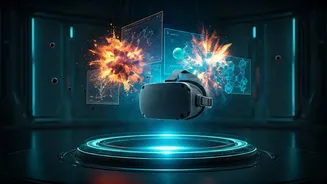
and even break. The headline-grabbing idea of ‘blowing up the lab’ is a fun entry point, but it highlights a profound educational shift. Students can mix volatile chemicals without fear, crash particle accelerators to understand subatomic particles, or witness a supernova up close. These aren't pre-recorded videos; they are interactive simulations where every action has a realistic, scientifically accurate consequence. This technology allows students to conduct experiments that would be too expensive, too dangerous, or simply physically impossible in a traditional school setting.
Where the AI Comes In
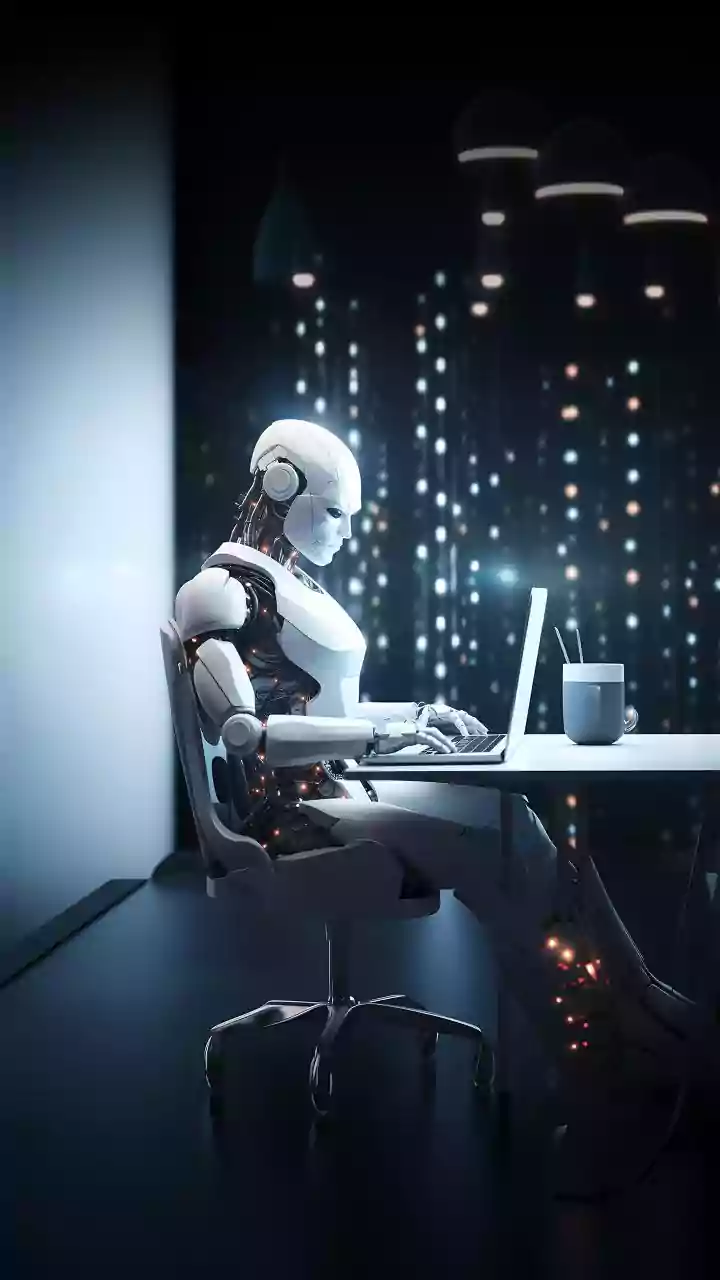
The VR environment is the stage, but Artificial Intelligence (AI) is the director. The AI acts as a tireless, personalised tutor for every single student. It doesn't just run the simulation; it watches how the student interacts with it. If a student is struggling to grasp why a certain chemical reaction occurred, the AI can provide instant, targeted feedback. It can highlight variables they might have missed, pose Socratic questions to guide their thinking, or offer a microscopic view of the molecular interactions they just triggered. This is a world away from a teacher trying to supervise 30 students at once. The AI can dynamically adjust the difficulty of the experiment, introduce unexpected variables to test critical thinking, and meticulously track a student’s progress, identifying knowledge gaps long before they become an issue in an exam.
The Safety Switch for Science
The most obvious benefit is safety. Every year, schools invest significant resources in maintaining lab safety protocols, and accidents, though rare, can be serious. In a VR lab, the concept of danger is purely academic. A student can learn about the hazardous properties of hydrofluoric acid without ever being in the same room as it. This freedom from physical risk encourages true experimentation. Students are more likely to be curious and take intellectual risks when they aren't worried about making a costly or dangerous mistake. This applies not just to explosive reactions but also to expensive equipment. A school might have one precious microscope, but in VR, every student can have their own electron microscope, and it doesn’t matter if they ‘break’ it while learning to use the controls.
More Than Just a Cool Gadget
Critics might dismiss this as another expensive tech gimmick, but the pedagogical benefits run deep. Science, especially physics, is full of abstract concepts that are hard to visualise. How do you truly explain gravitational waves or electromagnetic fields on a blackboard? In VR, these abstract ideas can be made visible and tangible. Students can ‘see’ the magnetic field lines around a wire or ‘feel’ the distortion of spacetime around a black hole. This transforms learning from passive memorisation of facts to active, inquiry-based discovery. The ability to repeat an experiment infinitely, tweaking one variable at a time, reinforces the scientific method in a way that a one-off, time-limited lab session never can.
The View from India
For a country like India, the potential is immense. The National Education Policy (NEP) 2020 strongly emphasises experiential learning and the integration of technology. However, the reality is a vast disparity in resources. While premier urban schools may have well-stocked labs, countless others across the country lack basic equipment. VR and AI could act as a great equaliser. A single set of VR headsets could provide a world-class lab experience to a rural school that could never afford the physical infrastructure. It offers a path to standardising the quality of practical science education nationwide. Of course, challenges remain. High costs of hardware, the need for stable internet connectivity, and the necessity of training teachers to use this new medium are significant hurdles. Yet, as hardware becomes cheaper and digital infrastructure improves, this futuristic vision is moving closer to an achievable reality.