
A History Written in Craters
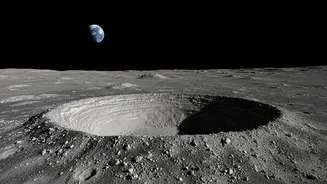
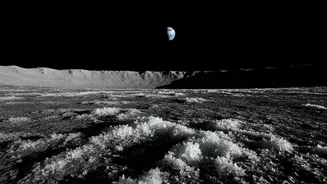
The Moon has no atmosphere, no wind, and no rain to erode its surface. This makes it an almost perfect historical archive of the solar system. Every crater is a record of an impact from an asteroid, meteoroid, or comet, left untouched for potentially
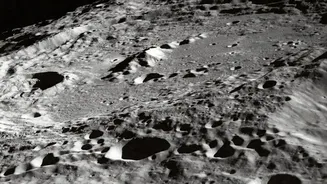
billions of years. By studying these craters, scientists can piece together a timeline of cosmic events, including a chaotic period known as the Late Heavy Bombardment, which pummeled the inner solar system around 3.9 billion years ago. The simple rule is that older surfaces have more craters, allowing scientists to create a relative age map of the entire lunar landscape just by counting them. It's like reading a guestbook where every signature is a violent, explosive event.
The Science of Impact Analysis
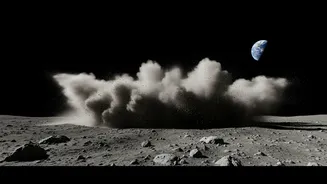
Analyzing an impact crater is more than just measuring its diameter. Scientists use a range of techniques to extract a wealth of information. The size and shape tell a story about the impactor's size, speed, and angle of approach. Small, fresh craters tend to be simple bowl shapes, while larger, older impacts form complex structures with flat floors and central peaks. The material thrown out by the impact, known as ejecta, provides a sample of what lies beneath the lunar surface. Some massive impacts have been powerful enough to dredge up material from the Moon's mantle, giving us a glimpse into its internal structure without ever needing to drill. Orbiters like NASA's Lunar Reconnaissance Orbiter (LRO) use high-resolution cameras and laser altimeters to map these features in incredible detail.
India's Pivotal Role in Lunar Science
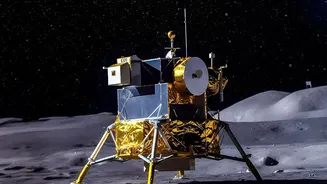
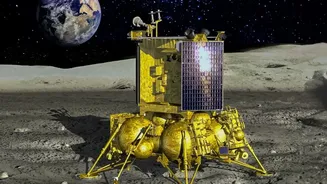
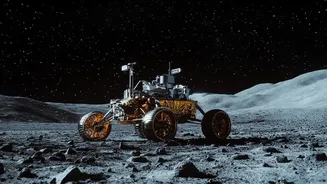
India’s space program, led by ISRO, has become a crucial player in modern lunar science. The Chandrayaan missions have made landmark contributions to our understanding of the Moon, particularly through crater analysis. Chandrayaan-1's instruments were instrumental in the groundbreaking discovery of water molecules on the lunar surface. More recently, data from Chandrayaan-2's advanced radar helped detect strong signs of water ice buried inside permanently shadowed craters near the south pole. In a stunning find, scientists analyzing data from the Chandrayaan-3 lander and rover discovered that the mission had landed inside a massive, 160-kilometer-wide buried crater, one of the oldest on the Moon. This provides a unique opportunity to study ancient materials excavated by multiple major impacts over billions of years.
From Ancient History to Future Habitation
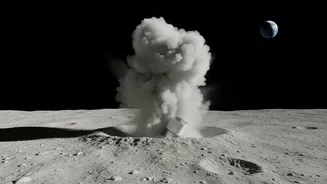
The study of lunar craters is not just about the past; it's essential for our future. The discovery of water ice in permanently shadowed polar craters, confirmed by missions like Chandrayaan and NASA's LCROSS, is a game-changer for human exploration. This ice could potentially be mined and converted into drinking water, breathable oxygen, and even rocket fuel for missions deeper into the solar system. However, crater analysis also reveals hazards. By comparing images over time, scientists have found that new impacts are more frequent than previously thought. This constant rain of micrometeorites and occasional larger impacts poses a risk to future lunar bases and astronauts, making careful site selection and habitat design paramount for long-term survival on the Moon.