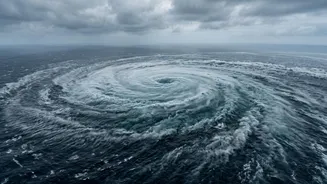






India's long and densely populated coastline has always lived under the shadow of cyclones. Now, new scientific analysis of long-term weather patterns is confirming what many have feared: the behaviour of these powerful storms is changing.
A Tale of Two Seas
For decades,
India's storm narrative was dominated by the Bay of Bengal, which historically generated about four times as many cyclones as the Arabian Sea. The Bay's unique shape, warmer waters, and prevailing conditions made it a notorious breeding ground for destructive storms. However, recent studies highlight a dramatic shift in this dynamic. While the overall number of cyclones in the North Indian Ocean remains relatively stable, the activity in the once-calmer Arabian Sea is undergoing a significant transformation. Research shows a 52% increase in the frequency of cyclones in the Arabian Sea over the past four decades, with the number of 'very severe' cyclones rising by a staggering 150%.
More Intense, Slower, and Longer-Lasting
The changes are not just about frequency. Storms in the Arabian Sea are becoming more powerful and lasting longer. Studies have recorded a 20% to 40% increase in cyclone intensity in the Arabian Sea, and their total duration has risen by 80%. This means coastal areas are exposed to high-speed winds and heavy rainfall for extended periods. One of the most dangerous new trends is rapid intensification. This is where a storm strengthens dramatically in a very short time, giving authorities and communities less time to prepare for evacuation and disaster response. Since 2000, about 38% of cyclones in the North Indian Ocean have undergone rapid intensification. Cyclone Amphan in 2020, for example, exploded from a Category 1 to a Category 5 storm in less than 24 hours. Furthermore, some cyclones are now moving more slowly after formation, prolonging their destructive impact on the areas they hit.
The Engine of Change: Warming Waters
The primary driver behind this alarming shift is the rapid warming of the ocean. The Indian Ocean is warming at a faster rate than the Atlantic or Pacific, and the Arabian Sea is heating up even faster than the Bay of Bengal. Over the last four decades, sea surface temperatures in the Arabian Sea before cyclone formation have risen by 1.2°C to 1.4°C. Cyclones are essentially giant heat engines that draw their energy from warm ocean waters. Warmer seas provide more fuel, in the form of heat and moisture, allowing storms to become stronger and more intense. This extra heat doesn't just stay on the surface; the layer of warm water is deepening. This prevents the natural braking mechanism where a storm's own winds churn up cooler water from the depths, which would typically slow its growth. With a deeper pool of warm water, storms can maintain and even increase their strength.
Implications for India's Coasts
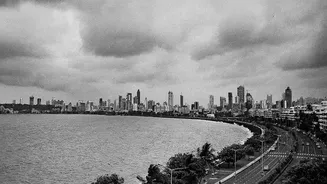
These changing storm patterns have profound implications for India, particularly its western coast. States like Gujarat, Maharashtra, and Kerala, which were historically less cyclone-prone, now face a heightened threat. Increased storm intensity means a greater risk of devastating winds, catastrophic rainfall, and dangerous storm surges. The recent backstto back cyclones Arnab and Murasu, which struck the eastern coast in late October and early November 2026, serve as a stark reminder of the destructive power of these systems. The event was considered a rare anomaly because a second major storm formed and made landfall in the same region less than a week after the first, overcoming the usual atmospheric conditions that would suppress a second storm. This highlights the need for a complete re_evaluation of coastal vulnerability, infrastructure resilience, and disaster management protocols. Early warning systems must now account for rapid intensification, and coastal infrastructure must be built to withstand stronger, longer_lasting storms.