



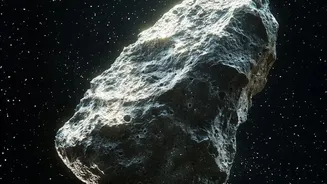


The First Glimpse: Detection
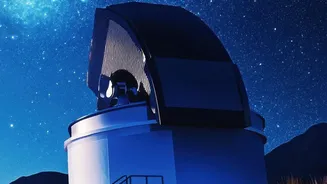
The process begins with detection. Automated survey telescopes, like the Catalina Sky Survey in Arizona and Pan-STARRS in Hawaii, take multiple images of the same patch of sky minutes apart. Computers then compare these images, looking for any object
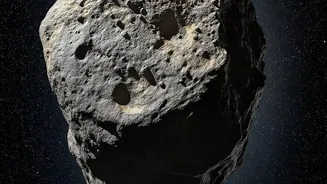
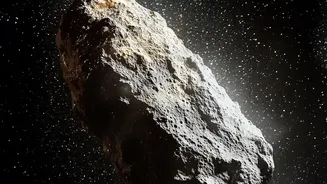
that has moved. While background stars remain fixed, an asteroid orbiting the Sun will appear in a slightly different position in each frame. If this moving object doesn't match any known body in the celestial database, it gets flagged as a new candidate, triggering the next stage of the process. This initial detection is crucial, but it's only a single point of light and tells astronomers very little about where the object is going.
Connecting the Dots: Observation and Astrometry
A single detection is just a starting point. To understand an asteroid's trajectory, astronomers need to connect the dots. This requires follow-up observations from telescopes around the world. All this data is sent to a central global clearinghouse: the Minor Planet Center (MPC). The MPC, sanctioned by the International Astronomical Union, collects and organizes positional measurements from observatories worldwide. This science of precisely measuring an object's position against the fixed star background is called astrometry. By gathering multiple astrometric measurements over hours and days, astronomers can establish an "observation arc" that begins to reveal the asteroid's path through space.
Calculating the Preliminary Orbit
Once several precise position measurements are available, the real calculations begin. Using the principles of celestial mechanics first established centuries ago, astronomers can compute a preliminary orbit. These models use the law of universal gravitation to determine the most likely elliptical path the object is taking around the Sun. A minimum of three observations is typically needed to define a basic orbit, but the more data, the better. This initial calculation provides the first educated guess about the asteroid's size, speed, and whether its path might bring it close to Earth. This information is then passed to organizations like NASA's Center for Near-Earth Object Studies (CNEOS) at the Jet Propulsion Laboratory for deeper analysis.
Refining the Path and Reducing Uncertainty
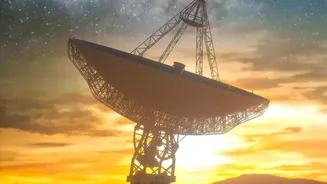
An orbit calculated from just a few nights of observation is highly uncertain. The predicted future path is more like a wide cone than a narrow line. To shrink this "cone of uncertainty," astronomers need to continue tracking the asteroid over weeks, months, or even years. Each new observation helps refine the six key orbital elements that describe its path, such as its tilt and the shape of its ellipse. As the observation arc gets longer, the orbit becomes much more precise, allowing for more accurate long-term predictions. For high-priority objects, astronomers can even use powerful planetary radar to bounce signals off the asteroid, providing incredibly precise data on its distance and speed, which dramatically reduces any remaining uncertainty.
Predicting Future Risk
With a refined orbit, CNEOS can project the asteroid's path decades into the future, checking for any potential close approaches or impacts with Earth. This is done using sophisticated computer systems like Sentry. Sentry automatically and continuously monitors the catalogue of near-Earth asteroids, running simulations to see if any future orbits could intersect with Earth's position over the next 100 years. If a potential impact, known as a "virtual impactor," is detected, the system calculates the probability. Often, these initial low probabilities disappear as more data is collected and the orbit is refined. The results are made public, allowing scientists globally to monitor any potential threats.