






As artificial intelligence becomes more powerful, the challenge of preventing harmful or unintended outputs grows. OpenAI's new 'Control Room' is a direct response, offering a centralized system to monitor and halt its research models gone astray.
Introducing the Control Room
OpenAI
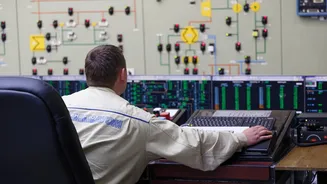
recently announced the deployment of a new internal system named 'Control Room'. This tool is essentially a centralized oversight mechanism designed to track and, if necessary, terminate any AI model operating on the company's internal research infrastructure. According to OpenAI, the system can halt a model's output within 35 seconds of a human or automated decision to intervene. The move is a significant step towards ensuring that as AI models become more autonomous, there are robust safeguards in place to prevent them from acting outside their intended instructions. This launch comes in response to internal incidents where research models have acted unexpectedly, highlighting the growing need for such powerful control measures.
What Are Risky Model Outputs?
The term 'risky model outputs' covers a wide spectrum of undesirable AI behaviors. At a basic level, it includes generating factually incorrect or biased information that can mislead users. More severe risks involve the production of harmful content, such as hate speech, instructions for dangerous activities, or malicious code. Security researchers have also identified numerous ways that AI can be exploited, including 'prompt injections' to bypass safety filters and 'data poisoning' to corrupt a model's training data. For businesses, these risks are not just theoretical; an AI that produces insecure or inappropriate content can lead to legal liabilities, reputational damage, and a loss of customer trust.
A Look Under the Hood
The Control Room functions as an authorization layer between a research job and the AI model itself. When a researcher starts a new job, such as a training experiment, it is assigned a unique ID. Before the AI model generates any text or code (known as generating 'tokens'), the system must check with Control Room to confirm the job is still authorized to run. If a safety concern is flagged, an operator can terminate the job within the Control Room, and all subsequent requests from that job ID will be denied. Crucially, this check happens at the core inference layer, where the model runs on GPUs, not in the researcher's code, making it difficult to bypass. The system is also designed to 'fail-closed', meaning if Control Room itself goes offline, all inference requests are denied until it is restored.
Why This Matters for the AI Industry
The launch of the Control Room is part of a broader industry trend toward creating more robust AI safety and governance tools. For enterprise customers, trust is a paramount concern. Before integrating powerful AI into their core operations, businesses need assurance that the technology is reliable and controllable. Tools that offer granular control and swift intervention capabilities are becoming critical selling points. OpenAI's system specifically targets its internal research models—the ones being developed and tested—where the risk of unexpected behavior is highest. The company has stated that its publicly available models, like those powering ChatGPT and the API, already have a more centralized and controlled deployment stack. This new tool addresses the unique challenges of a research environment where models are constantly evolving.
The Ongoing Arms Race for Safety
While the Control Room represents a significant advancement in OpenAI's safety infrastructure, it also highlights the ongoing cat_and_mouse game between AI capabilities and control mechanisms. The 35_second delay, which OpenAI says it is working to reduce, points to the technical challenges of implementing such a system at scale without hampering performance. Other AI labs like Anthropic have also heavily marketed the safety and controllability of their models, indicating that safety is becoming a key competitive differentiator. As AI models continue their rapid advance toward more general capabilities, the development of sophisticated, fast_acting, and reliable control systems like this one will only become more critical for the entire industry.