


A New Star Ignites National Ambition
The atmosphere was electric at a recent national conclave where government officials, industry leaders, and students gathered not just to welcome a hero, but to listen to a blueprint for the future. The guest of honour was ISRO astronaut Shubhanshu Shukla,
who recently returned from the International Space Station (ISS) as the pilot of the Axiom Mission 4 (Ax-4). This mission marked a significant milestone, making Shukla the first Indian to fly on a commercial mission to the ISS and only the second Indian in space after Rakesh Sharma. His presence at the event transformed a celebration into a strategic discussion about how India can leverage private human spaceflight for national growth.
The Axiom-4 Mission: A Commercial Leap
The Ax-4 mission, a partnership between Axiom Space, NASA, and SpaceX, was a private spaceflight that took a four-person crew to the ISS. For India, it was a crucial step, integrating with the Gaganyaan programme by providing an opportunity for an Indian astronaut to gain valuable experience on a commercial platform. During his 18-day mission, Shukla conducted a series of experiments developed by ISRO and other Indian institutions, studying everything from muscle atrophy to crop resilience in microgravity. Unlike the government-led mission of 1984, this flight represents a new era of public-private partnership, demonstrating how commercial platforms can be used for strategic national goals.
Beyond a Single Flight: A Galaxy of Opportunity
The central message from the event was clear: space is no longer just the domain of government agencies. Since India opened its space sector to private investment in 2020, over 200 startups have emerged, turning the nation into a hotbed of innovation. The success of companies like Skyroot Aerospace, which launched the first private Indian rocket into orbit, has proven the viability of this new ecosystem. The Indian space economy, currently valued at over $8 billion, is projected to surge to $44 billion by 2033, and the Ax-4 experience is being positioned as a powerful catalyst for this expansion.
Commercial Spaceflight and Tourism
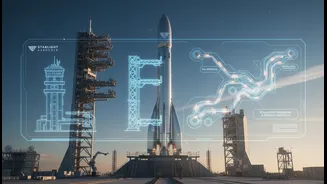
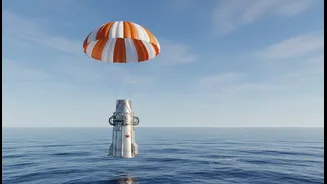
The journey of Gopichand Thotakura, who became India's first space tourist on a Blue Origin flight, already ignited public imagination. The Ax-4 mission takes this a step further. Speakers at the event highlighted that India is perfectly poised to become a hub for not just launching satellites, but also for commercial human spaceflight. This includes training, mission control, and eventually, domestic space tourism. The development of reusable rocket technology by Indian startups like Agnikul Cosmos and EtherealX aims to drastically reduce launch costs, a key factor in making space travel more accessible.
Research and Manufacturing in Orbit
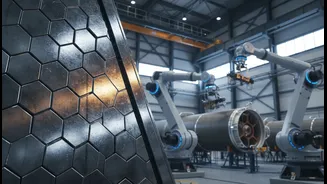
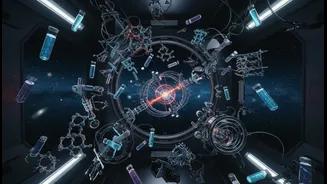
The experiments conducted by Shukla on the ISS are just the beginning. Axiom Space actively promotes the ISS as a platform for in-space research and manufacturing, a service Indian companies can now more easily access. From developing new pharmaceuticals in zero gravity to creating novel materials, the potential for groundbreaking innovation is immense. Furthermore, India’s goal to build its own space station by 2035 will require a robust domestic supply chain, creating massive opportunities for private manufacturing in everything from life support systems to advanced electronics.
Inspiring India's Next Generation
Perhaps the most profound impact discussed at the event was the mission's inspirational power. The sight of an Indian astronaut working on the ISS, broadcast across the nation, serves as a powerful call to action for students to pursue careers in Science, Technology, Engineering, and Mathematics (STEM). Axiom's own outreach emphasizes how these missions inspire youth and generate national pride. With ISRO facing a talent migration to the private sector, inspiring a new generation to enter the field is critical for sustaining both public and private space ambitions.