



The Universe’s Ultimate Speed Limit
Everything we see is thanks to light. But light, while incredibly fast, does not travel instantaneously. It moves at a blistering pace of nearly 3,00,000 kilometres per second. This means it takes time for light to travel from a celestial object to our
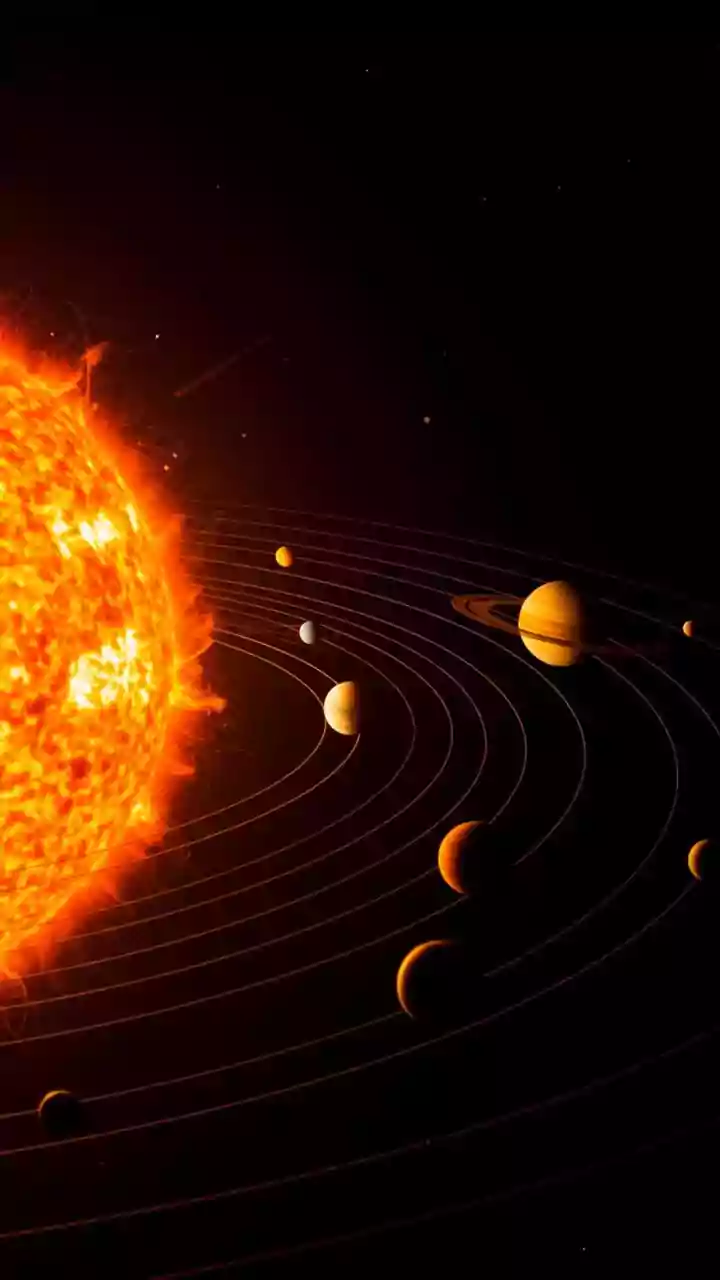
eyes on Earth. This delay is the key to understanding why stargazing is looking into the past. For nearby objects, this delay is tiny. The light from our own Sun, for instance, takes about 8 minutes and 20 seconds to reach us. So, if the Sun were to suddenly vanish, we wouldn’t know about it for over eight minutes. This concept is measured in 'light-years'—the distance light travels in one year. It’s not a measure of time, but an immense measure of distance, roughly 9.5 trillion kilometres.
Postcards from Our Neighbours
Let’s start with our closest stellar neighbour, Proxima Centauri. It is about 4.24 light-years away. This means the faint light we see from it tonight actually began its journey 4.24 years ago. When that light left its star, India was preparing for a different general election, the world was yet to face a global pandemic, and the conversations we were having were entirely different. Every star in our sky is a similar postcard from the past. Some are recent, like Proxima Centauri’s. Others, as we’ll see, are from a time so distant it’s hard to comprehend.
Echoes from Indian History
Now, let’s find a familiar face in the Indian night sky: Dhruva Tara, also known as Polaris or the North Star. For centuries, it has been a guiding light for travellers. Polaris is approximately 433 light-years away. The light we see from it today left the star around the year 1591. At that time, the Mughal Empire was flourishing under Emperor Akbar. The Charminar in Hyderabad was newly constructed. William Shakespeare was just beginning to write his famous plays in England. The light that left Polaris during that era has only just completed its journey across the cosmos to reach your eyes. You are, quite literally, seeing a star as it shone during a completely different period of human history.
Messages from Deep Time
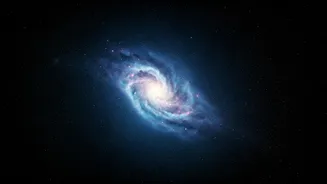
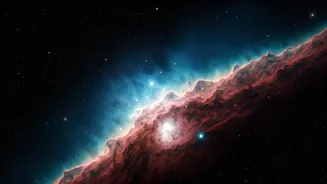
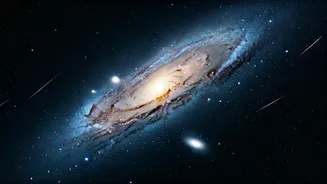
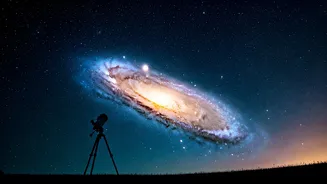
The further we look, the further back in time we see. Take the Orion Nebula, the fuzzy patch visible in the 'sword' of the Orion constellation. It is a stellar nursery where new stars are being born, and it’s about 1,344 light-years away. The light we see from it left around the 7th century, a time when the Chalukya and Pallava dynasties dominated southern India. But even that is nothing compared to the Andromeda Galaxy. On a very clear, dark night, you can spot this galaxy as a faint, smudge-like cloud. It’s the most distant object visible to the naked eye, located a staggering 2.5 million light-years away. The light reaching us now from Andromeda started its journey when our earliest human ancestors, like *Homo habilis*, were first walking the Earth. Dinosaurs had already been extinct for over 60 million years. That faint glow is an ancient message from before humanity even existed as we know it.
Gazing at Cosmic Ghosts
This time-delay effect has a fascinating and slightly eerie implication: some of the stars we see in the night sky may not even exist anymore. A star that is 1,000 light-years away could have exploded in a supernova 500 years ago, and we would have no way of knowing. For the next 500 years, we would continue to see its light shining brightly in our sky, completely unaware that we are looking at a ghost. For very distant and massive stars, this is a distinct possibility. The universe is not a static picture but a dynamic, evolving place, and the light reaching us is a running history of its epic story, not a live broadcast.