

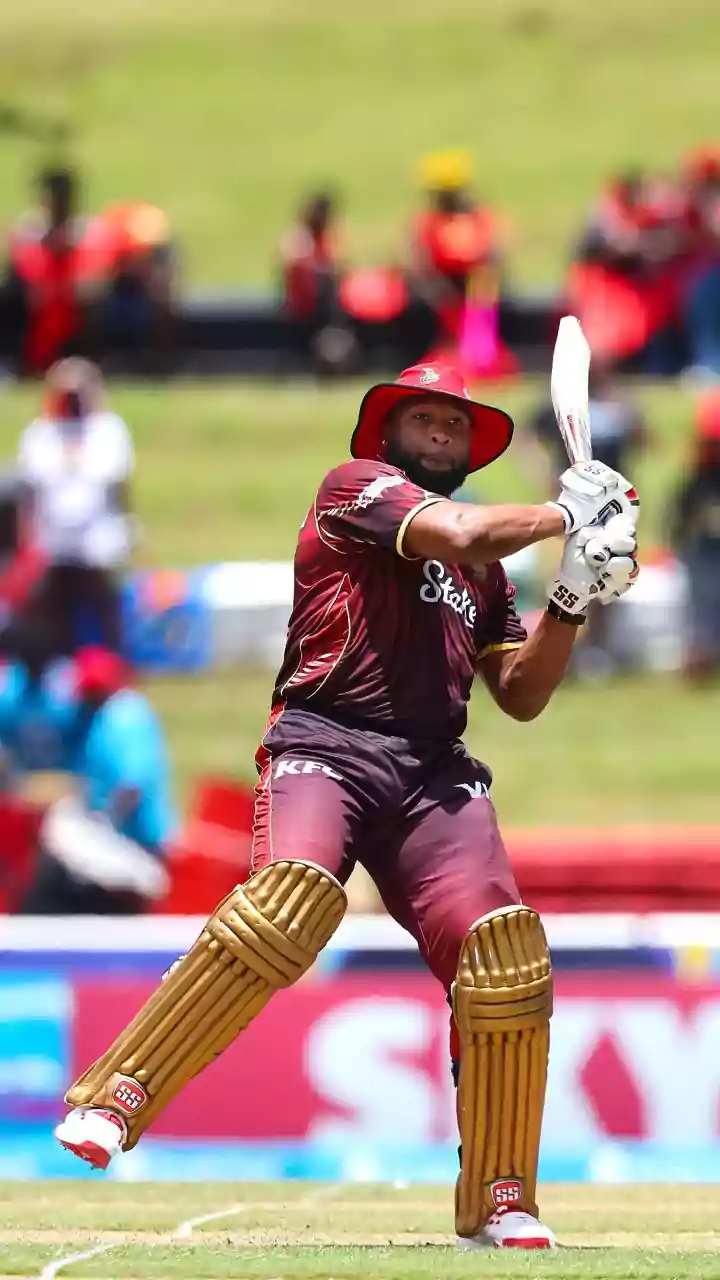


Nicholas Pooran: The Retirement That Wasn’t
The headline mentions Nicholas Pooran, but his story is complex. In June 2025, the explosive West Indian batter announced his retirement from international cricket at just 29. He cited the immense physical and mental toll of a packed schedule as a key
factor, indicating a shift towards the lucrative global T20 franchise circuit. As West Indies' all-time leading run-scorer in T20Is, his departure was a significant blow. However, this isn't a straightforward retirement. Pooran had previously stepped away from Test cricket to focus on the shorter formats, a move many modern players make. His recent announcement signifies a departure from international duty, not necessarily the sport entirely, allowing him to focus on franchise opportunities where his destructive batting is in high demand.
Henry Olonga: A Career Ended by Conviction
Perhaps one of the most poignant early retirements is that of Henry Olonga. During the 2003 Cricket World Cup, Olonga, then 26, and teammate Andy Flower wore black armbands to “mourn the death of democracy” in Zimbabwe under Robert Mugabe's regime. This courageous political stand had immediate and severe consequences. Olonga's involvement with the team became untenable, and he received death threats that made it perilous for him to return home. Forced into exile in England, his international career was over in an instant. He was not just the first Black cricketer to play for Zimbabwe but also a fast bowler of considerable talent whose career was sacrificed for a principled stand against injustice.
James Taylor: A Heartbreaking Diagnosis
England’s James Taylor was a tenacious, promising middle-order batsman whose career was flourishing. But in 2016, at the age of 26, his world was turned upside down. He was diagnosed with Arrhythmogenic Right Ventricular Cardiomyopathy (ARVC), a serious and rare inherited heart condition. The condition, which can be exacerbated by vigorous physical activity, made continuing his professional sports career impossible. The diagnosis forced his immediate retirement from all forms of cricket, a devastating blow for a player just entering his prime and who had fought hard to establish himself in the England side.
Craig Kieswetter: An Injury Too Severe
Craig Kieswetter was the man of the match in the 2010 T20 World Cup final, a hero for England. An aggressive wicketkeeper-batsman, his future seemed bright. However, in a county match in 2014, he was struck in the face by a bouncer that sneaked through his helmet's grille. The impact caused a broken nose, a fractured eye socket, and lasting vision problems. Despite attempting a comeback, he found that his vision was permanently impaired. In 2015, at just 27, Kieswetter announced his retirement, admitting that mentally, he could never be the same player again after the traumatic injury.
Tatenda Taibu: A Higher Calling
Tatenda Taibu was a record-breaker for Zimbabwe. A gifted wicketkeeper-batsman, he became the youngest Test captain in history in 2004. His career, however, was intertwined with the political turmoil in his country, leading him to a brief exile in 2005 after protesting unfair conditions for players. He returned to play for Zimbabwe, but in 2012, at the age of just 29, he announced his retirement from the sport. The reason was not injury or politics, but a personal conviction. Taibu stated his “true calling” was to do work for the church, a decision that stunned the cricket world but showed that for some, there are priorities beyond the boundary rope.
Zafar Ansari: The Scholar’s Choice
Just six months after making his Test debut for England, Zafar Ansari called time on his career in 2017 at the age of 25. A talented all-rounder, Ansari was also a brilliant academic, having graduated from Cambridge University. He had always maintained that cricket was just one part of his life and that he had other ambitions he wished to fulfill. Realising his passion for the game had waned, he chose to retire to pursue a new path, potentially in law. His story is a rare example of a player at the highest level deciding, on his own terms, that his future lay outside the world of professional sport.