





A New Window on the Universe
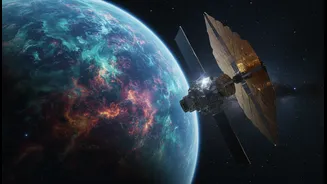
The James Webb Space Telescope (JWST) is the most powerful space observatory ever built, designed to see the universe in infrared light. This capability is crucial because vast clouds of cosmic dust, which are opaque to visible light telescopes like Hubble,
become transparent when viewed in the infrared spectrum. This allows Webb to peer into regions that were previously hidden, such as the chaotic and cluttered centres of galaxies where supermassive black holes reside and exert their immense gravitational influence. By capturing this otherwise invisible light, Webb provides an unprecedented opportunity to understand the mechanics of the cosmos.
Target: The Circinus Galaxy
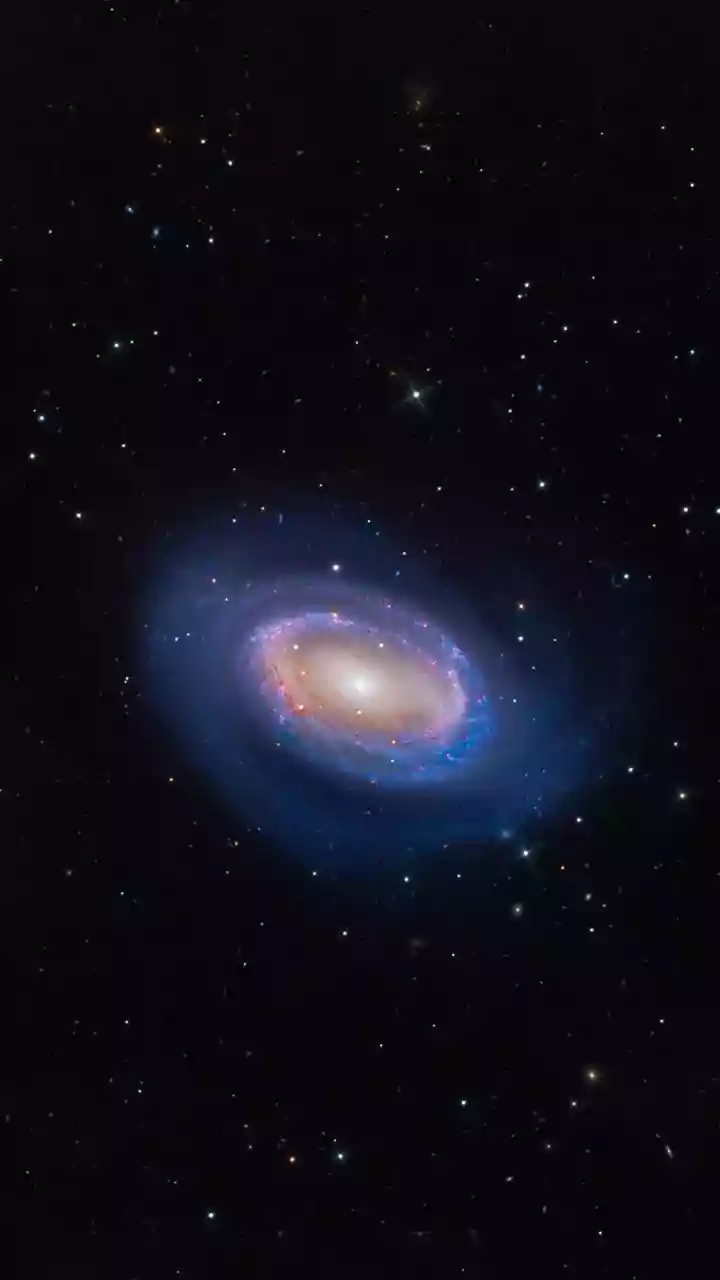
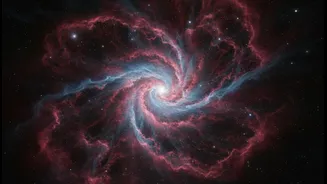
The subject of Webb's sharp new gaze is the Circinus galaxy, located a relatively close 13 million light-years from Earth. At its core is an active galactic nucleus (AGN), which is a supermassive black hole that is actively feeding on surrounding gas and dust. As this material spirals into the black hole, it forms a donut-shaped structure called a torus. Friction within this swirling disk of matter heats it to extreme temperatures, causing it to glow so brightly in infrared that it can outshine all the stars in the galaxy combined. For decades, this intense glow has made it difficult for astronomers to see exactly what is happening near the black hole itself.
What Webb's Sharp Eye Revealed
Using a specialized imaging technique called Aperture Masking Interferometry, Webb effectively doubled its resolution, providing a view equivalent to a 13-meter space telescope. This produced the sharpest images ever taken of the environment around a black hole. The new data reversed a long-held belief. Astronomers previously thought that most of the intense infrared light seen from AGNs came from powerful jets, or outflows, of material being blasted away from the black hole. However, Webb’s observations show that the vast majority of this emission—around 87%—comes directly from the hot, dusty disk of material that is actively feeding the black hole, not from what it's ejecting.
Solving a Cosmic Feeding Puzzle
This discovery is more than just a new picture; it helps solve a major puzzle about how supermassive black holes grow and interact with their host galaxies. Understanding the balance between inflow (accretion) and outflow (feedback) is key to learning how these behemoths regulate their own growth and influence star formation across their galaxies. By showing that the infrared glow is dominated by the infalling material in the torus, Webb provides a much clearer picture of the 'engine' itself. Scientists can now better distinguish between the fuel going into the black hole and the exhaust coming out, leading to more accurate models of galactic evolution.
The Technology Behind the Breakthrough
The breakthrough was made possible by Webb's Near-Infrared Imager and Slitless Spectrograph (NIRISS) instrument, using its unique aperture masking capability. This technique uses a physical mask with seven small holes to control the light entering the detector, allowing astronomers to filter out the overwhelming glare from stars and isolate the faint structures close to the black hole. It's a powerful combination of cutting-edge optics and clever data processing that allows JWST to achieve such incredible sharpness over a small area of the sky. This method promises to be a game-changer for studying other nearby active galaxies, turning what were once blurry smudges of light into detailed maps of cosmic machinery.