


Why Flexibility Matters
Flexibility is more than just being able to touch your toes; it's about allowing your body to move freely and comfortably through its full range of motion. When muscles are tight, they can pull on your joints, leading to poor posture and discomfort. A
consistent yoga practice helps lengthen tight muscles, improve posture, increase blood flow, and reduce the general aches that come from inactivity. Even just 10 to 15 minutes a day can make a significant difference, leading to better balance and a greater sense of ease in your body. These simple asanas, or poses, are the perfect starting point.
Cat-Cow Stretch (Marjaryasana-Bitilasana)
This gentle, flowing movement is one of the best ways to warm up the spine and relieve tension in the back and neck. It is often used at the beginning of a yoga class to prepare the body for deeper stretches. The synchronization of breath with movement helps calm the mind and improve focus. To begin, position yourself on all fours, with your hands directly under your shoulders and knees under your hips. As you inhale, drop your belly towards the mat and look up, arching your back into Cow Pose. As you exhale, round your spine upwards, tucking your chin to your chest, like a cat stretching. Flow between these two poses for several breaths, feeling the spine awaken.
Downward-Facing Dog (Adho Mukha Svanasana)
Arguably the most iconic pose in yoga, Downward-Facing Dog is a full-body stretch that lengthens the hamstrings, calves, and spine while building strength in the arms and shoulders. Start on your hands and knees. Tuck your toes and lift your hips up and back, forming an inverted 'V' shape with your body. Spread your fingers wide and press firmly into your hands. For beginners, it's important to keep a slight bend in the knees to maintain a long, straight spine; don't worry about getting your heels to the floor. Let your head hang freely and breathe deeply.
Child's Pose (Balasana)
Child's Pose is a restorative posture that provides a gentle stretch for the back, hips, and thighs. It's a perfect resting pose to take anytime you need a breather during your practice. From your hands and knees, bring your big toes to touch and spread your knees wide. Sit back on your heels and fold your torso forward, resting your forehead on the floor. Your arms can be stretched out in front of you or rested alongside your body. This pose calms the nervous system and can help alleviate stress and fatigue.
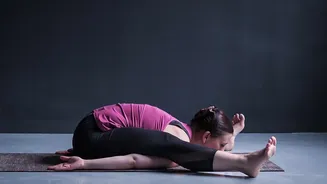
Seated Forward Bend (Paschimottanasana)
This pose provides a deep stretch for the hamstrings and lower back, areas that often become tight from prolonged sitting. Sit on the floor with your legs extended straight in front of you. Inhale to lengthen your spine, and as you exhale, hinge at your hips and begin to fold forward. Lead with your heart rather than rounding your back. Rest your hands wherever they comfortably reach—on your shins, ankles, or feet. If your hamstrings are very tight, sit on a folded blanket and keep a slight bend in your knees. The goal is a comfortable stretch, not a strain.
Bridge Pose (Setu Bandhasana)
Bridge Pose is a gentle backbend that helps to stretch the front of the body, including the chest, neck, and spine, while strengthening the back, glutes, and hamstrings. Lie on your back with your knees bent and feet flat on the floor, hip-width apart. You should be able to touch your heels with your fingertips. Press into your feet and lift your hips off the floor. Keep your thighs parallel. You can clasp your hands together on the floor beneath you for a deeper shoulder stretch. Hold for a few breaths before slowly rolling your spine back down to the mat.