

South India: The Divine Aura of Temple Jewellery
For South Indian brides, particularly in states like Tamil Nadu, Karnataka, and Kerala, temple jewellery isn't just an accessory; it's a sacred tradition. This style originated as adornments for deities in temples during the Chola and Pandya dynasties
before being adopted by royalty and eventually becoming a bridal staple. Characterised by intricate carvings of gods, goddesses like Lakshmi, peacocks, and lotus motifs, these pieces are crafted in gold and often set with red Kemp stones. A complete bridal look features layered necklaces like the Kasu Mala (coin necklace) and Manga Malai (mango motif necklace), elaborate waist belts called Vaddanam, bell-shaped Jhumka earrings, and hair ornaments for the braid.
North India: The Royal Gleam of Kundan and Polki
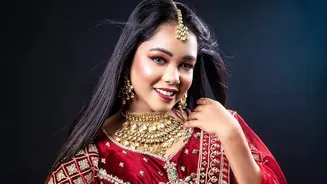
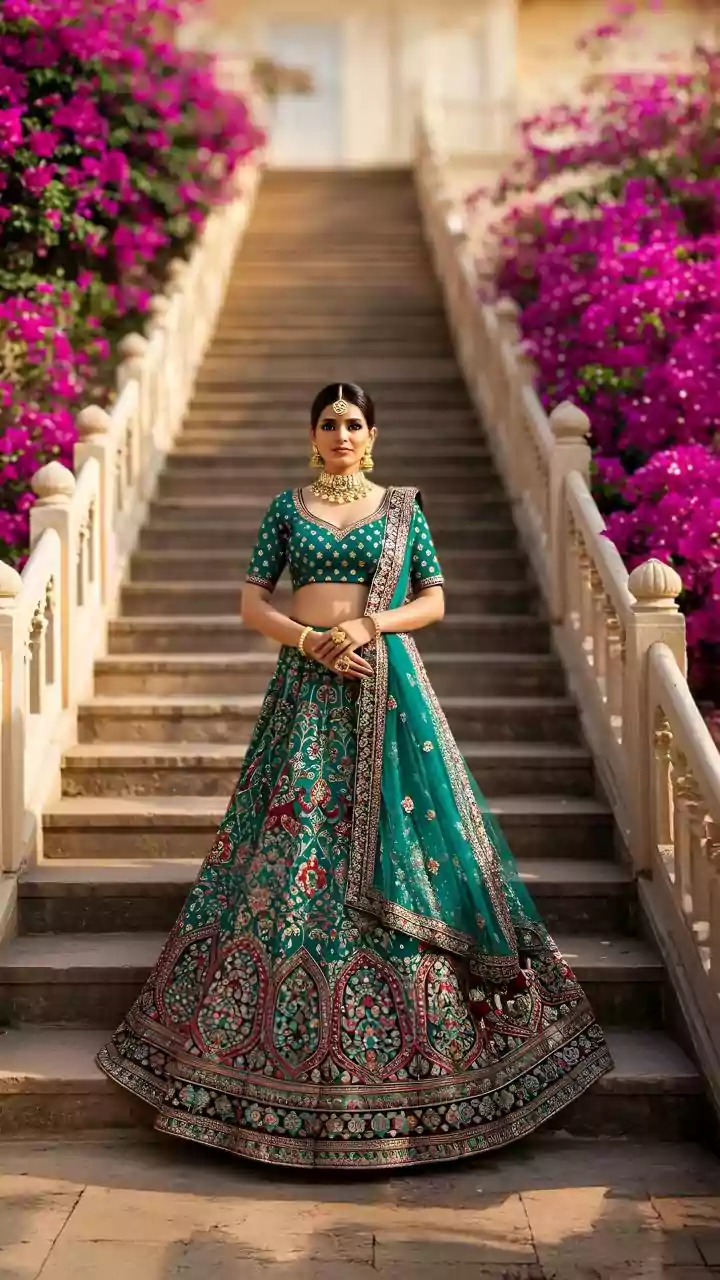
Journey to the North, especially Rajasthan and Punjab, and you'll find the regal splendour of Kundan and Polki jewellery. With roots in the Mughal courts, these styles are synonymous with royal weddings. Kundan is a meticulous art form where glass stones are set into a gold framework. Polki, on the other hand, uses uncut, unpolished diamonds, giving the jewellery a raw, natural sparkle and making it a more valuable heirloom. A North Indian bride might wear a heavy choker, a statement Maang Tikka on her forehead, and a 'Haath Phool', a delicate ornament connecting a bracelet to rings, all showcasing this intricate craftsmanship.
West India: Maharashtrian Gold and Gujarati Craft
In Maharashtra, bridal jewellery is a beautiful blend of gold and pearls. The most iconic piece is the Brahmani Nath, a distinctive pearl-and-bead nose ring. The bride's neck is adorned with pieces like the Thushi, a choker of tightly packed gold beads, and the Kolhapuri Saaj, a long necklace. Her arms are decorated with green glass bangles, a symbol of fertility, alongside solid gold bangles called Tode. In neighbouring Gujarat, Jadau work, the technique of embedding stones into gold, is prominent. Layered gold necklaces and elaborate Matha Pattis that frame the hairline are hallmarks of a Gujarati bride's ensemble.
East India: The Delicate Artistry of Bengali Gold
The Bengali bride shines in jewellery known for its delicate and precise craftsmanship. Key items include the 'Shakha Pola', a pair of bangles made from conch shell (white) and red coral, which are symbolic of a married woman. The bride's ears are often adorned with the 'Kaan Bala', an earring shaped to the contour of the ear, or elaborate Jhumkos. For necklaces, the 'Sita Haar' is a long, multi-layered chain that makes a grand statement. A 'Tikli', similar to a Maang Tikka, and a 'Mukut', a small golden tiara, complete the bride’s head adornments, giving her a look of classic elegance.