




A Panoramic View of the Cosmos
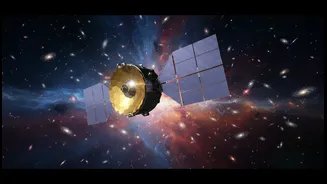
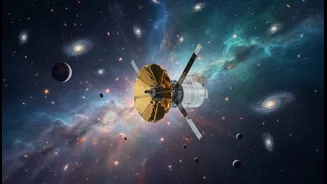
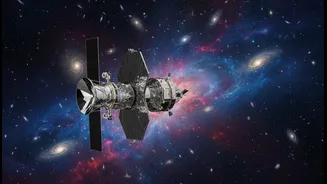
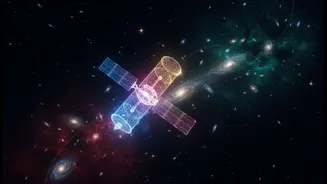
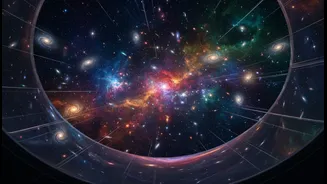
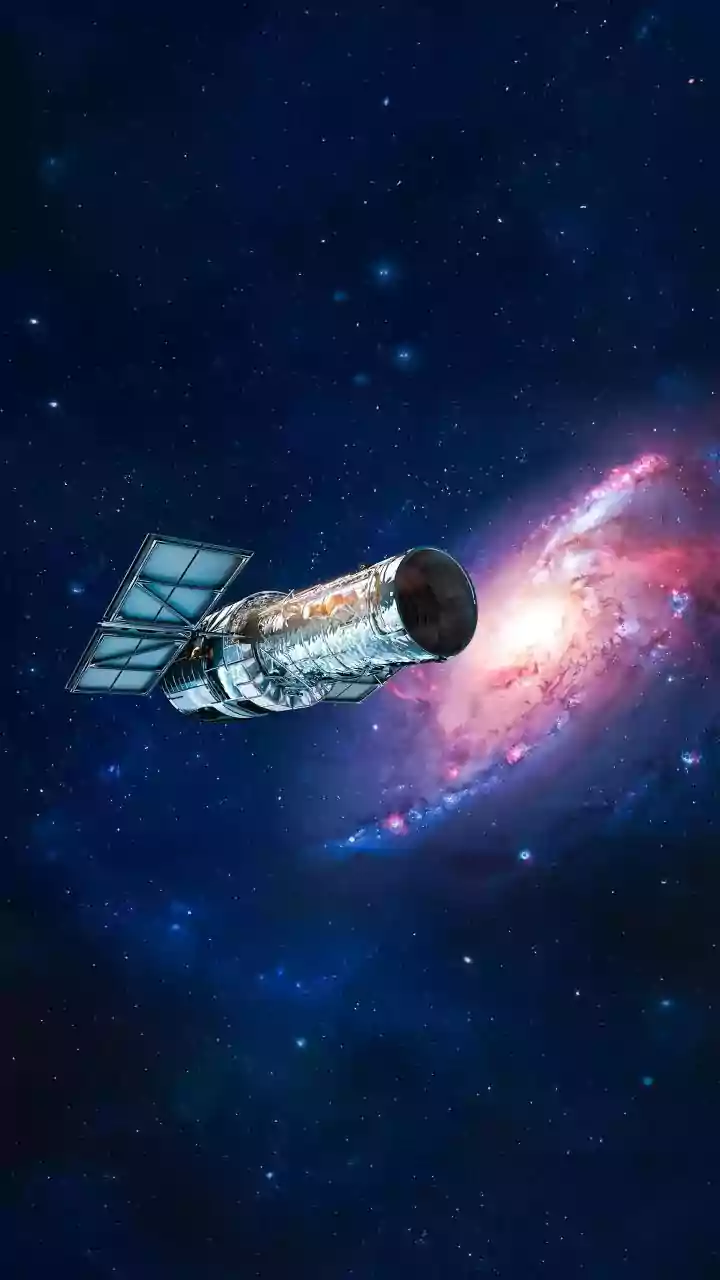
The single most significant feature of the Nancy Grace Roman Space Telescope is its incredible field of view. Its Wide Field Instrument (WFI) can capture an area of the sky 100 to 200 times larger than Hubble's or Webb's infrared cameras in a single snapshot.
While Hubble and Webb are like microscopes, designed for deep, narrow dives into specific cosmic targets, Roman is a panoramic camera built for breathtaking surveys. Imagine trying to create a mosaic of a vast landscape by taking thousands of photos through a telephoto lens; that’s the challenge for older telescopes. Roman can capture that same landscape in just a few shots, with the same sharp resolution as Hubble. This efficiency is staggering: Roman will be able to survey the sky up to 1,000 times faster than Hubble. In its first five years, it's expected to image over 50 times the area of sky that Hubble covered in its first 30 years of operation.
Illuminating the Dark Universe
Roughly 95% of the universe is made of dark energy and dark matter, mysterious components that we can't see or directly detect. Roman’s primary mission is to tackle these profound puzzles head-on. It will investigate dark energy, the force thought to be accelerating the expansion of the universe, using three powerful techniques: mapping the distribution of galaxies, measuring cosmic distances with exploding stars called Type Ia supernovae, and studying how the light from distant galaxies is bent by gravity, a phenomenon known as weak gravitational lensing. By observing hundreds of millions of galaxies, Roman will create a 3D map of the cosmos that reveals how dark energy's influence has changed over billions of years. This will also allow scientists to map the invisible scaffolding of dark matter that shapes how galaxies form and cluster together, providing crucial clues to its fundamental nature.
A New Census of Alien Worlds
While NASA's Kepler and TESS missions have found thousands of exoplanets using the "transit" method—watching for the dip in a star's light as a planet passes in front—Roman will primarily use a different and complementary technique called gravitational microlensing. This method is sensitive to planets that other techniques often miss, including worlds farther from their star (like our own Jupiter and Saturn) and even "rogue" planets that drift through the galaxy untethered to a star. Microlensing occurs when a star with a planet passes in front of a more distant star, and its gravity acts like a lens, briefly magnifying the background starlight. The planet creates its own little blip in that magnification signal. From its vantage point in space, free of Earth's blurry atmosphere, Roman's survey of the dense star fields in the galactic center is expected to find thousands of new worlds, providing a more complete census of planetary systems.
A Data Goldmine for All
Roman isn't just a discovery machine; it's a data-generating powerhouse for the entire astronomical community. The sheer volume of high-resolution imagery it will produce—estimated at around 100,000 pictures every year—will create an unprecedented public archive. This data will be a treasure trove for scientists studying everything from asteroids in our own solar system to the evolution of the most distant galaxies. One of Roman's most powerful roles will be acting as a scout for other observatories. Its wide-angle surveys will identify unique and interesting targets—rare galaxies, unusual supernovae, or intriguing exoplanet systems—that the James Webb Space Telescope can then zoom in on for more detailed analysis. This synergy, combining Roman's breadth with Webb's depth, will allow astronomers to understand cosmic phenomena in a much broader context, transforming how astrophysics is done for decades to come.