
What Exactly Is Hydroponics?
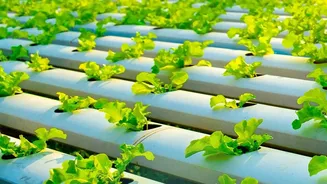
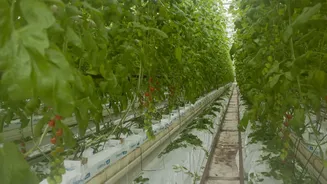
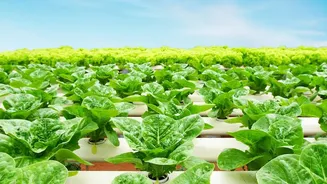
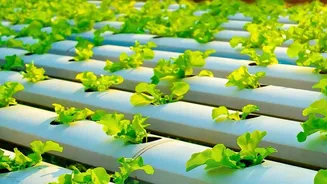
At its core, hydroponics is a method of growing plants without soil. Instead of sending roots into the earth to find what they need, plants are grown in an inert medium, and their roots are fed a nutrient-rich water solution. This technique gives you
precise control over the plant's environment, from nutrition to light. While it might sound futuristic, the concept has ancient roots, from the Hanging Gardens of Babylon to floating gardens in China. Today, it presents a practical solution for urban gardening, allowing you to grow more in less space, often right inside your home.
Why Coriander Thrives Without Soil
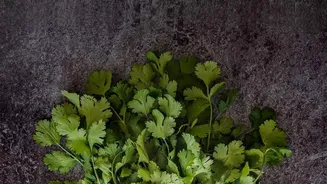
Coriander, or cilantro, is an ideal candidate for hydroponics. This method sidesteps many common gardening frustrations. Without soil, there are no soil-borne pests or diseases to worry about. Plants also tend to grow faster—some studies suggest 30-50% quicker than in soil—because nutrients are delivered directly to the roots. This means the plant wastes no energy searching for food and can focus entirely on growing lush, green leaves. For a herb as notorious for 'bolting' (flowering prematurely) in the heat as coriander, the controlled indoor environment of a hydroponic setup is a major advantage, allowing for year-round harvesting.
Your Hydroponic Starter Kit
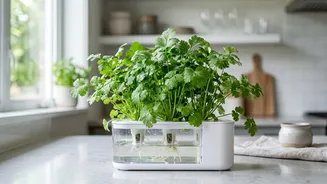
Getting started doesn't have to be complicated. For beginners, a simple Deep Water Culture (DWC) or a Kratky method system is highly recommended and easy to build at home. You'll need a few basic components: a container or reservoir to hold water, net pots to hold the plants, a growing medium like clay pebbles (Leca) or coco peat, a liquid hydroponic nutrient solution, and an air pump with an air stone for DWC systems to oxygenate the water. Many all-in-one kits are also available, which come with built-in LED grow lights and are perfect for a kitchen counter.
A Step-byStep Guide to Your First Harvest
First, germinate your coriander seeds. A simple way is to place them between moist paper towels in a cool, dark place for a few days. Once they sprout, carefully place the seedlings into net pots filled with your chosen growing medium. Prepare your nutrient solution according to the package directions, ensuring the pH level is between 5.5 and 6.5, which is ideal for coriander. Place the net pots into your system so that the roots are submerged in the nutrient solution. Coriander needs plenty of light—around 12 to 16 hours a day is optimal, which can be provided by a sunny windowsill or an LED grow light. You can start harvesting in as little as four to six weeks by snipping the outer leaves. A good rule is to never take more than a third of the plant at once to ensure it continues to produce.
Common Challenges and Solutions
While hydroponics solves many problems, it has its own challenges. The most common issue with coriander is bolting, which is often triggered by heat. Keeping the ambient temperature between 18°C and 24°C can help prevent this. Algae can sometimes grow in the reservoir if it's exposed to light; simply ensure your container is opaque to block it out. Root rot, caused by poor oxygenation, is another potential problem. An air pump in a DWC system is crucial for preventing this. Finally, pay attention to your nutrient solution. Regularly check the pH and nutrient concentration (EC), and change the solution every two to three weeks to keep your plants healthy and thriving.