

The Two Main Circuits
Planning a trip across all eight states of Northeast India in one go is a common mistake that leads to rushed travel and exhaustion. The region is vast, and travel between hilly destinations can be slow. A better approach is to choose a regional circuit.
For first-time visitors, the most popular and accessible route combines Assam and Meghalaya. A second, equally rewarding circuit focuses entirely on Sikkim and its high-altitude Himalayan landscapes. Both itineraries offer spectacular lakes, but with very different characteristics. For a shorter trip of 5-7 days, it is wise to stick to just one of these circuits. Longer trips of 10-14 days allow for deeper exploration or combining regions.
Meghalaya’s Expansive Waters: Umiam Lake
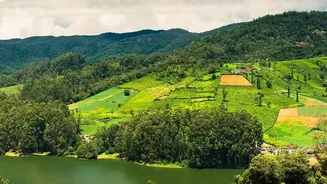
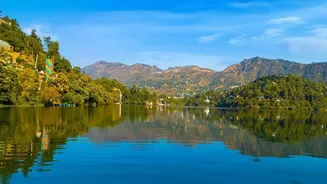
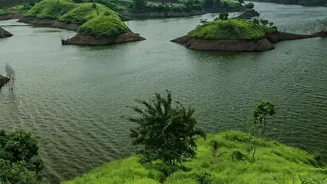
For those on the Assam-Meghalaya circuit, Umiam Lake is an unmissable introduction to the state's beauty. Located just 15 km north of Shillong, it’s a sprawling man-made reservoir often called 'Barapani' or 'big water'. Formed in the 1960s by damming the Umiam River, its sheer scale, fringed by pine-covered Khasi Hills, makes it feel entirely natural. Most travellers encounter it on the scenic drive from Guwahati to Shillong. It’s a popular stop for boating, water sports like kayaking and water cycling, or simply admiring the view from a lakeside cafe. Because of its easy accessibility, a visit to Umiam Lake can be a half-day trip from Shillong, fitting perfectly into a broader Meghalaya itinerary that includes the waterfalls of Cherrapunji and the crystal-clear rivers of Dawki. No special permits are needed for Meghalaya, making it a logistically simple start to a Northeast adventure.
Sikkim’s Glacial Jewels: Tsomgo & Gurudongmar
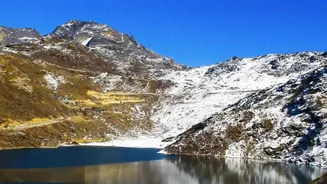
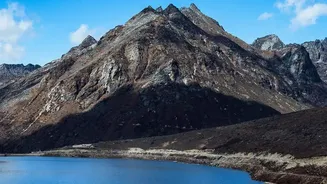
The Sikkim circuit offers a completely different experience, taking you into the high Himalayas. Here, the lakes are glacial, sacred, and set at breathtaking altitudes. Tsomgo Lake, also known as Changu Lake, is the most accessible. Located about 40 km from the capital city of Gangtok at an altitude of 12,313 feet, this holy lake is surrounded by steep mountains that are snow-covered in winter. Further into North Sikkim lies Gurudongmar Lake, one of the highest lakes in the world at over 17,000 feet. Its surreal blue waters against a backdrop of stark, barren peaks are an unforgettable sight. Visiting these lakes requires careful planning. Both are in protected areas, so permits are mandatory for all tourists and are typically arranged a day in advance by registered tour operators in Gangtok. The high altitude also means acclimatisation is crucial.
Manipur's Floating Wonder: Loktak Lake
For a truly unique experience, consider a trip to Manipur to see Loktak Lake, the largest freshwater lake in Northeast India. What makes it globally famous are the 'phumdis'—hundreds of floating islands of vegetation, soil, and organic matter. These phumdis are so large that local fishermen build their homes on them. The lake is also home to Keibul Lamjao National Park, the world's only floating national park, which is the last natural habitat of the endangered Sangai or 'dancing deer'. A trip to Loktak fits well into a dedicated 3 to 4-day Manipur itinerary, starting from the capital, Imphal, which is about 45 km away. Experiences include taking a boat ride through the phumdis, staying in a floating homestay, and visiting the INA Memorial where the Indian flag was first unfurled on mainland soil in 1944.
Building Your Lake-Focused Itinerary
To best experience these lakes, don't try to see them all at once. For a one-week trip, focus on either Meghalaya or Sikkim. A classic Meghalaya trip would be: fly into Guwahati, drive to Shillong stopping at Umiam Lake, spend several days exploring Shillong, Cherrapunji, and Dawki, then return to Guwahati. A one-week Sikkim trip involves flying into Bagdogra Airport (West Bengal), driving to Gangtok, acclimatising, and then taking day trips to Tsomgo Lake and other nearby sights. If you have two weeks, you could combine the Assam-Meghalaya circuit with a visit to Kaziranga National Park. Alternatively, a more adventurous two-week trip could pair Sikkim with a flight to Manipur, offering a journey from high-altitude glacial lakes to a unique floating ecosystem. The best time to visit for clear skies and pleasant weather is generally from October to April, though monsoons have their own misty charm.