


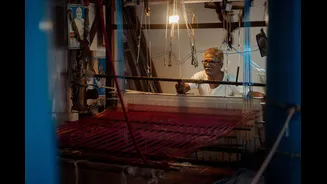
A Resurgence of National Pride
The hum of the handloom is growing louder across India. Spurred by a greater consciousness around sustainable fashion and a desire to support local economies, consumers are increasingly turning towards handcrafted textiles. This movement is not just about
buying fabric; it's about buying a piece of heritage. Initiatives like the government's 'Vocal for Local' campaign and the annual National Handloom Day on August 7th have significantly boosted this sentiment. The day commemorates the 1905 Swadeshi Movement, linking today's revival to a historical legacy of self-reliance and cultural pride. This renewed focus aims to transform the sector from a cottage industry into a globally competitive creative economy, celebrating the skill of over 3.5 million weavers and allied workers, the majority of whom are women in rural areas.
The Double-Edged Sword of Modernisation
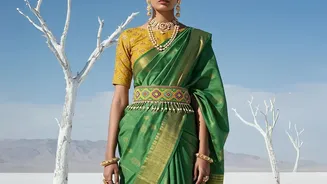
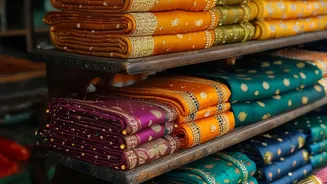
To stay relevant, handloom cannot remain a museum piece. Designers and brands are playing a pivotal role in bridging the gap between the weaver and the global consumer. They are reinterpreting traditional motifs and weaves—like Banarasi brocades and Chanderi silks—into contemporary silhouettes that appeal to a younger, fashion-forward audience. This collaboration creates market-ready products and helps ensure artisans earn fairer wages. However, this push for commercial viability comes with the inherent risk of craft dilution. The pressure to produce faster and cheaper can lead to the simplification of complex designs, the use of lower-quality materials, or, in the worst cases, the mislabelling of power-loom fabric as handloom. The very essence of handloom—its slow, meticulous, and human-centric process—is threatened by the demands of a fast-fashion world.
Distinguishing Handloom from Power Loom
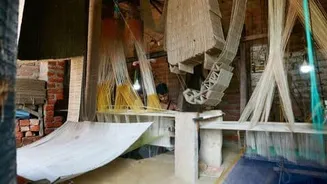
The line between handloom and power loom can be blurry for the average consumer, but the differences are fundamental. Handloom weaving is done manually without electricity, imbuing each fabric with slight, unique irregularities that are a signature of human touch. Power looms, driven by electricity, produce uniform textiles at a fraction of the time and cost, but lack the distinctive texture and character of handwoven cloth. Handloom fabric is softer, more breathable, and drapes differently due to the weaver's ability to control the yarn's tension manually. Financially, the price of handloom reflects weeks of labour, fair wages, and the preservation of skill, whereas power loom costs are driven by industrial efficiency. This distinction is crucial, as the flooding of markets with cheaper, machine-made imitations poses a significant threat to the livelihoods of genuine artisans.
The Weaver at the Center
Despite the sector's revival, the artisan's reality remains challenging. Low and inconsistent wages have historically been a major issue, deterring younger generations from taking up the craft. The Fourth All India Handloom Census highlighted that even with some improvements, a large percentage of weavers still struggle with low monthly incomes. For the revival to be truly successful, the benefits must flow directly to the weavers. This requires a multi-pronged approach: ensuring fair wages, providing access to quality raw materials through schemes like the Raw Material Supply Scheme, and offering financial support via programmes like the Weaver MUDRA Scheme. Empowering weavers through the formation of producer companies and providing them with direct market access via digital platforms are also critical steps towards making weaving a viable and respected profession once more.
Weaving a Sustainable Future
The path forward for Indian handloom lies in a delicate balance between heritage and innovation. Authenticity is becoming a powerful brand in itself. The use of Geographical Indication (GI) tags, which protect regional weaving traditions like Kanjeevaram or Pochampally Ikat, and the India Handloom Brand certification help guarantee genuineness for consumers. Technology, once seen as a threat, is now being harnessed to support the craft, from e-commerce platforms connecting weavers directly to buyers to QR codes that trace a garment's journey from loom to wardrobe. Ultimately, the future of this sector depends on creating a complete ecosystem where designers innovate respectfully, the government provides robust support, and consumers make conscious choices, understanding that the true value of handloom lies not just in the product, but in the people and the culture woven into every thread.