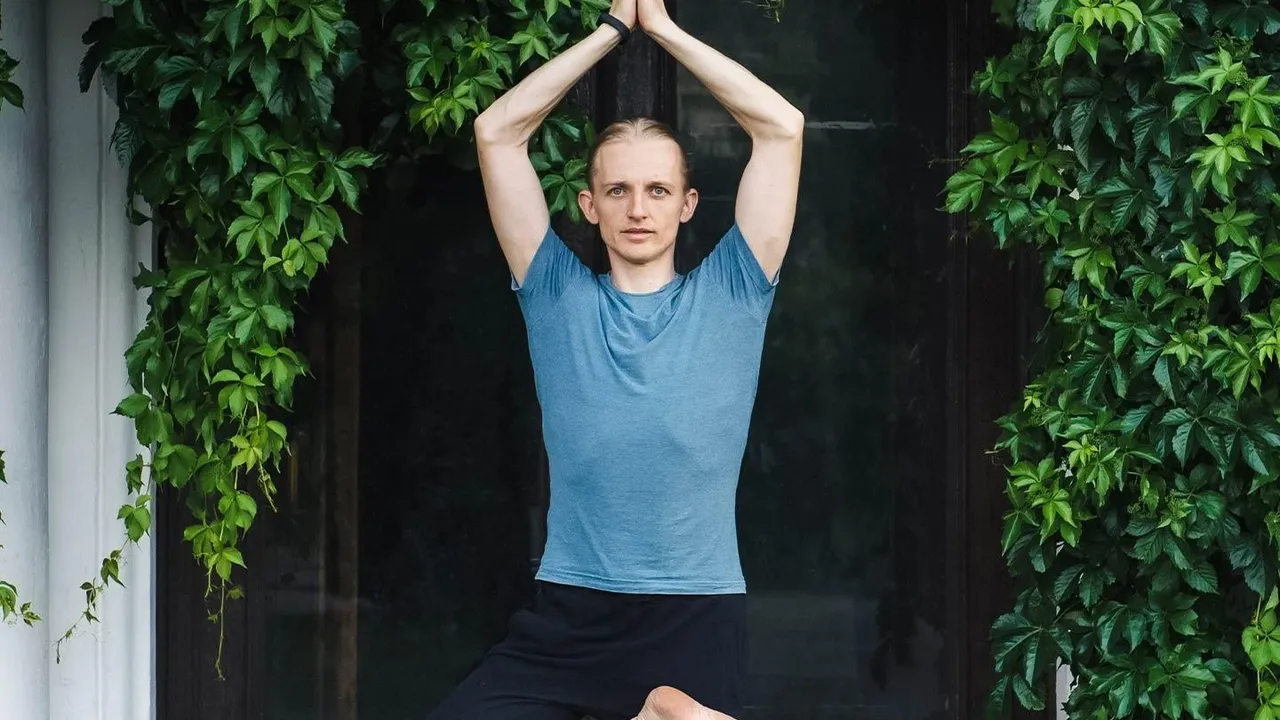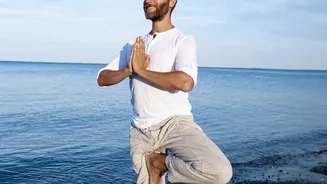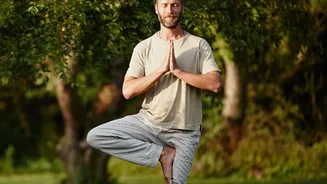





Ready to elevate your yoga practice? Combining the grounding stability of Tree Pose with the binding power of Eagle Pose offers a unique challenge. This blend tests your balance, sharpens your focus, and deepens your body awareness.
The Foundation: Mastering Tree Pose (Vrksasana)
Before adding complexity,
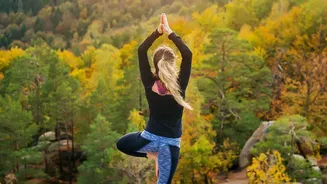
it’s essential to have a stable Tree Pose. Begin in Mountain Pose (Tadasana), feet together and grounded. Shift your weight onto one foot, engaging the muscles of the standing leg. Bend the other knee and place the sole of your lifted foot on your inner ankle, calf, or inner thigh—avoiding direct pressure on the knee joint. Press the foot into the leg and the leg back into the foot to create stability. Keep your hips level and find a fixed point to gaze at (your drishti) to maintain balance. Your hands can be at your heart center or extended overhead. A solid Tree Pose is the root from which all variations grow.
Introducing Eagle Arms (Garudasana Arms)
Eagle arms create a deep stretch across the upper back and shoulders. From a stable standing or seated position, extend your arms forward. Cross one arm over the other at the elbow. Bend your elbows, bringing the backs of your hands toward each other. If accessible, continue to wrap your forearms and press your palms together. To deepen the stretch, gently lift your elbows while drawing your shoulders down and away from your ears. This action helps release tension between the shoulder blades and is a powerful antidote to the slouched posture many of us adopt while sitting at desks.
How to Combine Eagle Arms with Tree Pose
Once you feel steady in your Tree Pose, you can introduce the arm variation. First, establish your base—a strong standing leg and the lifted foot placed firmly. Instead of bringing your hands to your heart or overhead, extend them forward and move into your Eagle arm wrap. You’ll likely notice an immediate shift in your center of gravity. This combination challenges your balance in a new way, forcing the small stabilizing muscles in your standing leg and core to work harder. Keep your gaze steady and your breath even. Don't worry if you wobble; it’s part of building greater stability over time.
The Ultimate Challenge: Tree Pose with Eagle Legs
This variation is a significant test of balance and hip compression. Begin by bending your standing leg slightly. Instead of placing your lifted foot on the inner thigh for Tree Pose, cross the lifted thigh high over your standing thigh, as you would for Eagle Pose. From here, the goal is to work toward the full Eagle leg bind, hooking the top foot behind the standing calf. This requires open hips and considerable focus. Maintain a soft bend in the standing knee to act as a shock absorber. This hybrid pose intensely challenges your proprioception—your body's sense of where it is in space.
The Benefits of Blending These Poses
Combining these asanas does more than just look impressive. It builds incredible focus and concentration, as maintaining balance with these complex binds demands your full attention. Physically, it strengthens the entire standing leg, from the ankle and calf up to the thigh. The Eagle arm variation opens the upper back and shoulders, relieving stiffness. The Eagle leg wrap stretches the hips and outer thighs while promoting joint stability. This fusion of poses acts as a 'meditation in motion,' quieting the mind as you navigate the physical challenge.
Modifications for a Safer Practice
These poses should be challenging, not painful. If the full expression feels out of reach, there are plenty of modifications. For Eagle arms, if you can’t press the palms together, simply press the backs of your hands together or give yourself a hug by placing your hands on your opposite shoulders. For the leg wrap, you can cross your thighs but keep the toes of the wrapped foot on the floor or on a block for support, acting as a 'kickstand'. Always practice near a wall for stability if you feel unsteady. Listen to your body and avoid these poses if you have recent or chronic knee, ankle, or shoulder injuries.