

The Problem with Power
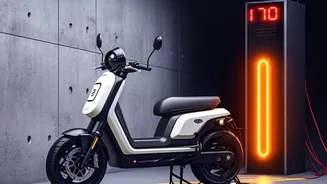
For all their benefits, electric scooters have been dogged by two persistent public concerns: battery safety and charging speed. News stories of battery fires have made potential buyers wary. These incidents often involve a phenomenon called 'thermal
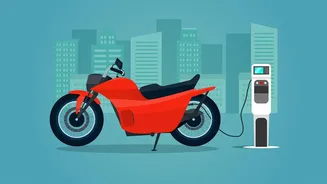
runaway' in conventional lithium-ion (Li-ion) batteries, where damage or stress can cause a cell to overheat, leading to a dangerous, self-sustaining fire. On top of safety fears, the convenience of a quick petrol top-up is a high bar for EVs to clear. The hours-long wait for a full charge has been a significant barrier to wider adoption, creating 'range anxiety' and limiting the practicality of scooters for heavy-use scenarios like delivery services.
A Safer Chemistry: Lithium Iron Phosphate (LFP)
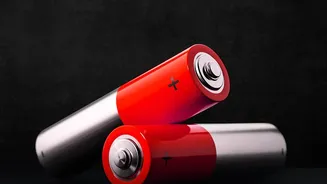
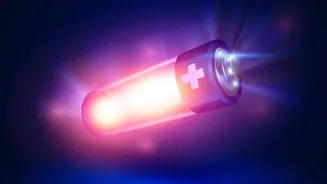
One of the most significant immediate upgrades is the shift in battery chemistry to Lithium Iron Phosphate, or LFP. Unlike the more common Nickel Manganese Cobalt (NMC) chemistry, LFP batteries are inherently more stable. Their chemical structure is far more resistant to overheating and does not produce oxygen when under stress, which is what fuels the dangerous thermal runaway process in NMC batteries. This makes them significantly safer, especially in India's hot climate. While LFP batteries have a slightly lower energy density—meaning they might offer a bit less range for the same weight—they compensate with a much longer lifespan, often handling two to four times more charge cycles than their NMC counterparts. This durability and safety make them a smart, practical choice for the everyday Indian commuter.
The Ultimate Upgrade: Solid-State Batteries
The true game-changer on the horizon is the solid-state battery. These batteries replace the flammable liquid or gel electrolyte found in conventional Li-ion batteries with a solid material, such as a ceramic or polymer layer. This fundamental change almost completely eliminates the risk of fire. Without a flammable liquid, there's nothing to leak or ignite. Beyond safety, solid-state technology promises a massive leap in performance. Projections show they could double the energy density, meaning a scooter could travel twice as far on a battery of the same size and weight. Furthermore, they are more stable across extreme temperatures and can handle much faster charging—potentially reaching 80% capacity in under 15 minutes without degrading the battery's health.
Smarter, Not Just Newer
Beyond new chemistries, the 'brain' of the battery pack—the Battery Management System (BMS)—is also getting a major upgrade. An advanced BMS acts as a vigilant supervisor, continuously monitoring the voltage, current, and temperature of every individual cell in the pack. This allows it to prevent overcharging, balance the charge across all cells for a longer life, and crucially, detect and pre-empt the conditions that could lead to overheating. Some next-gen systems are even going wireless, which reduces complexity and weight while improving reliability by removing physical connections that can fail. These smarter systems ensure that even existing battery chemistries can operate more safely and efficiently.
Solving the Rapid Power Puzzle
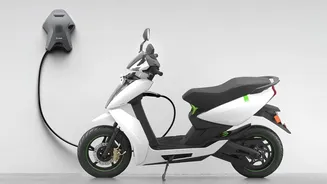
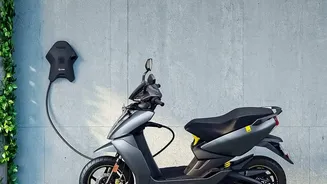
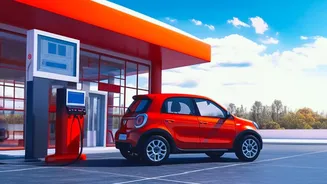
For riders, 'rapid power' means less time tethered to a wall socket. New technologies are solving this in two ways. Firstly, batteries like LFP and solid-state, with their superior thermal stability, can safely accept higher charging currents. Innovations like graphene-enhanced anodes also promise to dramatically slash charging times, potentially to as little as 10 minutes. The second, and perhaps more immediately impactful solution for India, is battery swapping. This model, already being deployed by companies for commercial fleets, allows a rider to pull into a kiosk, swap a depleted battery for a fully charged one in under two minutes, and be on their way. This system effectively eliminates charging wait times, making the electric scooter experience as fast as a traditional fuel stop.