





Why Workout Balance Is Non-Negotiable
Creating a balanced workout plan is essential for long-term health, preventing injuries, and achieving sustainable progress. When you focus too heavily on certain muscles—often the 'mirror muscles' like the chest and biceps—while neglecting others, you create
imbalances. These imbalances can pull your joints out of proper alignment, leading to issues like rounded shoulders, lower back pain, and an increased risk of strains or tears. An unbalanced routine can also lead to performance plateaus, where you stop making gains because weaker, underdeveloped muscles are holding you back. A well-rounded plan ensures all your muscles develop in proportion, supporting good posture, efficient movement, and overall physical resilience.
Think in Movements, Not Just Muscles
The most effective way to build a balanced body is to structure your workouts around fundamental human movements. Rather than just listing body parts, this functional approach ensures you're training your body the way it's designed to move in real life. Experts identify five to seven core patterns that every balanced plan should include. The main ones are the Push, Pull, Squat, Hinge, and Carry. These movements cover every major muscle group in a coordinated, functional way. For example, a push works the chest, shoulders, and triceps, while a pull engages the back and biceps, creating natural opposition and balance.
The Five Pillars of a Balanced Routine
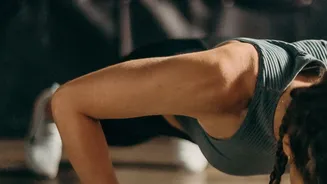
To audit your own plan, check if you're regularly training these five key movement patterns:\n\n1. Push: These are exercises where you push a weight (or your body) away from you. This includes horizontal pushes like the bench press and push-ups, and vertical pushes like the overhead press.\n2. Pull: The opposite of a push, these exercises involve pulling a weight toward your body. Examples include pull-ups, bent-over rows, and lat pulldowns. A balanced plan should have roughly an equal volume of pushing and pulling exercises.\n3. Squat: This is any movement where you lower your body by bending at the hips and knees while keeping your torso relatively upright. Goblet squats, front squats, and lunges all fit into this category.\n4. Hinge: This pattern involves bending at the hips, moving your torso forward while keeping a neutral spine. It's crucial for building a strong posterior chain (glutes, hamstrings, and lower back). Deadlifts and kettlebell swings are classic hinge movements.\n5. Carry: Simply picking up a heavy weight and walking with it, like in a farmer's walk, builds core stability, grip strength, and real-world durability that often gets missed in other lifts.
How to Audit Your Weekly Workout
Take a look at your workouts for the past week. Grab a piece of paper and create columns for each of the five movement patterns. Now, list every strength exercise you did under the appropriate category. Do you see a glaring disparity? Many people find their 'Push' column is packed, while the 'Pull' and 'Hinge' columns are sparse. A simple rule of thumb is to aim for a 1:1 ratio between pushing and pulling movements to maintain shoulder health and good posture. Likewise, ensure you have at least one primary exercise for the squat, hinge, and carry patterns in your weekly rotation. If you notice a big gap, your first step is to add exercises that fill it.
Listen to Your Body: Physical Signs of Imbalance
Your body often sends signals when something is off. Persistent pain or stiffness on one side of your body can be a major red flag. Other common signs of muscle imbalance include having one side that is visibly larger or consistently weaker than the other, poor posture like hunched shoulders, and a limited range of motion in certain joints. If you feel unstable during exercises like lunges, find one arm fatigues much faster during a press, or have recurring injuries that never seem to fully heal, it may be time to reassess your routine for hidden imbalances.